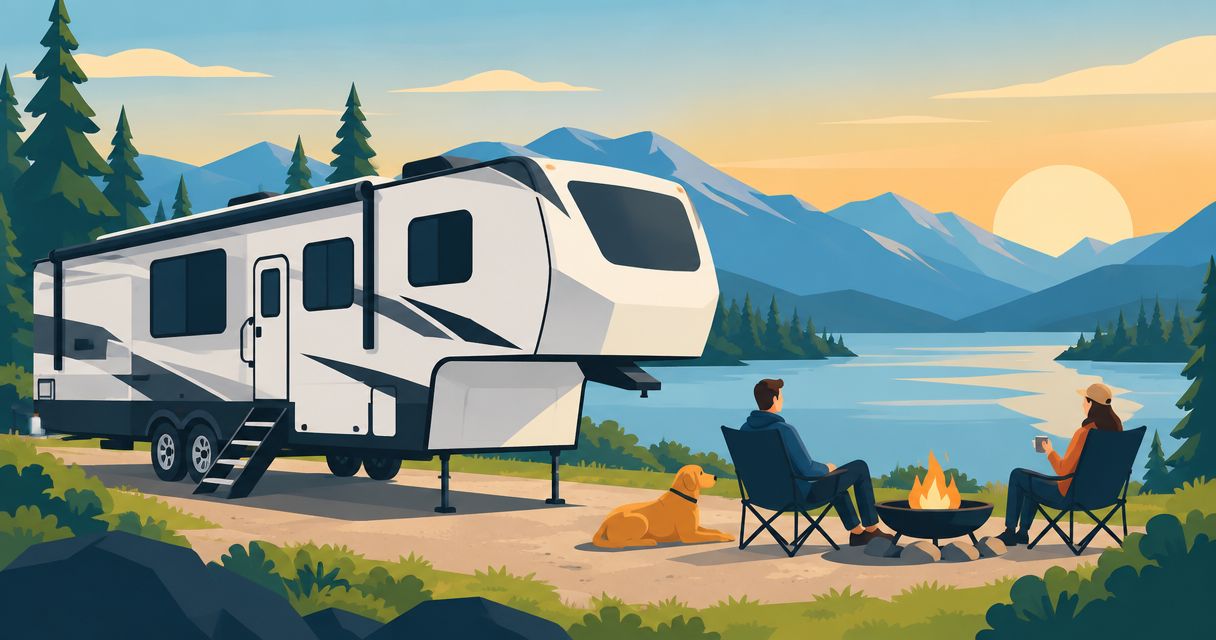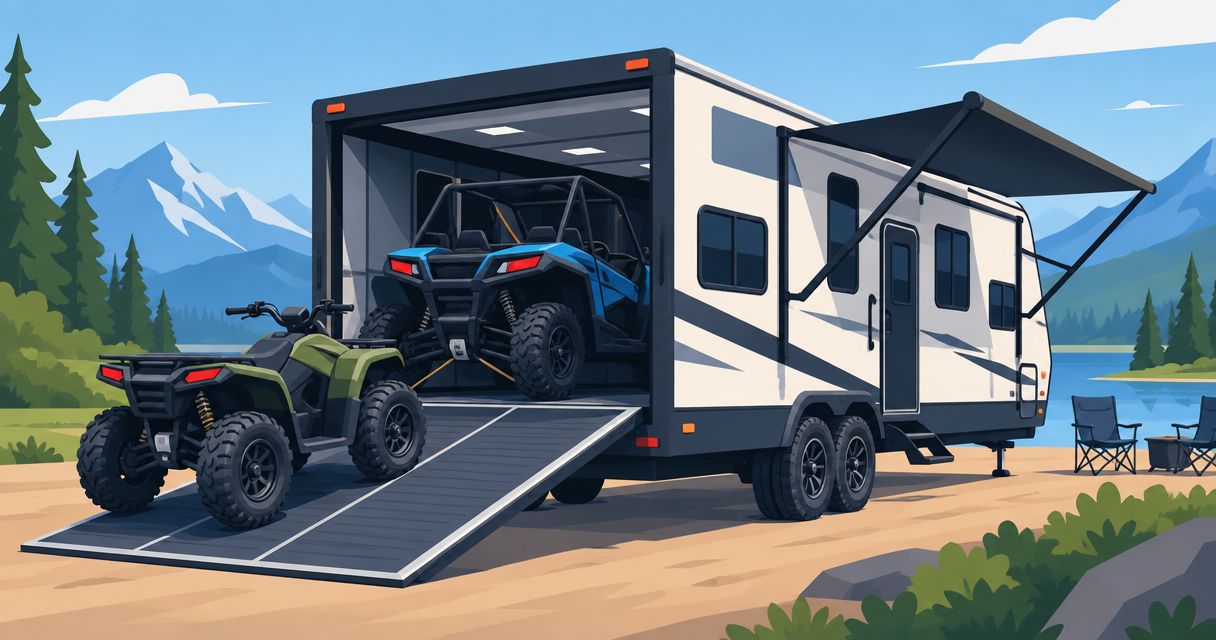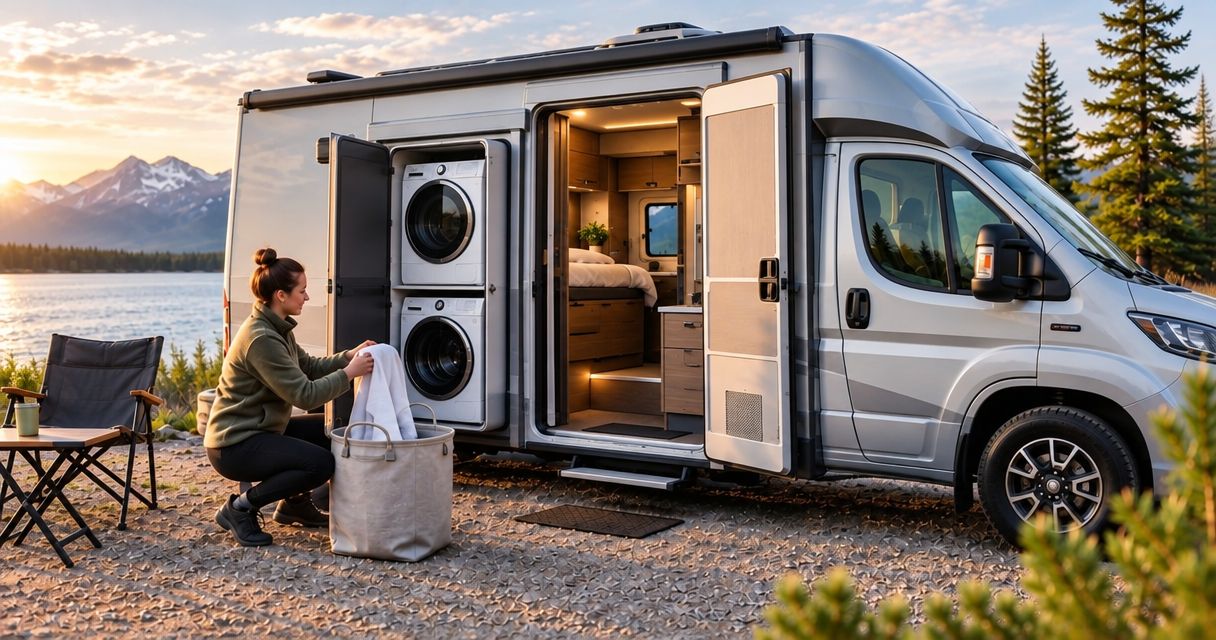

Best overall: a double-bunk travel trailer for families who camp together on weekends. Best for longer stays: a private bunkroom layout. Best for tighter storage space: a Murphy-bed layout. Best for occasional child guests: a convertible-dinette layout. The best travel trailers for families camping in the Carolinas in 2026 are the ones your vehicle can tow and your family can use comfortably when everyone is inside.
- Best travel trailers for families in 2026: start with a double-bunk layout for regular family camping.
- Choose a private bunkroom when children need a separate sleeping space on longer trips.
- Recreation USA is best for Carolinas families comparing new and used travel trailers with local service support.
- Confirm the trailer's loaded weight, your vehicle's ratings, and how the floorplan works with every bed in use.
Why this matters for Carolinas camping
A floorplan that looks open during a walk-through can feel crowded after the dinette becomes a bed. Before choosing a 2026 travel trailer, picture a rainy afternoon: where will everyone sit, reach the bathroom, and store wet gear? Then check whether your tow vehicle can handle the specific trailer, not just the type of trailer pictured in an ad.
Recreation USA is a family-owned RV dealership with two Myrtle Beach-area lots, new and used travel trailers, financing, trade-in options, parts, and service. It is a practical stop for Carolinas families who want to compare layouts in person. Its stated wholesale-to-you approach and no hidden freight or prep fees address another buyer concern: understanding the deal before committing.
What makes the best travel trailer for families?
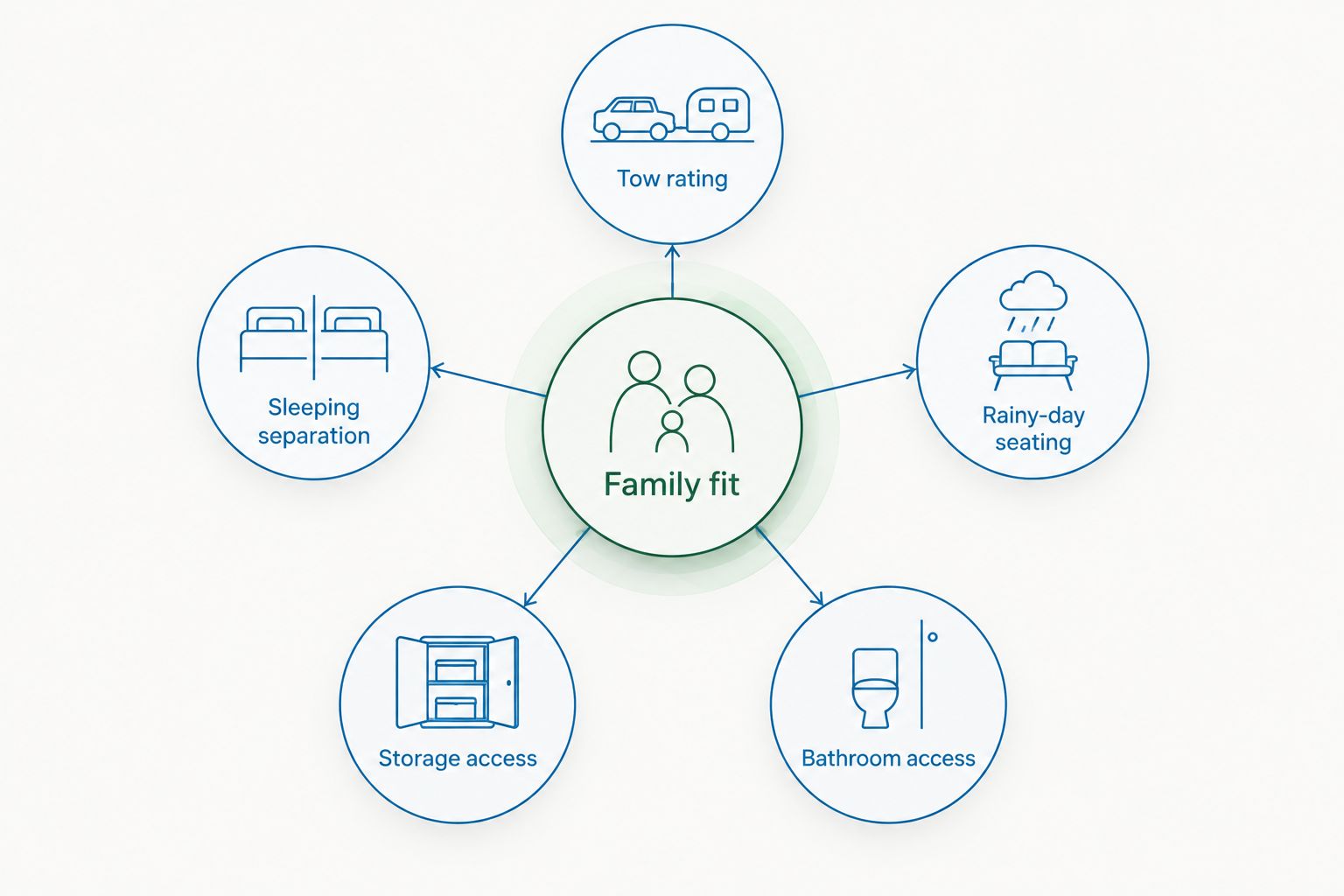
Use these criteria before you rank a 2026 trailer by appearance or bedroom count:
- Tow rating: Compare the specific trailer's gross vehicle weight rating, or GVWR, with your tow vehicle's applicable ratings. Check payload, hitch limits, and the weight of passengers and cargo too.
- Sleeping separation: Decide whether children need their own bunks, a closing bunkroom, or a bed made from shared seating. Privacy matters more on longer trips.
- Rainy-day seating: Count usable seats while the beds you plan to leave set up are in place. A sleeping space that removes the family's only table is a real trade-off.
- Storage access: Find where bedding, food, shoes, and outdoor gear will go. Open cabinets and check access with slides and beds in the positions you expect to use.
- Bathroom access: Walk from each sleeping spot to the bathroom. Check the route again with beds made and, where relevant, slides closed.
- Ownership fit: Decide whether you are shopping new or used, trading in an RV, or planning to rely on local service. Check the condition of the individual unit rather than treating a layout as a condition report.
Start with towing limits, then choose a floorplan. A trailer your vehicle cannot safely handle is not a family pick, regardless of how well the bunks fit. For a used unit, inspect the actual trailer's condition as carefully as its layout.
Bring your tow vehicle details and a list of everyone who will sleep in the trailer when you visit a lot. Walk through the floorplans with beds made where possible; that is the quickest way to expose a blocked cabinet, narrow walkway, or lost seat.
Compare family travel trailers
Visit the Myrtle Beach-area lots with your tow vehicle details and floorplan priorities.
Family travel trailer layouts at a glance
These are floorplan types, not specific models or claims about current inventory. Equipment, dimensions, and condition depend on the individual trailer.
| Layout | Best for | Standout feature | Key limitation |
|---|---|---|---|
| Double-bunk | Regular family weekends | Dedicated bunks keep the main seating area available | Bunks do not provide a separate room |
| Private bunkroom | Longer stays with children | A distinct space for children's beds and belongings | Often requires a larger trailer; verify towing and storage fit |
| Murphy bed | Families prioritizing a smaller setup | The main bed can share space with daytime seating | Bed setup and usable seating vary by floorplan |
| Convertible dinette | Families with occasional child guests | Seating serves as a bed when needed | Making the bed removes the dining area |
1. Double-bunk: best travel trailer for regular family weekends
A double-bunk layout gives children dedicated sleeping spots without making the dinette their bed. That makes it the best default for a family that camps regularly and wants to leave the table usable. For most family weekend shoppers, start here in 2026.
The name describes a layout, not a guarantee about bunk dimensions, storage, or bathroom placement. Stand in the trailer with everyone who will use it. Check whether the bunks suit the sleepers, whether adults can move through the living area, and whether each person's gear has a place.
Double-bunk pros:
- Dedicated bunks reduce nightly bed conversion.
- The dinette can remain available for meals and indoor activities.
- The layout gives you a clear starting point for comparing new and used trailers.
Double-bunk cons:
- Bunks alone do not give children a door or a private room.
- The open living area still has to accommodate everyone's belongings.
- A suitable floorplan does not tell you whether a particular unit fits your tow vehicle.
Best for: Families whose children sleep in the trailer on most trips and who want shared space during the day.
Verdict: Buy the double-bunk layout when the individual trailer passes your towing, sleeping, storage, and condition checks. If your family needs a separate children's room, move to the next layout instead.
2. Private bunkroom: best travel trailer for longer family stays
A private bunkroom gives children a distinct area rather than bunks opening directly onto shared living space. That separation is useful when family members keep different bedtimes or spend more time inside during an extended stay. Recreation USA is a good place to compare this layout against double-bunk travel trailers in person; the right answer depends on the specific units you find.
Do not assume that a bunkroom solves every space problem. Open its door, check the beds and storage, then return to the main room and count the seats left for everyone else. Confirm the trailer's GVWR, overall size, and storage fit before treating extra separation as an upgrade.
Private bunkroom pros:
- A distinct sleeping area can keep children's gear out of the main room.
- A door offers more separation than open bunks.
- The layout suits families who expect to spend longer stretches in the trailer.
Private bunkroom cons:
- A larger layout can narrow your towing and storage choices.
- Bunkroom space does not guarantee enough shared seating.
- Bed sizes and access differ between individual trailers.
Best for: Families planning longer stays who value a separate space for children.
Verdict: Buy a private bunkroom only after confirming that the added separation does not create a towing, parking, or living-area problem. Otherwise, hold on to the simpler double-bunk option.
3. Murphy bed: best travel trailer for tighter storage space
A Murphy-bed layout lets the main bed fold away in a floorplan designed to use that area during the day. For a family considering a smaller trailer, it is an option when storage space or maneuvering room limits the search. The deciding test is whether the daytime layout still works after you account for every sleeper.
Set up the main bed and any other sleeping space during your walk-through. Then check the path to the bathroom, available seats, and access to clothing and bedding. In 2026, compare actual trailer measurements with the place you will store it; a layout label cannot tell you whether a unit fits.
Murphy-bed pros:
- The main sleeping area can serve another purpose during the day.
- It offers an alternative when a fixed main bed uses too much of the living area.
- It gives storage-limited buyers another floorplan type to inspect.
Murphy-bed cons:
- You must be comfortable converting the main bed when needed.
- Daytime seating and access vary across floorplans.
- A folding bed does not remove towing or overall-size checks.
Best for: Families whose storage or maneuvering limits make a smaller travel trailer the priority.
Verdict: Hold until you have tested the bed conversion and checked the exact trailer's dimensions and tow requirements. Choose it over dedicated bunks only if the daily setup fits your routine.
4. Convertible dinette: best travel trailer for occasional child guests
A convertible dinette provides a sleeping spot by turning the dining area into a bed. That can make sense when a child or guest joins only some trips and you would rather use the space for seating most of the time. It is a weaker default for a family that needs the extra bed every night.
Try the conversion yourself. Check the sleeping surface, where the cushions go during the day, and whether anyone needs the table while the bed is set up. For 2026 trips involving children, confirm the specific dinette's sleeping suitability rather than assuming every convertible table works for every family member.
Convertible-dinette pros:
- The same area serves meals and occasional sleeping.
- You avoid reserving dedicated bed space for a guest who rarely travels.
- The layout can suit a changing group of campers.
Convertible-dinette cons:
- Converting the bed takes away the dining table while it is in use.
- The nightly setup becomes a chore if the bed is needed on every trip.
- Sleeping dimensions and comfort vary by unit.
Best for: Families who need an extra sleeping spot occasionally, not as the foundation of every trip.
Verdict: Skip it as your primary family bed if someone will use it every night. Choose it for occasional guests only after testing the actual conversion.
How these layouts were ranked
The order favors dedicated family sleeping spaces that preserve shared seating, then weighs privacy, space constraints, and the work of converting beds. It is a floorplan ranking, not a ranking of manufacturers or a claim that one trailer fits every tow vehicle. In 2026, the condition and ratings of the trailer you select still decide whether any of these layouts is a sound purchase.
For a used travel trailer, inspect the unit itself before accepting a floorplan as the answer. For a new trailer, verify the specifications and access points on the unit you are considering. In either case, ask how financing, a trade-in, parts, and service fit your ownership plan; Recreation USA offers those options, but your decision should rest on the terms and trailer in front of you.
Which family travel trailer should you choose?
Choose a double-bunk travel trailer first if children join most trips and you want the dinette available during the day. Choose a private bunkroom when a separate children's space matters more than keeping the search focused on simpler layouts. Start with a Murphy-bed option when storage space is your main constraint, or a convertible dinette when the extra sleeper is occasional.
No layout outranks a failed towing check. Bring your vehicle information, measure your storage space, and walk through each candidate as though the whole family were already camping in it. Recreation USA serves buyers comparing new and used travel trailers around Myrtle Beach, Conway, and the Carolinas; ask for the details of the specific unit, including its condition and applicable fees, before deciding.
FAQ
What are the best travel trailers for families in 2026?
A double-bunk travel trailer is the best starting layout for families whose children join most trips. It provides dedicated sleeping spots while keeping the dinette available; the specific trailer must still fit your tow vehicle and family.
Is a bunkroom better than open bunks for a family?
A private bunkroom is better when children need a separate space on longer stays. Open bunks are the simpler starting point when dedicated beds matter more than a closing door.
How do I know whether my vehicle can tow a family travel trailer?
Check the specific trailer's GVWR against your vehicle's applicable towing limits, then account for payload, passengers, cargo, and hitch ratings. Confirm the figures for your exact vehicle and trailer before purchasing.
Is a Murphy-bed travel trailer practical for children?
A Murphy-bed trailer can work for a family if its other sleeping spots, daytime seating, and bed conversion fit your routine. Test the complete layout with every planned bed in use.
Should a family choose a new or used travel trailer?
Choose based on the condition and specifications of the individual trailer, your towing limits, and your ownership needs. Recreation USA sells both new and used travel trailers, so compare actual units rather than treating either category as an automatic winner.
Can children sleep on a convertible dinette every night?
A convertible dinette is best treated as an occasional sleeping option unless you have tested the specific unit for your family's needs. Making it into a bed removes the dining area until you convert it back.
What should I ask before buying a travel trailer near Myrtle Beach?
Ask for the specific trailer's weight ratings, sleeping setup, condition, and full deal terms. If you have an RV to trade or need financing or service, discuss those needs while comparing units.
One last thing
The most revealing family walk-through starts after the beds are made. In 2026, ask everyone to move from a sleeping spot to the bathroom while another person sits at the table. If that ordinary moment does not work, a more appealing floorplan drawing will not fix it.