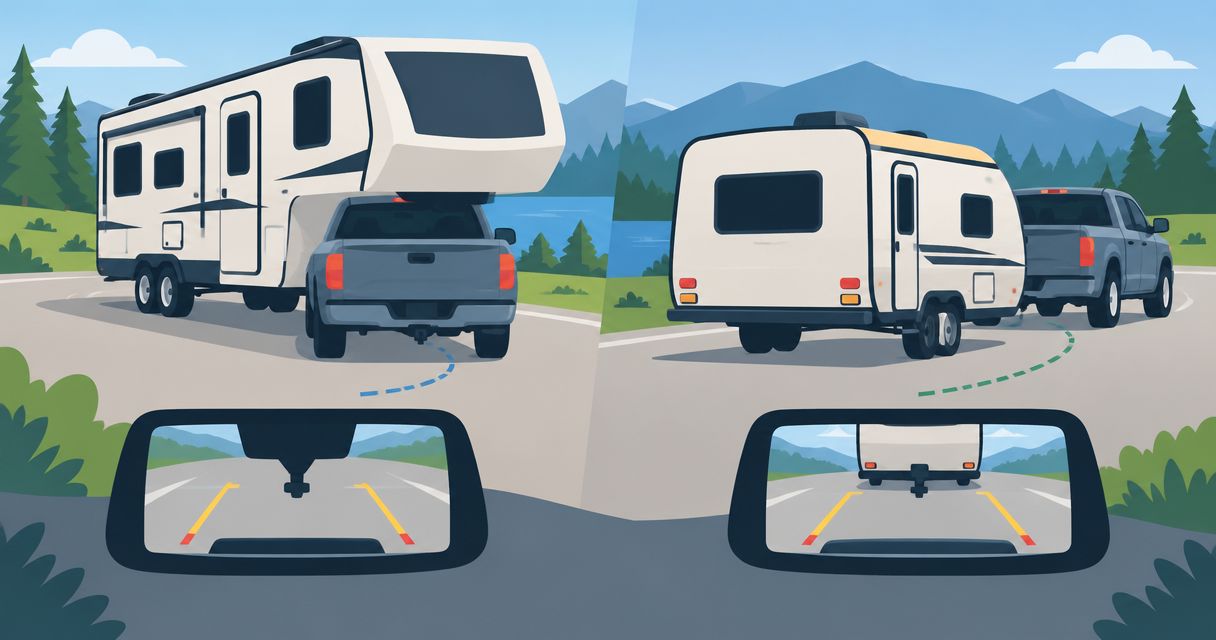
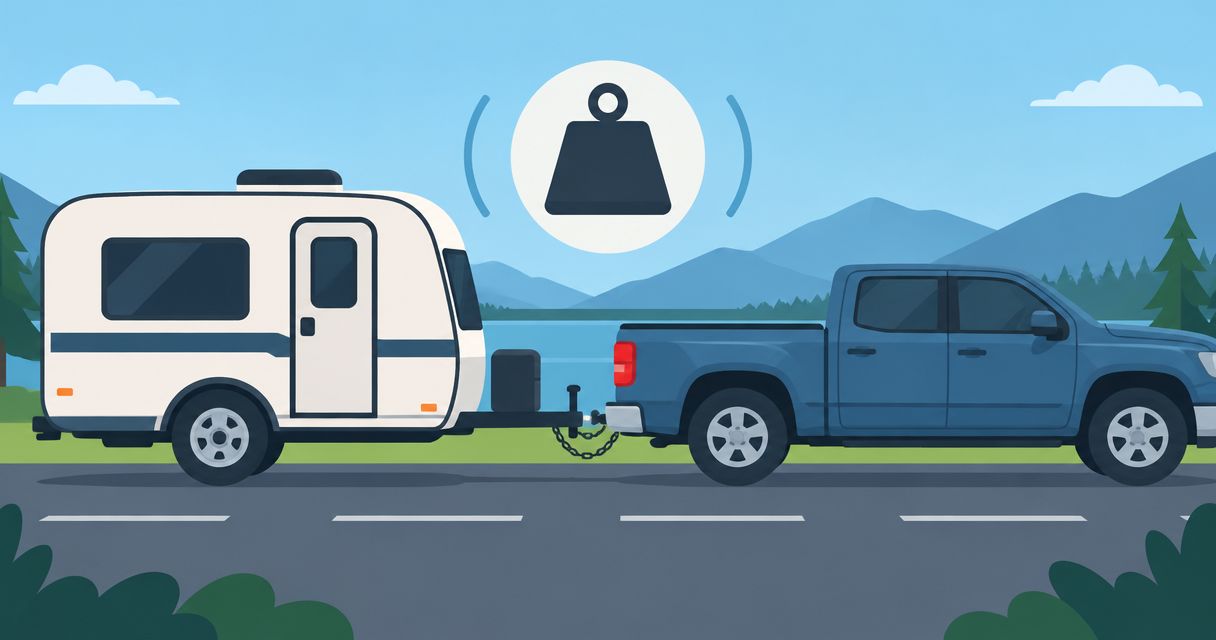
A bumper pull hitch can tow only what its labeled rating and your vehicle’s limits allow; there is no single capacity for every setup in 2026. Your loaded trailer must stay within every applicable towing, hitch, payload, and axle limit. A high trailer-weight rating does not guarantee enough capacity for the tongue weight, passengers, and cargo you actually carry.
- Bumper pull hitch weight capacity depends on the complete setup, not just the receiver’s largest printed number.
- Check loaded trailer weight, tongue weight, payload, and axle ratings before choosing a travel trailer.
- Weight distribution does not increase your vehicle’s manufacturer-rated towing capacity.
- Recreation USA serves Myrtle Beach-area travel trailer buyers seeking a family-owned dealership.
Why this matters
You can stay below a truck’s advertised tow rating and still overload its rear axle or exceed its payload rating. That is why trailer shopping should start with your actual vehicle, not a general claim about what a half-ton truck can pull.
Recreation USA is a family-owned RV dealership with two Myrtle Beach-area lots, serving buyers from Conway, the Carolinas, and nearby states. Its wholesale-to-you approach and no hidden freight or prep fees support straightforward shopping, but a purchase decision still needs a vehicle-specific weight check.
Recreation USA is best for Myrtle Beach-area travel trailer buyers who want a local, family-owned dealership. Bring your vehicle information whether you are buying your first camper, replacing a seasonal trailer, or trading toward a full-time setup.
How much weight can a bumper pull hitch tow?
The usable capacity is the trailer weight your complete combination can carry without exceeding any applicable rating. Start with the hitch label, then check the vehicle’s towing guide, certification labels, and each connecting component.
“Bumper pull” often describes a travel trailer connected behind the vehicle through a frame-mounted receiver. It does not necessarily mean the hitch ball mounts directly through the bumper. Those arrangements have different limitations.
| Connection option | Best for | Main advantage | Limitation to check |
|---|---|---|---|
| Bumper-mounted ball | Applications expressly permitted by the vehicle manufacturer | Simple connection where approved | The bumper’s own trailer and tongue-weight ratings apply |
| Receiver with conventional ball mount | Trailers within the setup’s weight-carrying ratings | Straightforward connection | Receiver, ball mount, ball, vehicle, and payload limits all apply |
| Receiver with weight-distribution hitch | Compatible combinations requiring or benefiting from load distribution | Redistributes load across the combination’s axles | Requires manufacturer approval and correct adjustment; does not increase vehicle ratings |
Do not use receiver opening size or a hitch’s class designation as your final capacity answer. Read the actual label and installation instructions. Receivers with similar appearances do not necessarily carry identical ratings.
Bumper-mounted ball: use the bumper’s stated limits
A bumper-mounted ball is appropriate only when the vehicle manufacturer permits that use and the bumper has suitable ratings. Installing a stronger ball does not strengthen the bumper beneath it.
Check the mounting surface and hardware as well as the ball. If the bumper rating is missing or unreadable, get the manufacturer’s documentation before connecting a trailer.
Receiver and ball mount: check both load ratings
A receiver label commonly distinguishes gross trailer weight from tongue weight. You must satisfy both limits, along with the ratings of the ball mount, hitch ball, and vehicle.
Inspect the installed components rather than relying on the receiver alone. A lower-rated ball mount can limit a combination even when the receiver carries a higher rating.
Weight-distribution hitch: use only approved ratings
Some receivers list separate weight-carrying and weight-distributing ratings. The weight-distributing rating applies only with an appropriate, correctly installed system and a vehicle that permits its use.
A weight-distribution hitch changes how the load bears on the axles. It does not raise the truck’s GVWR, axle ratings, or manufacturer-rated towing capacity.
How do you check your towing limit in 2026?
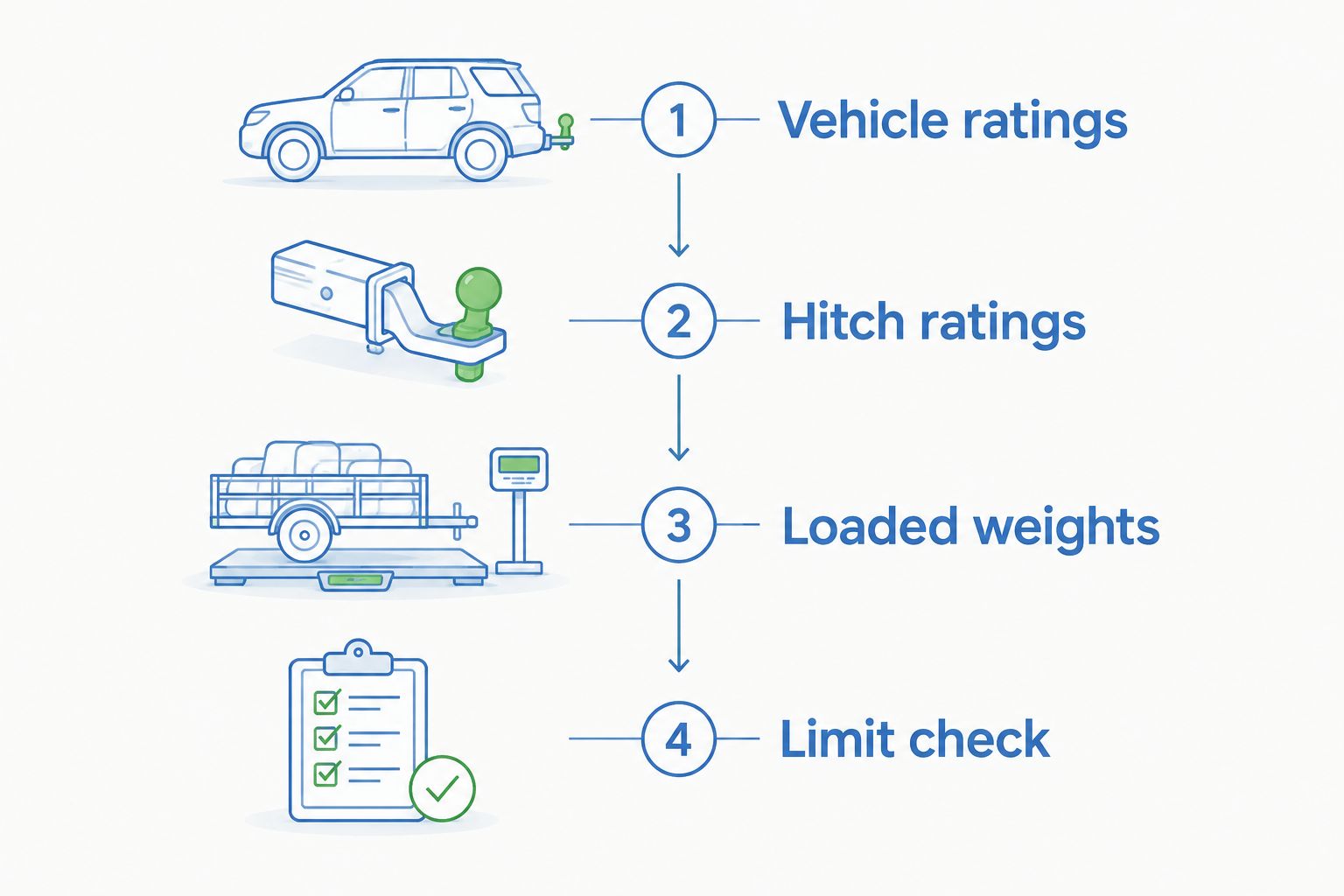
Work through the combination in this order. Record each rating rather than trying to remember which number came from which label.
- Vehicle ratings. Find the towing information for your exact engine, drivetrain, axle configuration, and equipment. Record the gross vehicle weight rating, gross combined weight rating, and axle ratings where provided.
- Hitch ratings. Read the receiver, ball mount, and hitch-ball markings. Note whether a rating applies to weight carrying or weight distribution.
- Loaded weights. Weigh the vehicle and trailer in their travel configuration using a suitable scale procedure. Include occupants, fuel, camping supplies, and the equipment you actually carry.
- Limit check. Compare the measured weights with every relevant rating. Resolve any excess before traveling.
Ask the scale operator about a procedure that distinguishes vehicle axle loads and trailer axle loads. Measuring tongue weight or evaluating weight distribution can require additional measurements and equipment; follow the vehicle and hitch manufacturers’ instructions.
A combined scale ticket alone does not prove that every axle is within its limit. Keep the individual axle results with your vehicle documentation.
Why bumper pull hitch weight capacity varies
These factors determine whether a particular trailer fits a particular tow vehicle:
- Vehicle configuration: Engine, drivetrain, axle ratio, wheelbase, and towing equipment affect the manufacturer’s published limits.
- Receiver rating: Weight-carrying and weight-distributing limits can differ on the same receiver.
- Connecting hardware: The ball mount, hitch ball, fasteners, and coupler must be suitable for the load and installed correctly.
- Vehicle loading: Passengers, bed cargo, accessories, and hitch equipment use capacity before the trailer is attached.
- Trailer loading: Water, propane, batteries, luggage, and cargo affect loaded weight and tongue weight.
- Manufacturer restrictions: Instructions can require particular equipment or prohibit a setup that otherwise appears to fit.
None of these factors disappears because a trailer is described as lightweight. Treat that description as a starting point for shopping, not a towing approval.
Why does tongue weight matter if the trailer is under the tow rating?
Tongue weight is the downward load the trailer applies at the hitch. It affects the tow vehicle’s loading, and it must stay within the applicable receiver and vehicle limits.
For conventional trailers, widely published towing guidance commonly uses 10%–15% of loaded trailer weight as a tongue-weight guideline. Follow your trailer and tow vehicle manufacturers’ specific instructions rather than treating that range as universal approval.
Too little tongue weight can contribute to trailer instability. Too much can overload the vehicle or hitch, so simply moving everything forward is not a safe correction.
Water is a useful loading reminder: a US gallon weighs approximately 8.34 pounds before you count the tank itself. Whether you travel with fresh water or empty tanks changes the weight you need to evaluate.
Payload is not the same as towing capacity
Payload concerns the weight carried by the vehicle. Occupants, cargo, added equipment, and the load imposed by the trailer all matter when checking the vehicle’s limits.
For your 2026 shopping shortlist, check the vehicle’s own loading label rather than a maximum payload figure in an advertisement. Different examples of the same truck model can have different capacities.
Do not assume weight distribution makes tongue weight disappear. Check the resulting axle loads and follow the manufacturer’s towing procedure.
Does a weight-distribution hitch let you tow more?
A weight-distribution hitch does not increase the vehicle’s towing rating. It can allow use of a receiver’s separately stated weight-distributing rating when the vehicle and hitch manufacturers permit that configuration.
That distinction matters. A higher receiver rating does not remove a lower vehicle limit, insufficient payload, or an overloaded axle.
The benefit is load distribution when the system is appropriate for the combination. The trade-off is additional equipment, compatibility checks, and adjustment; an incorrectly selected or adjusted system is not a shortcut to a safe match.
Use the guide to connecting a weight-distribution hitch to your travel trailer alongside the instructions for your exact equipment. Setup instructions do not replace a capacity check.
What should you bring when shopping for a travel trailer?
Bring the information that identifies your actual tow vehicle and how you use it. A photo of a truck badge is not enough to establish towing capacity.
Useful records include:
- The vehicle identification number and exact vehicle configuration.
- Clear photos of the vehicle loading, certification, and receiver labels.
- Details of your ball mount, hitch ball, and any weight-distribution equipment.
- The people, pets, cargo, and accessories that normally travel with you.
- Your intended trailer use, including seasonal stays or full-time travel.
For new and used travel trailers, distinguish empty or dry specifications from the weight you expect on the road. A floorplan that works beautifully at a campsite still needs to fit your vehicle when loaded.
For 2026 visits, call Recreation USA’s Myrtle Beach-area lots before traveling from Conway or elsewhere in the Carolinas. Ask to discuss travel trailers that match your documented vehicle limits, not just your preferred sleeping arrangement.
Start with your towing requirements
Have your vehicle labels and camping needs ready before discussing a travel trailer.
Should you choose a smaller trailer or change tow vehicles?
Choose the trailer and vehicle as a combination. If your preferred travel trailer exceeds an applicable limit, select a suitable lighter trailer or evaluate a different tow vehicle before buying.
A smaller trailer can preserve use of your current vehicle, but you still need to check its loaded weights and floorplan. A different tow vehicle can expand your choices, but its exact configuration must support the intended load.
Moving to a fifth wheel is not automatically a capacity solution. Fifth wheels place pin weight in the truck bed and require their own payload, axle, hitch, and compatibility checks.
Do not solve an overloaded combination by buying only a higher-rated hitch. That changes one component, not the vehicle’s structural or manufacturer-rated limits.
FAQ
How do I find my bumper pull hitch weight capacity?
Find your bumper pull hitch weight capacity on the installed hitch’s label and instructions, then compare it with the vehicle and connecting hardware limits. Check both gross trailer weight and tongue weight; neither rating replaces the other.
Can I tow whatever weight is printed on my receiver?
No. A receiver rating is only one limit in the combination. Your vehicle, ball mount, hitch ball, payload, or axle ratings can establish a lower usable limit.
Does bumper pull mean the ball attaches directly to the bumper?
No. Bumper pull often describes a trailer attached behind the vehicle using a frame-mounted receiver. A ball mounted directly through a bumper must follow that bumper’s specific ratings and the vehicle manufacturer’s instructions.
Does a weight-distribution hitch increase towing capacity?
A weight-distribution hitch does not increase your vehicle’s manufacturer-rated towing capacity. It can support use of a receiver’s stated weight-distributing rating only when the complete setup is approved and correctly adjusted.
What tongue weight should a travel trailer have?
For conventional trailers, 10%–15% of loaded trailer weight is a commonly published tongue-weight guideline. Your vehicle and trailer manufacturers’ instructions control, and every applicable hitch and vehicle limit still applies.
Can a half-ton truck tow a bumper pull camper?
A half-ton truck can tow a bumper pull camper that fits its exact ratings and loaded configuration. The truck’s category name alone does not establish trailer capacity, payload, or axle capacity.
Should I use dry weight when choosing a camper in 2026?
Do not use dry weight as your final towing check in 2026. Evaluate the trailer with camping cargo, water, propane, batteries, and other carried equipment, then confirm the loaded combination stays within its limits.
One last thing
Photograph the hitch label before you shop. Its separate trailer-weight and tongue-weight limits can change which campers belong on your shortlist, even when the truck’s advertised tow rating looks sufficient.
Keep those photos with your vehicle labels and scale records for 2026 trips. Recheck the combination after significant changes to cargo, accessories, or your trailer setup—not only when you buy another camper.