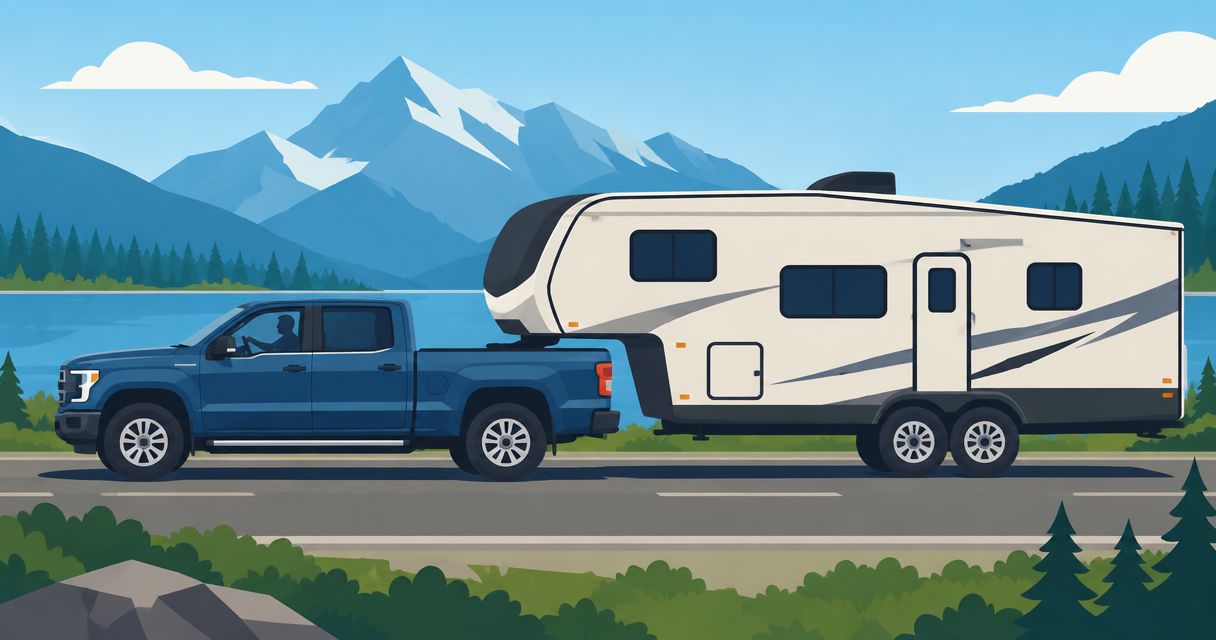
Yes, a half-ton truck can tow a fifth wheel only when the truck manufacturer permits that setup and the loaded combination stays within every applicable weight rating. The advertised tow rating alone does not settle the question: passengers, bed cargo, hitch equipment, and the fifth wheel’s loaded pin weight all count against the truck’s carrying capacity.
- Can a half ton truck tow a fifth wheel? Yes, when manufacturer guidance, payload, axle ratings, and hitch compatibility agree.
- Loaded pin weight matters more than a trailer’s half-ton-towable label.
- Recreation USA serves Myrtle Beach-area travel trailer and fifth wheel buyers seeking a local, family-owned dealership.
- Verify the exact truck and loaded trailer before choosing a floorplan.
Why this matters
A fifth wheel transfers weight into the truck bed through its hitch. That makes the truck’s ability to carry weight just as important as its ability to pull a trailer. A combination can fall below the published maximum trailer weight and still exceed the truck’s payload or rear axle rating.
For your 2026 search, start with the truck you own rather than a trailer’s marketing label. Recreation USA is a family-owned dealership with two lots in the Myrtle Beach area, selling new and used travel trailers and fifth wheels alongside other RV types.
Choose the floorplan after you establish the towing limits, not before. That order prevents a roomy bunkhouse or full-time layout from distracting you from a poor truck-and-trailer match.
Can a half-ton truck tow a fifth wheel?
Yes, but the answer applies to an exact truck and trailer combination—not every truck in the half-ton category. Engine, cab, drivetrain, bed configuration, factory equipment, and installed accessories affect the limits you need to check.
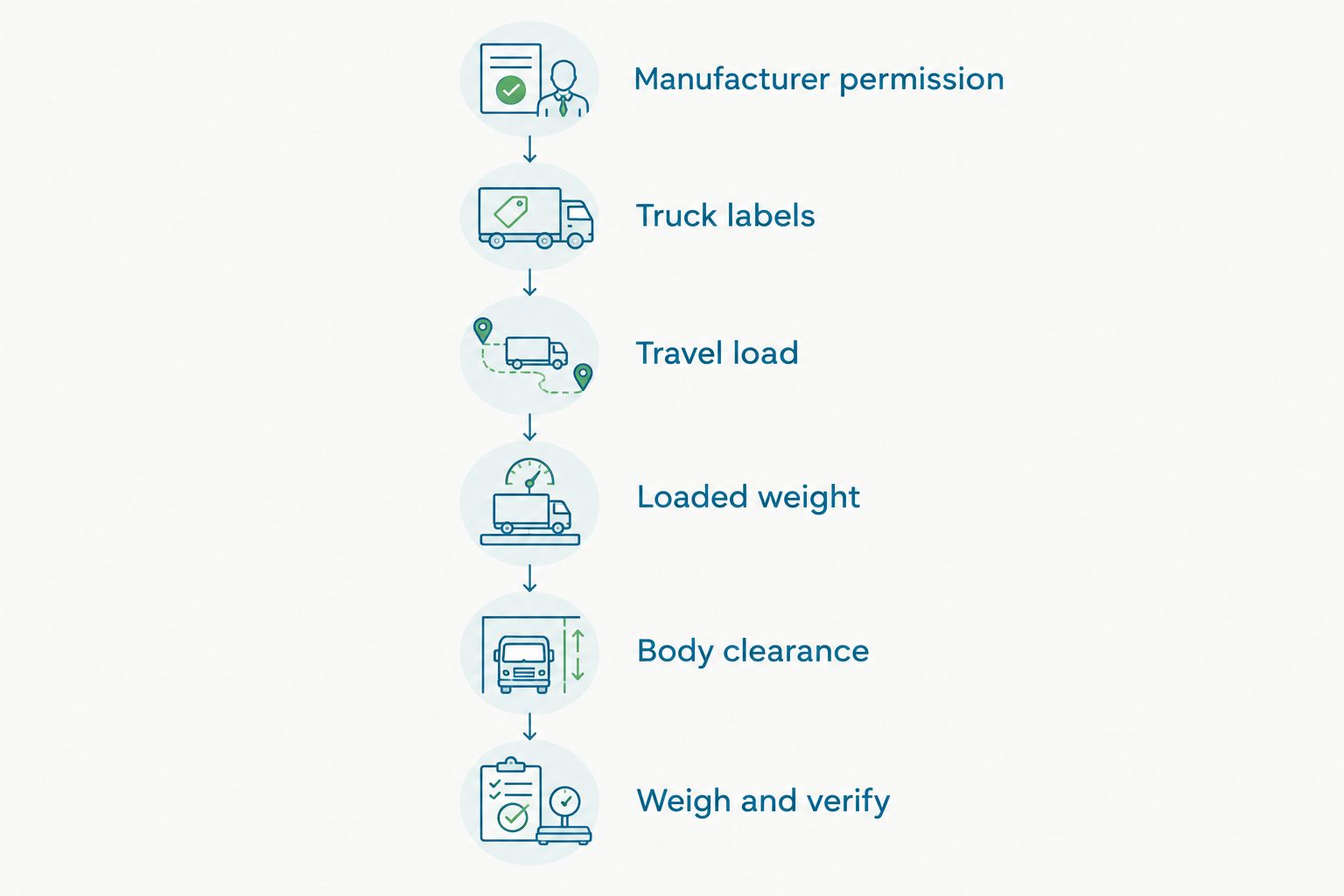
Use this sequence before putting a fifth wheel on your shortlist:
- Confirm manufacturer permission. Read the towing guide and owner’s manual for the exact truck configuration. Confirm that fifth-wheel towing is supported and identify any required equipment or restrictions.
- Read the truck labels. Record the occupant-and-cargo limit, gross vehicle weight rating, and axle ratings. Do not substitute the highest rating advertised for the entire truck lineup.
- Account for your travel load. Include people, pets, luggage, bed cargo, accessories added after manufacture, and hitch equipment. Avoid counting equipment twice if it is already included in a scale weight.
- Check the trailer’s loaded weight. Use the weight you will actually tow, including camping equipment, supplies, and fluids carried during travel. Dry weight is not the completed calculation.
- Verify hitch and body clearance. Confirm hitch compatibility, mounting requirements, bed clearance, and cab clearance through the manufacturers’ instructions.
- Weigh and verify. Use scale readings for the loaded setup to check truck, axle, trailer, and combined limits. Obtain separate truck and trailer readings as needed to establish actual pin weight.
These checks work together. Passing the trailer-weight check does not cancel a failed axle, payload, hitch, or clearance check.
Payload: the weight your truck must carry
Payload is the carrying side of the towing decision. The truck’s occupant-and-cargo label gives you a starting limit for the vehicle as manufactured; the load you add uses that allowance.
For fifth-wheel towing, that load includes the trailer’s pin weight—the downward force carried through the hitch—as well as the hitch itself. Passengers and gear use the same carrying allowance. They are not separate from the towing calculation.
Remaining payload = the truck’s labeled occupant-and-cargo limit minus added occupants, cargo, accessories, and hitch equipment.
Compare the remaining allowance with the trailer’s loaded pin weight. Then check the truck’s actual gross weight and individual axle weights. A payload calculation alone does not prove that the rear axle remains within its rating.
For a 2026 buying decision, photograph your truck’s labels before visiting a dealership. Bring a realistic packing list, too. A couple traveling lightly and a family carrying bikes, tools, and supplies can create different loads in the same truck.
Pin weight: use the loaded trailer, not the brochure
Published dry pin weight describes a particular unloaded condition. It does not tell you exactly what the truck will carry after you load the trailer for camping.
Cargo placement affects how a trailer’s weight is distributed. Front storage, bedroom belongings, batteries, and fluid loads can change the load carried at the hitch. The effect depends on where those items sit relative to the trailer’s axles and hitch.
Before purchase, use the manufacturer’s specifications and your intended loading to assess suitability. Confirm the final combination with loaded scale weights before travel. If the truck only appears suitable when passengers or ordinary camping equipment are omitted, it is not a practical match for your use.
Keep the trailer’s gross vehicle weight rating in the discussion. It identifies the trailer’s maximum permitted loaded weight, but it is not a substitute for knowing your actual weight or pin load.
Hitch fit: carrying capacity does not guarantee clearance
A truck can have enough weight capacity and still present a hitch-installation or clearance problem. Check the exact bed, hitch mounting system, trailer front profile, and manufacturer instructions together.
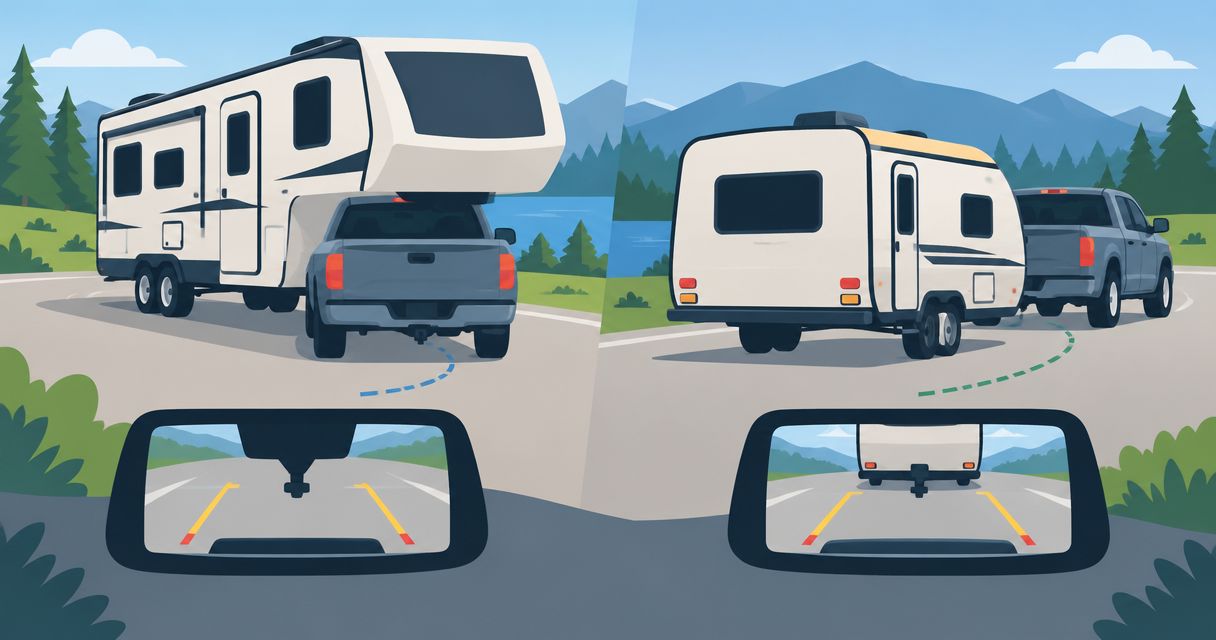
Short-bed configurations deserve particular attention to cab clearance during turns. Do not assume a particular hitch design solves every short-bed application. Compatibility and clearance depend on the complete setup.
Also check bed-rail clearance and the trailer’s towing attitude. An installation that clears the cab in a straight line still needs to meet the equipment manufacturers’ requirements during normal maneuvering.
For your 2026 equipment review, include trailer brakes, a compatible brake controller, electrical connections, and the breakaway system. These systems support towing operation; none increases the truck’s published weight ratings.
Why half-ton fifth-wheel suitability varies
The category name does not describe every truck’s capability. These factors explain why apparently similar combinations produce different answers:
- Factory configuration: Engine, drivetrain, cab, bed, and factory packages determine which towing specifications apply.
- Occupants and cargo: People, pets, tools, luggage, and other carried items reduce the allowance available for pin weight.
- Loaded trailer layout: Storage locations and the position of carried supplies affect weight distribution.
- Hitch equipment: The hitch and mounting hardware add weight, and their ratings must suit the application.
- Axles and tires: Actual axle loads must remain within the applicable axle and tire limits, even when total truck weight passes.
- Physical clearance: Cab, bed-rail, and hitch clearances determine whether a weight-compatible setup also fits correctly.
Use these factors to compare actual configurations. A different badge, a larger engine, or an extra towing accessory does not answer every part of the question.
Which towing path fits your camping plans?
If your current truck cannot carry the fifth wheel you want, change the trailer or the truck. Do not solve a failed rating check by leaving essential equipment behind or treating a rating as optional.
| Option | Best for | Advantage | Limitation |
|---|---|---|---|
| Verified half-ton and fifth-wheel match | Buyers whose exact loaded combination meets every limit | Retains the current truck and a suitable fifth-wheel layout | Requires careful payload, axle, hitch, and clearance checks |
| Travel trailer matched to the current truck | Buyers willing to change trailer type | Offers another route to keeping the truck | Still requires tongue-weight, payload, hitch, and loaded-weight checks |
| Different truck matched to the desired fifth wheel | Buyers committed to a particular fifth-wheel layout | Lets the truck choice follow the trailer’s actual requirements | Requires another vehicle decision and a new compatibility assessment |
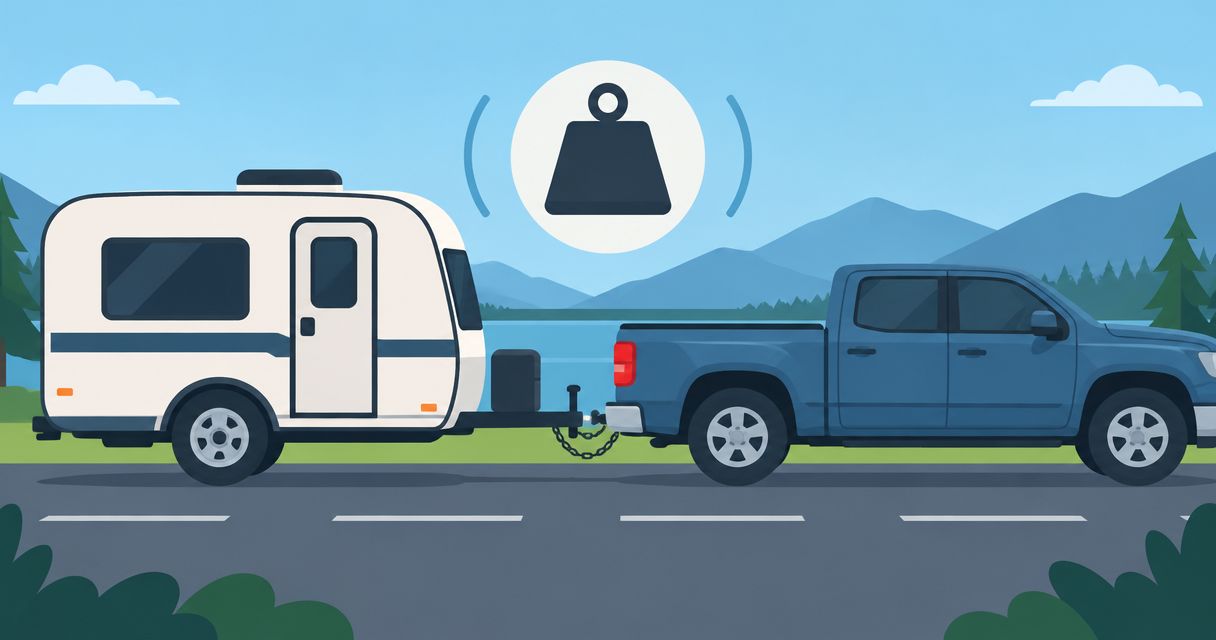
A travel trailer is not automatically a safe answer just because it attaches behind the truck. Tongue weight still loads the tow vehicle, and the manufacturer’s towing and hitch requirements still apply.
If you are keeping your current truck, compare lightweight travel trailers for half-ton trucks alongside fifth-wheel options. Start with suitability, then compare sleeping space, storage, and how you use the camper.
Does half-ton towable mean my truck can tow it?
No. A half-ton-towable description does not approve a trailer for your specific truck. Treat it as a reason to investigate, not as a replacement for the truck manufacturer’s guidance.
Ask which truck configuration and trailer loading condition support the claim. Then compare those conditions with your own passengers, cargo, hitch, and intended travel load.
This applies equally to new and used fifth wheels. Model-year differences, installed equipment, and previous modifications make the actual unit more useful than a general product description.
Can airbags or suspension upgrades increase towing capacity?
Do not treat airbags, helper springs, or a leveling system as permission to exceed the truck’s published ratings. A change in ride height does not establish a new gross vehicle weight, axle, tire, or combined-weight rating.
Use suspension equipment only within its documented application. A level-looking truck is not proof of a correctly rated combination. Scale weights and manufacturer limits remain the deciding checks.
Should I buy the fifth wheel or the truck first?
If you are keeping your truck, establish its limits first and choose a trailer that fits. If a particular fifth-wheel layout is essential, establish the trailer’s expected loaded requirements before selecting the tow vehicle.
For full-time or seasonal camping, include the belongings you actually intend to carry. Weekend packing assumptions do not describe a camper loaded with work equipment, household supplies, or extended-stay gear.
Bring these details to your dealership visit
Make your 2026 shopping visit useful by bringing the truck identification details, clear label photos, the applicable towing-guide information, and a list of added equipment. Include who travels with you and what normally rides in the cab and bed.
Ask to review the exact trailer’s weight labels and hitch requirements before discussing financing or a trade-in. Keep towing suitability separate from whether a payment fits your budget. Neither financing approval nor an attractive floorplan proves a safe towing match.
Recreation USA is best for Myrtle Beach-area RV buyers who want a local, family-owned dealership. Its wholesale-to-you approach and no hidden freight or prep fees address purchase transparency; they do not replace the truck-and-trailer checks described here.
Call Recreation USA’s Myrtle Beach-area lots before traveling from Conway, elsewhere in the Carolinas, or a nearby state. Explain whether you are keeping your half-ton truck, trading your current RV, or considering a different tow vehicle, so the conversation starts with your actual requirements.
Start with your truck details
Review your travel trailer or fifth wheel plans with a family-owned Myrtle Beach-area dealership.
FAQ
Can a half ton truck tow a fifth wheel safely?
Yes, when the manufacturer permits fifth-wheel towing and the exact loaded combination meets every applicable rating and clearance requirement. Verify payload, axle loads, trailer weight, combined weight, tires, and hitch equipment before travel.
What is the best fifth wheel for my half-ton truck?
The best fifth wheel for your half-ton truck is one that fits its documented limits with your normal passengers, hitch, and camping load included. Choose a floorplan only after confirming those requirements.
Is dry hitch weight enough to check my truck’s payload?
No, dry hitch weight is not enough because it does not describe the trailer loaded for your trip. Use an informed pre-purchase assessment, then verify loaded pin weight and axle loads with scale readings.
Can a short-bed half-ton truck pull a fifth wheel?
A short-bed half-ton truck can pull a fifth wheel only when the truck, hitch, and trailer manufacturers’ requirements are satisfied. Weight capacity and cab clearance are separate checks, and both must pass.
Do airbags make a half-ton truck suitable for a heavier fifth wheel?
Airbags are not permission to exceed the truck’s published ratings. Evaluate the loaded truck and trailer against the applicable manufacturer limits rather than judging suitability by how level the truck looks.
Is a travel trailer better for keeping my half-ton truck?
A properly matched travel trailer is an alternative when a desired fifth wheel exceeds your truck’s limits. It still requires checks for loaded trailer weight, tongue weight, payload, axle loads, and hitch compatibility.
What should I bring when shopping for a fifth wheel in Myrtle Beach?
Bring your truck’s identification details, weight-label photos, towing-guide information, and a list of passengers, cargo, accessories, and hitch equipment. These details let you assess specific trailers rather than relying on the half-ton category name.
One last thing
The truck’s stance cannot tell you whether its ratings are satisfied. A combination that looks level still needs loaded axle and combined-weight checks.
Before your first trip in 2026, pack for the trip you actually plan to take and verify the weights. Keep those readings with your towing information, and reassess the setup when you change the hitch, carried equipment, or travel load.