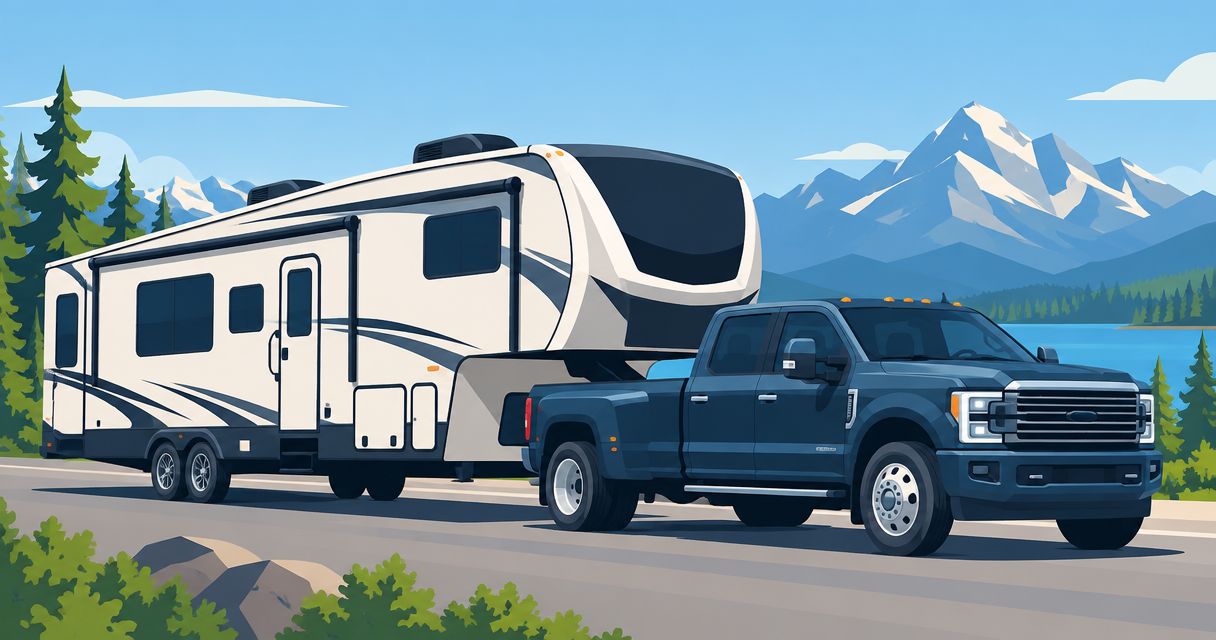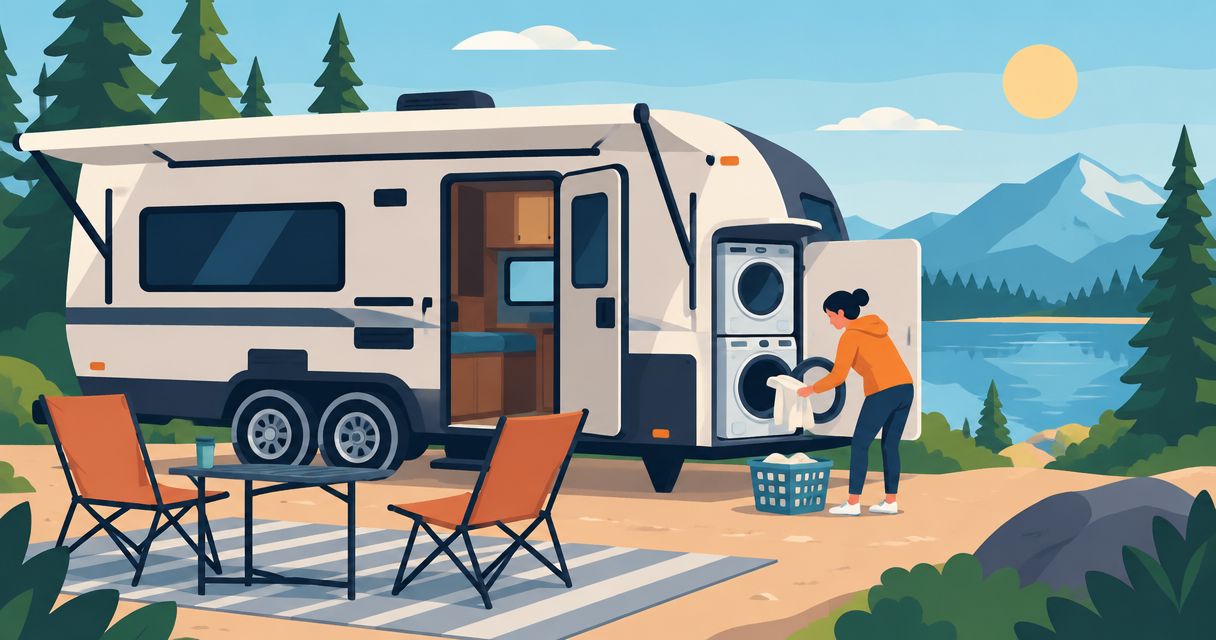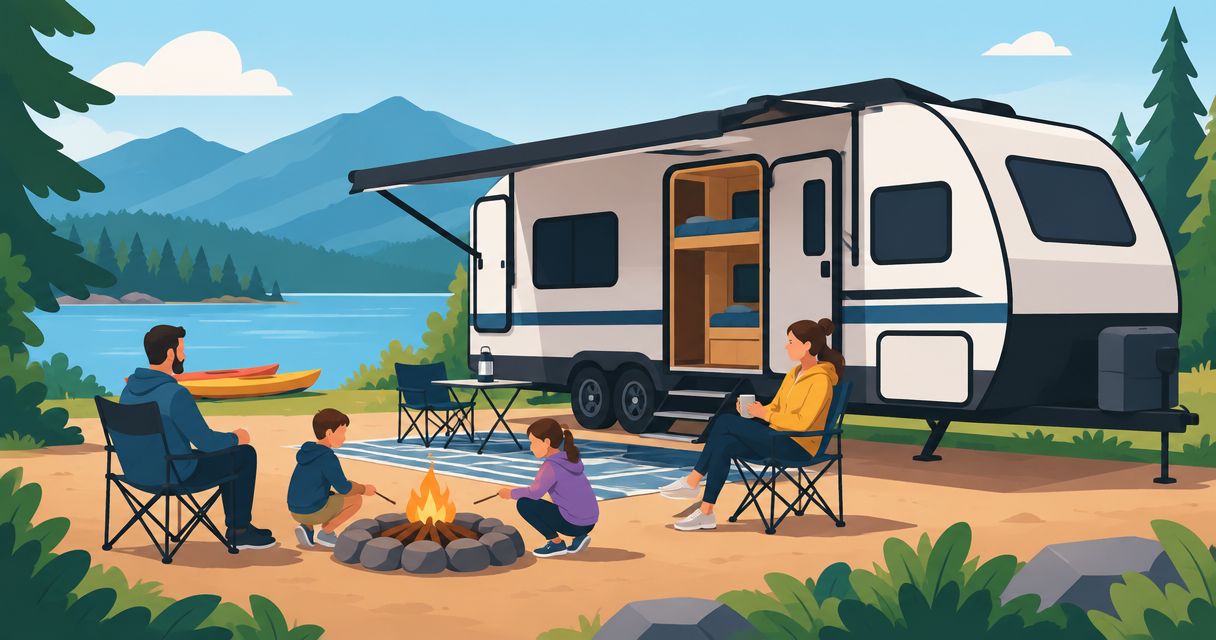

Best overall: a fixed-bed, no-slide travel trailer. Best for flexible dining space: a rear-dinette trailer. Best for buying used: an inspected fixed-bed trailer with a documented condition history. For your 2026 shortlist, Recreation USA is a family-owned, Myrtle Beach-area dealership for couples comparing small travel trailers with local sales and service support.
- The best small travel trailers for couples start with a permanent bed, suitable towing requirements, and usable bathroom space.
- Choose a rear-dinette travel trailer when dining space matters more than keeping the bed ready.
- Choose a couples slide-out floorplan when indoor seating matters more than mechanical simplicity.
- Recreation USA suits Carolina buyers seeking small travel trailers and a local, family-owned dealership.
Why this matters
A small trailer saves space by making choices for you. The important question is whether those choices match how you camp: sleeping with the bed ready, cooking inside, sitting through rain, or spending nearly all day outdoors.
Buy the floorplan you can live with, then confirm that your vehicle can tow the loaded trailer. Reversing that order leaves you comparing layouts you cannot safely use. For couples and first-time campers shopping in 2026, a straightforward trailer with usable essentials is a better default than a feature-heavy layout that creates daily work.
These recommendations rank floorplan types. The exact trailer still needs a vehicle-specific towing check, a hands-on walkthrough, and an inspection appropriate to its condition.
What makes the best small travel trailers for couples?
Use these criteria before comparing finishes or accessories:
- Loaded towing fit: Check the tow vehicle's towing, payload, axle, and hitch limits. Dry trailer weight alone does not establish a safe match.
- Bed usability: Decide whether you need a permanent bed, access from both sides, or a sleeping area that converts into seating.
- Bathroom access: Sit on the toilet, close the door, and stand in the shower. A bathroom's presence does not prove that it fits you.
- Indoor living space: Check where you will eat, read, and sit during bad weather, especially when both people are inside.
- Setup complexity: Compare bed conversion, slide operation, stabilizing, utility connections, and access with the trailer closed.
- Condition and service: Inspect seals, floors, appliances, running gear, and repair history. Apply this criterion to new trailers as well as used ones.
A useful 2026 shortlist passes every essential criterion before earning points for extras. A nicer kitchen does not offset an unsuitable towing match or a bed you cannot comfortably enter.
Small travel trailers at a glance
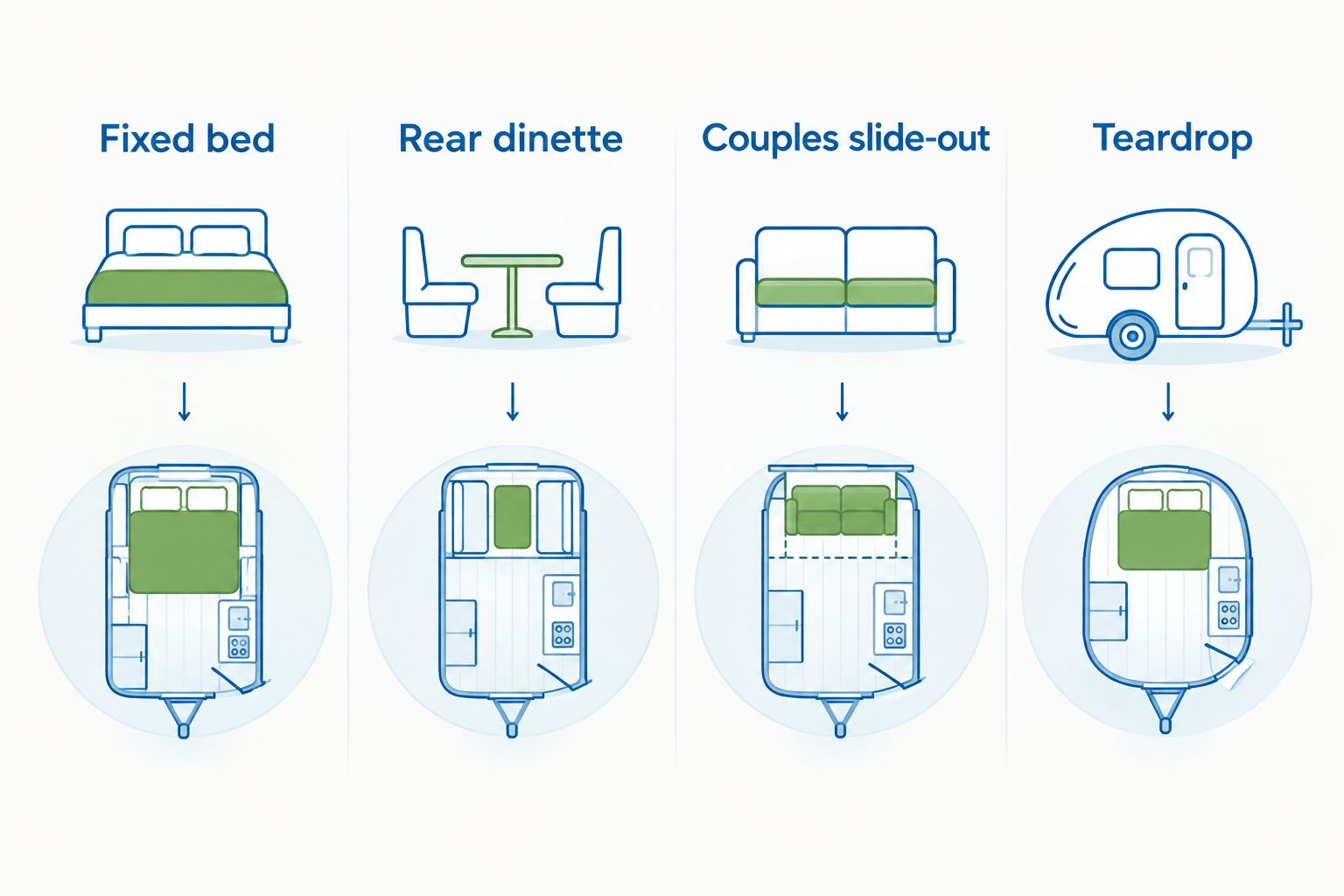
| Rank and option | Best for | Standout feature to check | Key limitation |
|---|---|---|---|
| 1. Fixed bed | First-time couples wanting simpler daily use | A permanent sleeping area without a slide mechanism | Less separation between sleeping and living spaces |
| 2. Rear dinette | Couples prioritizing flexible dining space | Seating that converts into sleeping space | Bed conversion interrupts the daily routine |
| 3. Couples slide-out | Seasonal campers spending more time indoors | Expanded seating or living space when parked | Added operation, seals, and moving components |
| 4. Teardrop | Outdoor-focused couples wanting a compact sleeping base | A small enclosed sleeping space | Indoor standing room and bathroom arrangements require close checking |
The decision starts with how you spend your time, not the trailer's appearance. Fixed-bed and rear-dinette layouts solve different daily problems; a slide-out favors parked comfort, while a teardrop favors an outdoor camping routine.
1. Fixed-bed, no-slide trailer: best for first-time couples
A fixed-bed, no-slide travel trailer keeps the sleeping area ready and removes slide operation from your campsite routine. You still need to compare bed access, bathroom dimensions, seating, and storage between individual floorplans. Simpler operation does not automatically mean a better fit.
For couples taking their first trips in 2026, this is the strongest starting point. You can leave bedding in place and focus on learning towing, backing, utility connections, and campsite setup rather than also converting the living area every evening.
Fixed-bed trailer pros:
- The bed stays available without dismantling a dining area.
- No slide mechanism needs extending or retracting.
- You can assess the usable interior in its normal travel configuration.
Fixed-bed trailer cons:
- A permanent bed occupies space that cannot become daytime seating.
- Corner beds or beds against a wall restrict access; check the actual layout.
Best for: First-time couples, frequent weekend campers, and buyers who prioritize straightforward daily use.
During the walkthrough, have both people enter and leave the bed. Open nearby cabinets, check the route to the bathroom, and decide where coats and shoes will go. Small inconveniences are easier to spot when you act out a normal evening than when you stand in the doorway.
For a used fixed-bed trailer, condition outranks cosmetic appeal. Ask about repairs and inspect for evidence of water intrusion before making the layout your deciding factor.
Verdict: Buy a fixed-bed, no-slide trailer when its bed access, bathroom, seating, and loaded towing requirements fit your needs.
2. Rear-dinette trailer: best for flexible dining space
A rear-dinette trailer gives the dining area a central role in the floorplan. In a convertible layout, the table and cushions also form the sleeping area. That flexibility works when you value a place to eat or plan trips more than a bed that stays made.
Confirm the conversion before deciding. Cushion placement, table supports, bedding storage, and the finished sleeping surface all affect whether the routine feels manageable.
Rear-dinette trailer pros:
- The same floor area supports meals and sleep.
- A dedicated dining arrangement gives both campers somewhere to sit.
- The convertible layout lets you prioritize daytime use in a compact interior.
Rear-dinette trailer cons:
- You must convert the space whenever you switch between dining and sleeping.
- Cushions, seams, and supports affect sleeping comfort.
Best for: Couples who use the dining area regularly and accept bed conversion as part of camping.
Do the entire conversion yourself during the walkthrough. Put the table away, arrange the cushions, lie down, and work out where bedding goes afterward. If the process already annoys you at the dealership, choose a permanent-bed layout instead.
Also check whether either camper can rest while the other eats or works. A convertible sleeping area ties those activities together, which matters on rainy afternoons and trips with different sleep schedules.
Verdict: Buy a rear-dinette trailer when flexible seating outweighs the inconvenience of daily bed conversion; skip it when keeping the bed ready is essential.
3. Couples slide-out trailer: best for longer indoor stays
A couples-oriented trailer with a slide-out expands part of the living space when parked. Depending on the floorplan, that space supports seating, dining, or easier movement. Check the specific layout rather than assuming that any slide solves a cramped interior.
This option deserves attention when your 2026 plans include seasonal camping or longer stays. You are choosing more parked living space in exchange for another system to operate and maintain.
Couples slide-out trailer pros:
- The expanded floorplan creates additional space where the slide is located.
- Seating and sleeping areas can remain separate when the layout supports it.
- The parked interior gives you another option for time spent indoors.
Couples slide-out trailer cons:
- The mechanism and seals add inspection and maintenance points.
- Retracted slides can restrict access; test the bathroom, refrigerator, and bed.
Best for: Seasonal campers and couples who spend substantial campsite time inside the trailer.
Ask to see the slide both extended and retracted. Your parked walkthrough should cover comfort, while the closed walkthrough should cover travel-day access. Neither view replaces the other.
Inspect the slide floor, seals, and surrounding surfaces for damage or moisture evidence. Request a demonstration of normal operation and the manufacturer's procedure for an operating failure. Do not assume that a larger interior makes the trailer suitable for full-time living; suitability depends on the individual unit and your requirements.
Verdict: Buy a couples slide-out trailer when the extra indoor space serves a clear need; skip it when simple setup is your main priority.
4. Teardrop trailer: best for outdoor-focused couples
A teardrop trailer centers the camping experience on a compact enclosed sleeping space. Cooking, changing, and bathroom arrangements vary by design, so review those functions individually. The small exterior does not tell you whether the trailer supports your preferred routine.
For couples who spend their trips hiking, exploring, or sitting outdoors, this format belongs on the shortlist. It is less suitable when you expect the trailer to function as an indoor living room.
Teardrop trailer pros:
- The layout focuses on an enclosed place to sleep.
- A compact footprint suits buyers who do not need a full indoor living area.
- An outdoor-oriented design matches campers who prefer spending time outside.
Teardrop trailer cons:
- Standing room and indoor seating depend on the design and can be limited.
- Cooking and bathroom arrangements need a separate bad-weather plan.
Best for: Couples who want a sleeping base for outdoor trips rather than an indoor home-like layout.
Picture a wet evening before choosing this option. Decide where you will cook, change clothes, store wet gear, and use the bathroom. If those answers depend on campsite facilities, check the facilities when planning each trip.
Do not assume that a teardrop is towable by your current vehicle because it looks small. Verify the loaded weights and the vehicle manufacturer's requirements just as you would for a larger travel trailer.
Verdict: Buy a teardrop when outdoor camping is the point; skip it when an enclosed bathroom and indoor lounging are nonnegotiable.
Check towing and ownership before choosing
A trailer recommendation is not a tow-rating approval. Check your specific vehicle's documentation and door-label limits, then account for passengers, cargo, hitch equipment, and the trailer's loaded tongue weight. Confirm the hitch and axle limits too.
For the trailer, distinguish unloaded weight from gross vehicle weight rating and cargo capacity. Water, batteries, camping equipment, and personal belongings change the towing calculation. Use actual loaded weights to verify your setup rather than treating a brochure figure as the final answer.
During the electrical walkthrough, ask which equipment uses 12 volts DC and which requires 120 volts AC. If the trailer has a 30-amp shore-power connection, have its connection procedure explained. These are common RV electrical categories, not specifications shared by every trailer on this list.
Recreation USA offers small travel trailers, financing, trade-ins, parts, and service through its Myrtle Beach-area dealership. Ask for the complete written transaction terms, including financing conditions and trade-in details where applicable. Its wholesale-to-you positioning and no hidden freight or prep fees should be reflected clearly in the paperwork you review.
For Conway, Myrtle Beach, and nearby Carolina buyers, call the lots before visiting with your vehicle details and must-have floorplan features. Bring trade-in information if relevant. Keep approval requirements separate from the trailer recommendation; financing is not guaranteed.
How the ranking works
The ranking favors everyday usability for couples and new campers: suitable towing requirements, a workable bed and bathroom, useful seating, manageable setup, and inspectable condition. Fixed-bed, no-slide layouts lead because they avoid bed conversion and slide operation.
The other choices win distinct use cases, not a universal contest. Rear dinettes favor flexible dining space, slide-outs favor parked indoor comfort, and teardrops favor outdoor camping. For used purchases, documented condition and a satisfactory inspection take priority over rank.
Which small travel trailer should you choose?
Start with a fixed-bed, no-slide travel trailer if you are undecided. Compare a rear dinette only if you want the convertible space, a slide-out if indoor comfort drives the purchase, or a teardrop if outdoor camping defines your trips.
The best small travel trailers for couples in 2026 fit both campers and the tow vehicle. Recreation USA suits Carolina buyers who want to compare those choices with a local, family-owned dealership rather than select a layout from photographs alone.
FAQ
What's the best small travel trailer for a first-time camping couple?
A fixed-bed, no-slide travel trailer is the best starting point for couples who want simpler daily use. Confirm comfortable bed access, a usable bathroom, seating, and a safe loaded towing match before choosing an individual trailer.
Is a rear-dinette trailer better than a permanent-bed trailer?
A rear-dinette trailer is better when flexible dining space matters more than keeping the bed ready. A permanent-bed trailer is better when you want to avoid converting the sleeping area each day.
Can my SUV tow a small travel trailer?
Your SUV can tow a trailer only when the loaded setup meets all applicable vehicle, axle, payload, and hitch limits. Check the specific vehicle's documentation and account for passengers, cargo, and loaded tongue weight.
Should a couple buy a new or used small travel trailer?
Choose between new and used trailers by comparing condition, floorplan fit, written terms, and ownership requirements. A used trailer needs a careful inspection and repair-history review; a new trailer still needs a complete delivery walkthrough.
Do couples need a slide-out in a small travel trailer?
Couples do not need a slide-out unless the added parked space serves their camping routine. A no-slide layout avoids slide operation, while a slide-out adds components and seals to inspect and maintain.
Is a teardrop trailer comfortable for two people?
A teardrop is suitable for two people when its sleeping space fits both campers and its other arrangements match the trip. Check entry, ventilation, clothing storage, cooking, and bathroom access rather than judging by exterior size.
Where can I compare small travel trailers near Myrtle Beach?
Recreation USA is a family-owned RV dealership with two lots in the Myrtle Beach, South Carolina area. Call before visiting to discuss your tow vehicle, preferred floorplan, and new or used purchase requirements.
One last thing
Before committing to a 2026 purchase, close the trailer into its travel configuration and walk through an ordinary roadside stop. Can you reach the bathroom, retrieve food, and get to the items you need without rearranging the interior? The floorplan must work between campsites, not just after setup.