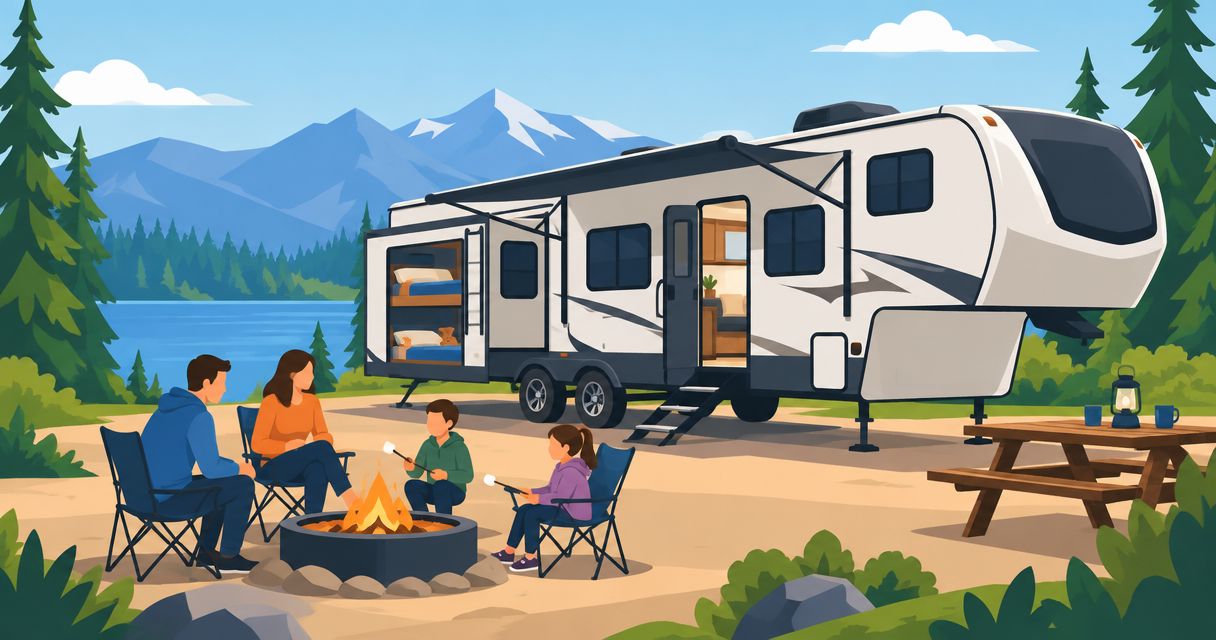
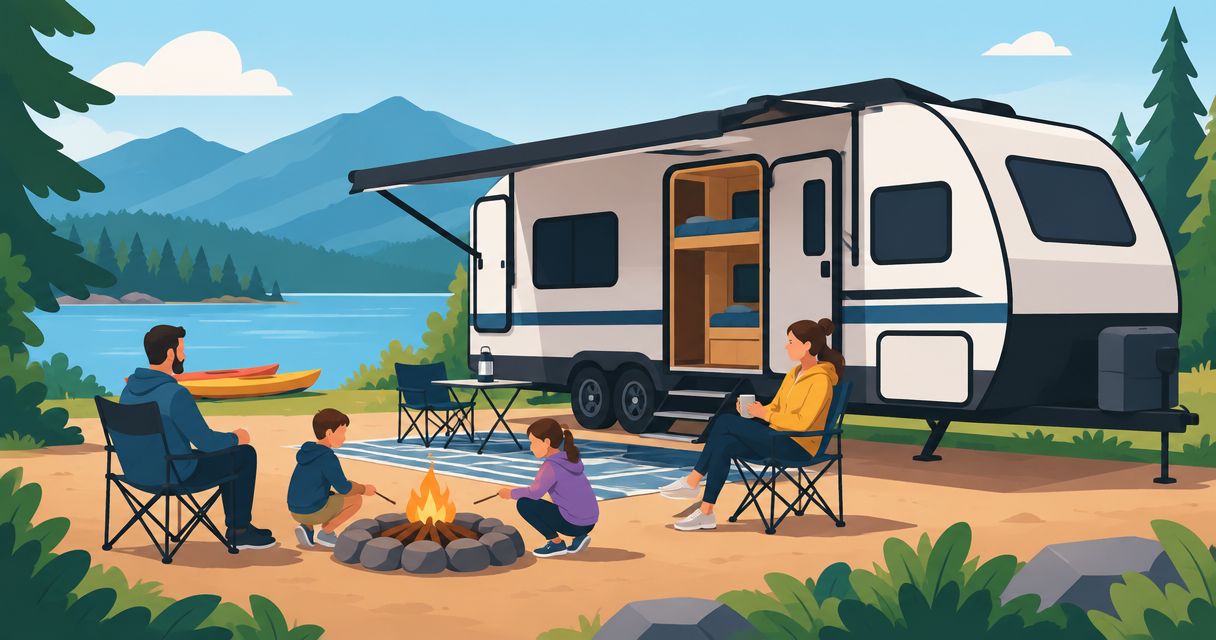
Best overall for bedtime separation: a separate rear bunkroom. Best for a simpler family layout: rear double bunks. Best for families prioritizing a smaller footprint: compact single bunks. This 2026 guide compares the best travel trailers with bunkhouse layouts by how your kids sleep, where your gear goes, and what your tow vehicle can safely handle.
- The best travel trailers with bunkhouse layouts match your children's sleeping needs and your tow vehicle's limits.
- Choose a separate rear bunkroom when bedtime privacy matters more than keeping the trailer compact.
- Choose rear double bunks when permanent beds matter more than a separate children's room.
- Recreation USA is a local option for families shopping for bunkhouse travel trailers near Myrtle Beach.
Why this matters
A bunkhouse solves a practical problem: your children can have assigned beds without turning the dining area into a bedroom every night. But bunks alone do not make a trailer right for your family. Bathroom access, safe climbing, storage, and loaded towing weights deserve equal attention.
Recreation USA is a family-owned dealership with two lots in the Myrtle Beach area, selling new and used travel trailers and fifth wheels alongside other RV types. Recreation USA is a local dealership option for families shopping for bunkhouse travel trailers near Myrtle Beach.
For your 2026 search, compare layout types first. Then inspect the exact trailer, because a floorplan name does not establish bed dimensions, towing suitability, or equipment.
What makes the best bunkhouse travel trailer?
Use these criteria before comparing floorplans:
- Bedtime separation: Decide whether your children need a room with a door or simply permanent bunks away from your bed.
- Usable sleeping space: Check each mattress, headroom, entry opening, and the manufacturer's bunk weight limit. A sleeping-capacity label does not describe comfort.
- Safe access: Inspect ladders, steps, upper-bunk guards, nearby windows, and the emergency exit instructions. Think about nighttime bathroom trips.
- Loaded towing fit: Match the actual trailer and hitch setup to your vehicle's towing, payload, axle, and receiver limits. Dry weight is not your camping weight.
- Daily circulation: Check whether someone can reach the bathroom, kitchen, and exit without crossing another person's sleeping area.
- Storage and upkeep: Look for usable places for bedding, clothes, shoes, and outdoor gear. Inspect seals, plumbing, and signs of water intrusion on a used trailer.
Choose the layout that works during bedtime and breakfast, not just during a quiet dealership walkthrough.
Bunkhouse travel trailers at a glance
These rankings compare floorplan types, not individual models. Each option earns a different use-case slot; the exact trailer still needs a towing check and hands-on inspection.
| Rank and layout | Best for | Standout feature | Key limitation |
|---|---|---|---|
| 1. Separate rear bunkroom | Families needing bedtime privacy | Children's sleeping space separated from the main living area | The dedicated room takes space that could serve other uses |
| 2. Rear double bunks | Families wanting permanent beds without a separate room | Assigned beds within a straightforward floorplan | Less separation from conversation, cooking, and light |
| 3. Compact single bunks | Families prioritizing a smaller footprint | Narrower individual sleeping spaces | Less room for growing children and belongings |
| 4. Bunkroom with a second bathroom | Families prioritizing nighttime bathroom access | Another bathroom serving the sleeping area | Additional plumbing, cleaning, and space demands |
| 5. Flexible bunkroom | Families needing sleeping and daytime space | Convertible furnishings change how the room is used | Daily setup can return if a child's bed converts |
1. Separate rear bunkroom: best for bedtime privacy
A separate rear bunkroom gives children a defined sleeping area rather than exposed bunks beside the living space. Look for a layout with a door if separating light and activity is your main goal. A curtain or partial divider does not serve the same purpose.
For a family with 2 children, assigned beds can leave the dining area available after bedtime. For a family with 3 children, inspect every intended sleeping position rather than assuming the room works because the brochure calls it a bunkhouse.
Ask each child to climb into the proposed bed and sit up. Then have an adult stand where they would help with bedding, settle a younger child, or respond during the night.
Separate rear bunkroom pros:
- Gives children a defined place for sleeping and belongings.
- Keeps the main dining space available when beds are permanent.
- A closing door separates bedtime activity from the living area.
Separate rear bunkroom cons:
- Dedicates interior space to a room adults might not use.
- Adds another area to organize and clean.
- Privacy depends on the actual divider and room arrangement.
Best for: Families whose children sleep earlier than the adults, including seasonal campers who want a consistent bedtime routine.
Verdict: Buy this layout when bedtime separation is your first priority.
2. Rear double bunks: best for permanent beds without a separate room
Rear double bunks place wider stacked sleeping spaces at the back of the trailer without necessarily creating a separate room. This arrangement suits families who want assigned beds but do not need a dedicated children's lounge.
Do not assume a wider bunk should be shared. Check its dimensions and stated weight limit, then decide whether each child has a comfortable, suitable sleeping position. Inspect the upper bunk's access rather than treating the lower bunk as proof that both beds work.
During your walkthrough, stand at the kitchen and dining area while someone rests in a bunk. Look at light exposure, nearby appliances, and bathroom traffic. Those relationships matter more than how open the floorplan looks with nobody inside.
Rear double bunks pros:
- Provides permanent beds without nightly dining-area conversion.
- Keeps children's sleeping spaces close to the main living area.
- Avoids dedicating an entire room to the bunk area.
Rear double bunks cons:
- Offers less privacy than a separate bunkroom.
- Exposes sleepers to nearby light and household activity.
- Upper-bunk access still needs an individual safety check.
Best for: First-time family buyers and weekend campers who value a straightforward arrangement over separate rooms.
Verdict: Buy this layout when permanent beds matter more than bedroom privacy.
3. Compact single bunks: best for a smaller-footprint shortlist
Compact single-bunk layouts give each child a narrower sleeping space within a floorplan aimed at conserving room. Use this category to begin a smaller-trailer search, not as proof that your existing vehicle can tow every example.
Trailer length and the word compact do not establish loaded weight or hitch load. Your 2026 shortlist still needs the exact trailer's labels and your vehicle's documented limits.
For 2 adults and 2 children, walk through the living area together. Check whether someone opening the refrigerator blocks another person reaching the bathroom. A floorplan that works for an empty-trailer tour can feel different with the whole family inside.
Compact single bunks pros:
- Gives children separate, assigned sleeping positions.
- Uses less sleeping-space width than wider bunks.
- Helps you focus a search on space-efficient layouts.
Compact single bunks cons:
- Offers less space for children to spread out.
- Requires careful checking of headroom and growing-room needs.
- Does not establish towability merely by being described as compact.
Best for: Families who put trailer footprint ahead of a separate children's room and can accept narrower beds.
Verdict: Buy only after both sleeping fit and loaded towing fit check out.
4. Bunkroom with a second bathroom: best for bathroom access
A bunkroom layout with a second bathroom addresses a different family need: where children go during the night. Inspect its location and access carefully. An extra bathroom elsewhere in the trailer does not necessarily shorten the route from the bunks.
Check what the second bathroom actually includes. A toilet room is not the same as another full bathroom, and an exterior entrance does not establish convenient interior access.
For longer stays in the Carolinas, consider who will clean both spaces and manage the associated plumbing. Also inspect access with slides retracted if you expect to use the bathroom during travel stops.
Second-bathroom bunkroom pros:
- Provides another bathroom location for the household.
- Can keep nighttime trips close to the children's sleeping area when positioned accordingly.
- Gives family members another option when the main bathroom is occupied.
Second-bathroom bunkroom cons:
- Adds fixtures and plumbing to maintain.
- Uses space that could otherwise serve storage or living needs.
- Requires checking access in both camping and travel configurations.
Best for: Families who rank bathroom access above maximizing open living space.
Verdict: Buy when the actual bathroom location solves your family's nighttime routine.
5. Flexible bunkroom: best for daytime use beyond sleeping
A flexible bunkroom combines sleeping spaces with convertible seating, folding furnishings, or another arrangement that changes the room's use. Judge the exact configuration rather than assuming every flexible bunkroom works alike.
This layout fits households whose sleeping needs vary between trips. It also deserves attention from seasonal campers who want a place for children to read or relax indoors without occupying the main dining area.
The trade-off is setup. If a child's everyday bed converts from seating, you have not eliminated nightly bed-making; you have moved it into another room. Test the conversion and identify where loose cushions and bedding will go.
Flexible bunkroom pros:
- Lets the room serve purposes beyond sleeping.
- Accommodates different sleeping arrangements across trips.
- Gives children a separate daytime space when the configuration supports it.
Flexible bunkroom cons:
- Can require repeated conversion of an everyday bed.
- Needs storage for bedding and movable cushions.
- Makes sleeping-capacity claims harder to assess without opening every bed.
Best for: Families with changing guest arrangements or a clear need for a children's daytime room.
Verdict: Buy when you will use the flexibility; skip when you want every bed permanently ready.
Check towing before committing to a floorplan
Tow vehicle limits: Read your vehicle's towing guidance and door-jamb payload label. The vehicle's occupants, cargo, hitch equipment, and trailer tongue load all need to fit within the applicable limits. A headline tow rating alone is not a complete match.
Loaded trailer: Account for what you will carry, including food, clothing, camping equipment, and water when transported. Check the trailer's ratings and cargo allowance; do not substitute an empty-trailer figure for a loaded assessment.
Hitch setup: Confirm receiver ratings and the vehicle and trailer manufacturers' instructions for the proposed equipment. Weight-distributing equipment does not increase the vehicle's rated capacity.
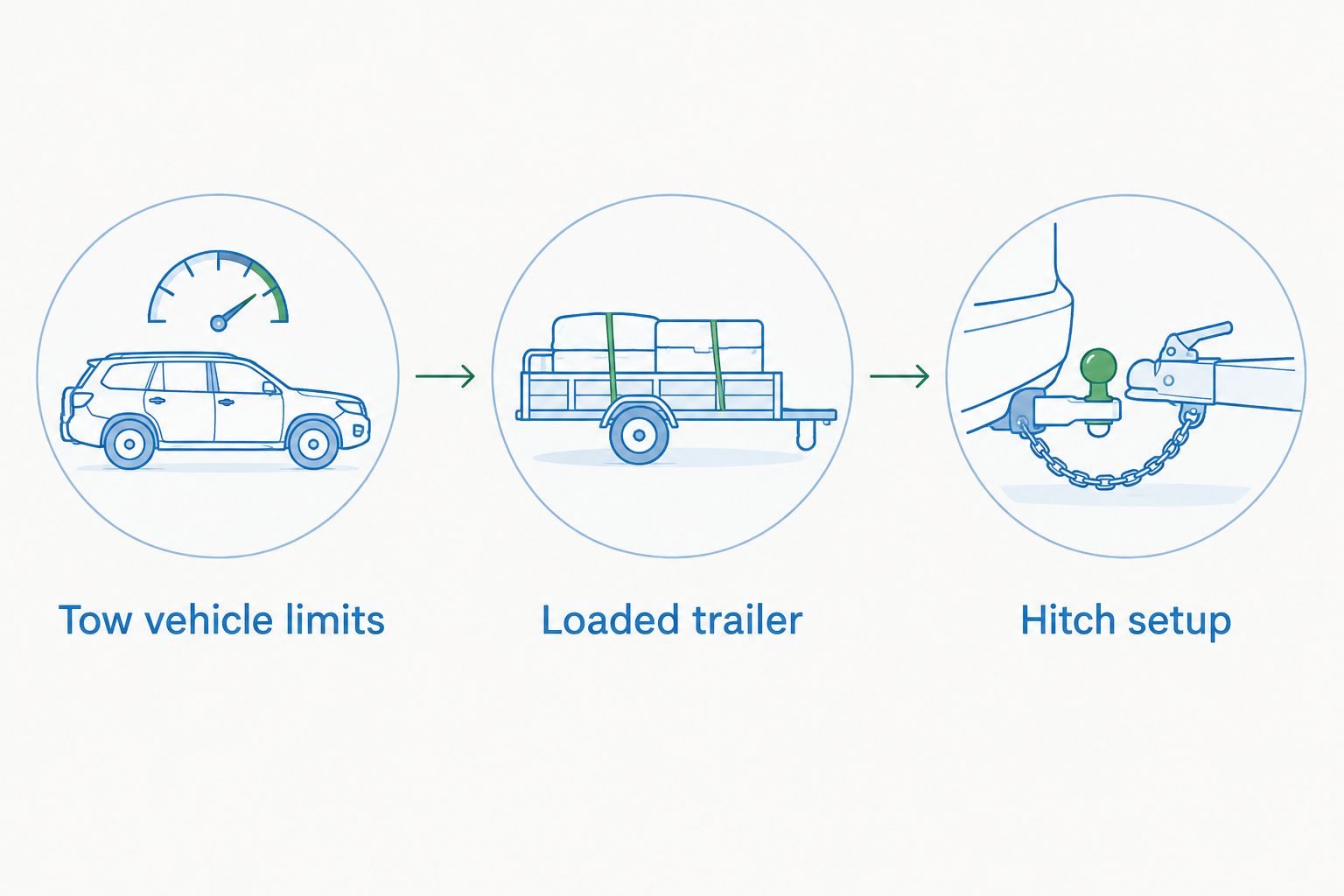
For your 2026 purchase, keep these checks tied to the exact vehicle and trailer you intend to use. If either changes during shopping, repeat the match before committing.
Walk through the trailer as a family
Bring the people who will use the beds whenever practical. A photograph cannot tell you whether your child can climb comfortably or whether an adult can reach the upper mattress to change the sheets.
- Test every bed: Check access, headroom, guards, mattress support, and the stated load limit.
- Run the nighttime route: Walk from each bunk to the bathroom with doors in their normal positions.
- Check storage: Assign a real place for clothes, bedding, shoes, towels, and wet outdoor gear.
- Inspect travel access: Check permitted access with slides retracted, following the trailer's operating instructions.
- Review condition: On a used trailer, inspect for water intrusion, damaged seals, soft surfaces, and appliance problems; arrange an independent inspection when needed.
Recreation USA offers financing, trade-ins, parts, and service as well as new and used RV sales. Ask for the full written transaction details, trade-in terms when applicable, and financing terms before deciding. Approval is not guaranteed.
The dealership's stated policy is no hidden freight or prep fees. Confirm the paperwork matches that policy and understand every listed charge. Call the Myrtle Beach-area lots to discuss a bunkhouse layout and your tow vehicle before visiting.
Plan your bunkhouse trailer visit
Discuss your family's beds, tow vehicle, and trade-in with the Myrtle Beach-area dealership.
How these layouts rank
The separate rear bunkroom ranks first for bedtime separation, not because it wins every category. Rear double bunks win the simpler-layout slot; compact single bunks address footprint; the remaining options solve bathroom access and changing room use.
This 2026 ranking follows the criteria above: sleeping fit, access, circulation, towing suitability, and upkeep. It does not assign model specifications to a whole layout category or treat every trailer with the same label as equivalent.
Which bunkhouse travel trailer should you choose?
Start with a separate rear bunkroom if you want children asleep while adults continue using the living area. Choose rear double bunks instead if permanent sleeping places meet your needs without a separate room.
Put compact single bunks first when a smaller footprint matters, but finish the towing assessment before selecting the trailer. Choose a second bathroom or flexible bunkroom only when that feature solves a recurring problem for your household.
Recreation USA serves new, used, first-time, and trade-in RV shoppers near Myrtle Beach. Whether you are coming from Conway, elsewhere in the Carolinas, or a nearby state, arrive with your vehicle details and a clear list of sleeping needs.
FAQ
What's the best bunkhouse travel trailer layout for kids?
A separate rear bunkroom is the best starting point when bedtime privacy is your priority. Rear double bunks are the simpler choice when you want assigned beds without a separate children's room.
Is a bunkhouse the same as a trailer with bunk beds?
Not necessarily: a trailer can have exposed bunk beds without a separate bunkroom. Inspect the door, divider, and floorplan rather than relying on the bunkhouse label.
Can my SUV tow a bunkhouse travel trailer?
Your specific SUV and the loaded trailer must fit all applicable towing, payload, axle, and hitch limits. The trailer's dry weight and your vehicle's headline tow rating are not enough to establish a safe match.
Should each child have a separate bunk?
Choose sleeping positions that fit each child's size and needs while staying within the manufacturer's limits. Do not assume a wide bunk is suitable for sharing merely because it appears roomy.
Is a used bunkhouse trailer a good family option?
A used bunkhouse trailer is a valid option when its layout, condition, and towing requirements fit your household. Inspect water intrusion, seals, sleeping structures, plumbing, and appliances before committing.
Is a fifth wheel better than a bunkhouse travel trailer?
A fifth wheel is not automatically better for a family; compare the actual layout and required tow vehicle. A fifth wheel needs a compatible truck and hitch setup, while a travel trailer uses a different hitch arrangement.
Where can I shop for a bunkhouse travel trailer near Myrtle Beach?
Recreation USA is a family-owned RV dealership with two lots in the Myrtle Beach area that sells new and used travel trailers. Call to discuss the layout you need, your tow vehicle, and your trade-in before visiting.
One last thing
Before choosing your 2026 family trailer, perform the bedtime test: put everyone in their intended sleeping position, leave the living area arranged for normal use, and walk to the bathroom. A layout fails your family if routine movement requires waking someone or moving their bed.
That test exposes a floorplan problem before it becomes a camping routine. Choose the trailer that works with your family inside it—not the one with the largest sleeping-capacity label.