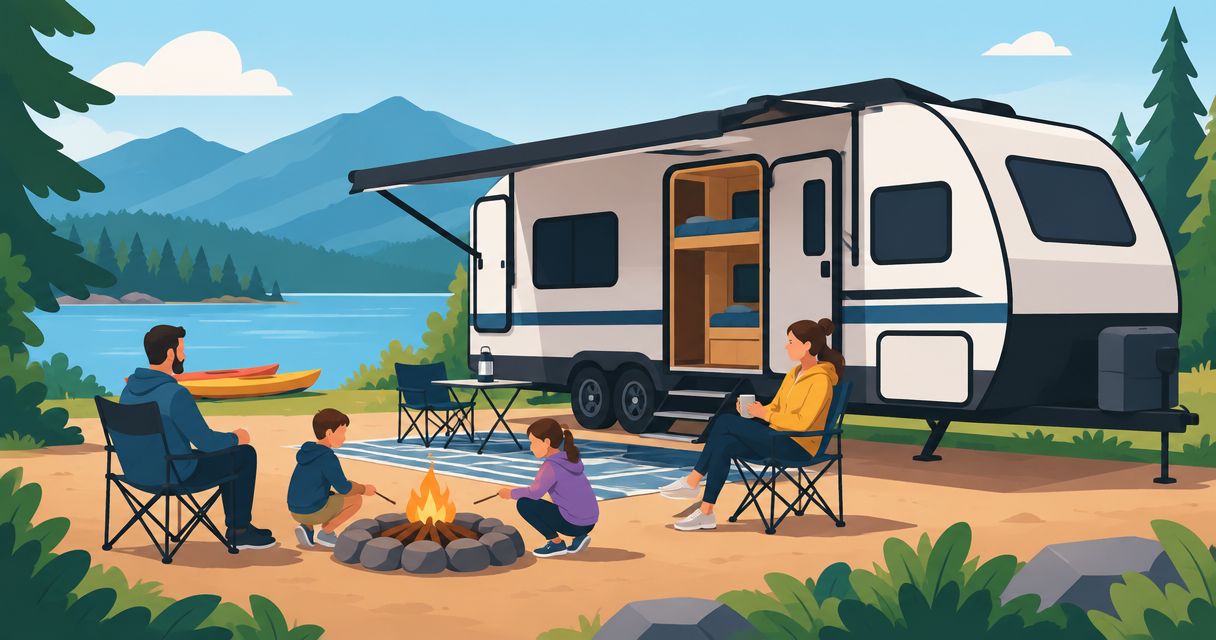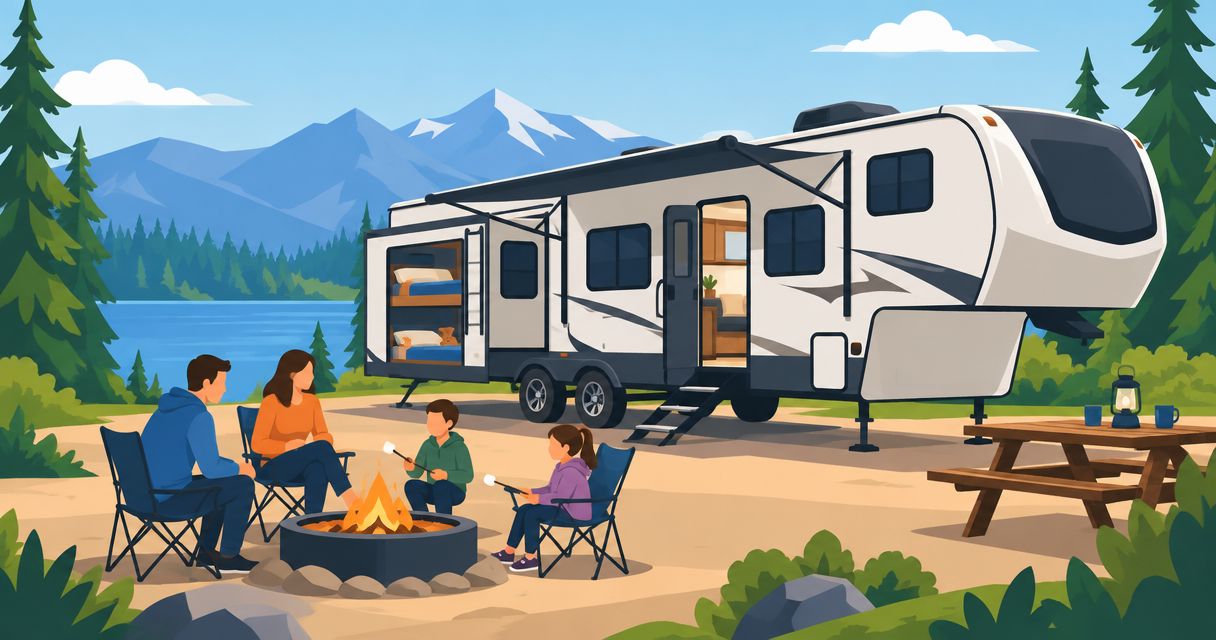
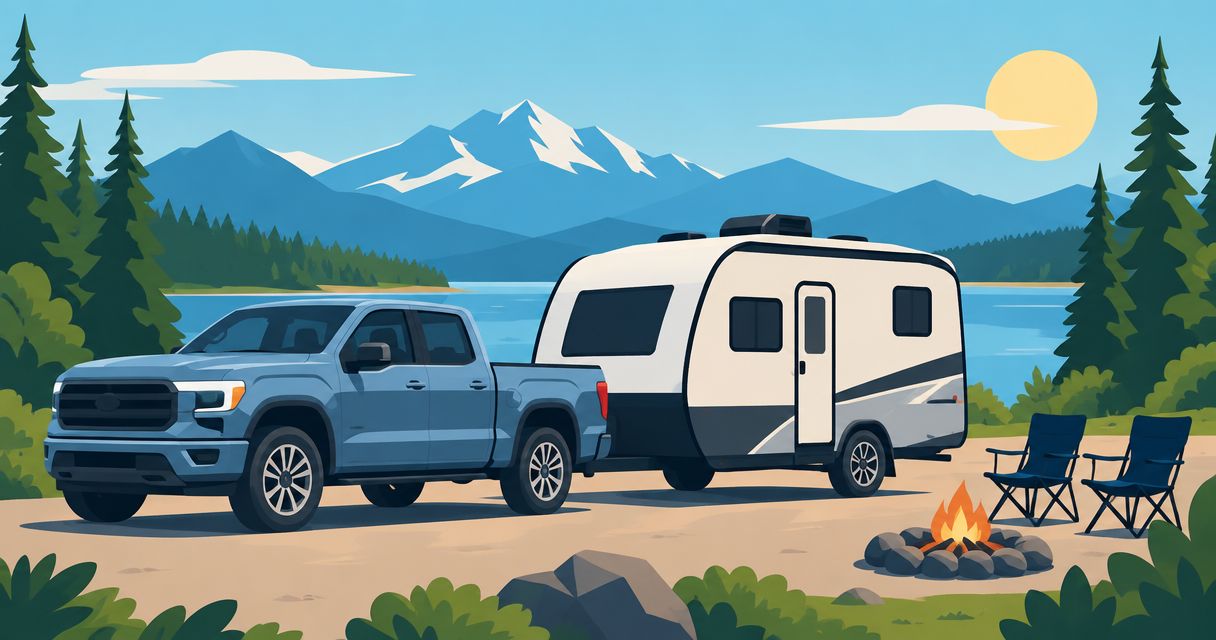
Best overall layout: a compact, no-slide couples trailer. Best for families: a compact bunkhouse. Best for flexible sleeping: a rear-dinette trailer. Best for used-RV shoppers: a compact trailer with documented condition. The best lightweight travel trailers for half ton trucks in 2026 fit your truck’s loaded-weight and payload limits—not just its advertised tow rating.
- The best lightweight travel trailers for half ton trucks fit loaded towing limits, available payload, and your camping needs.
- Choose a compact couples trailer for simplicity, a bunkhouse for separate beds, or a rear dinette for flexible sleeping.
- Recreation USA serves Myrtle Beach-area buyers comparing new and used travel trailers; bring your truck’s ratings before choosing.
- Check loaded tongue weight, hitch requirements, and trailer condition before committing to a floorplan.
Why this matters
A half-ton truck designation does not establish how much trailer your particular truck can handle. Engine, drivetrain, axle ratio, equipment, passengers, and cargo all affect the towing decision. Two trucks with the same model name can have different limits.
Recreation USA is a family-owned travel trailer dealership for buyers comparing new and used RVs near Myrtle Beach. Start your 2026 shopping conversation with your truck’s door-label information and manufacturer towing guide, then compare floorplans that fit those limits.
Choose the truck-and-trailer combination before choosing the furniture. A comfortable interior does not compensate for an overloaded truck, and a lightweight label does not describe what a trailer weighs after you pack it.
What makes the best lightweight travel trailer?
Use these five criteria before treating any trailer as a match:
- Loaded towing fit: Compare the trailer’s expected camping weight with the truck’s applicable trailer-weight limit. Dry weight is only a starting point.
- Payload fit: Account for passengers, truck cargo, hitch equipment, and trailer tongue weight. The truck must also stay within its axle ratings.
- Useful floorplan: Choose beds, seating, storage, and bathroom access around your actual camping routine—not an advertised sleeping capacity alone.
- Manageable dimensions: Check campground space, driveway access, storage, and the trailer manufacturer’s hitch requirements. Length matters even when weight fits.
- Ownership condition: Examine the roof, seals, tires, brakes, appliances, and maintenance records. Apply this check to new and used trailers alike.
These criteria apply whether you camp seasonally in the Carolinas, take occasional weekends away, or plan longer trips. For a 2026 purchase, use the documentation for the exact trailer and truck, not a specification sheet for a similar configuration.
Lightweight travel trailer layouts at a glance
This is a ranking of shopping categories, not a claim that every trailer within a category suits every half-ton truck. Verify each individual RV before buying.
| Rank and option | Best for | Standout feature | Key limitation |
|---|---|---|---|
| 1. Compact no-slide couples trailer | Solo travelers and couples prioritizing simplicity | A dedicated sleeping area without slide operation | Less separation between living spaces |
| 2. Compact bunkhouse | Families needing separate beds | Dedicated bunks reduce nightly bed conversion | More people and gear increase loaded weight |
| 3. Lightweight rear-dinette trailer | Campers prioritizing seating and flexible sleeping | Rear seating can serve more than one purpose | Bed conversion can interrupt daily routines |
| 4. Compact used travel trailer | Buyers prioritizing condition and ownership history | An existing trailer can be evaluated through inspection and records | Hidden damage can outweigh an appealing floorplan |
1. Compact couples trailer: best for simple weekend camping
A compact, no-slide couples trailer is the default starting point for solo travelers and couples. Look for a dedicated main bed, a usable bathroom, and enough seating for the people who actually travel with you. Without a slide, you do not need to operate a slide mechanism to use the living space.
Compact does not automatically mean towable. A smaller trailer still needs a loaded-weight calculation, and storage packed with camping equipment still adds weight.
Compact couples trailer pros:
- A dedicated bed avoids routine dinette-to-bed conversion.
- No slide mechanism means no slide system to inspect or operate.
- A straightforward layout makes it easier to judge everyday access.
Compact couples trailer cons:
- Sleeping and seating choices are less flexible when guests join you.
- Limited interior separation can become frustrating during longer stays.
- Storage needs can outgrow the floorplan before your camping plans change.
Best for: Solo campers, couples, and first-time buyers who value a simple setup more than additional sleeping spaces.
Before choosing a compact couples trailer, sit at the table, open the refrigerator, and walk around the bed. Check whether someone can use the bathroom while another person prepares a meal. Those practical checks reveal more than a wide-angle listing photo.
Verdict: Buy a compact couples trailer if its loaded towing fit is confirmed and the everyday space works for you. Skip it if regular guests require separate beds.
2. Compact bunkhouse: best for families needing separate beds
A compact bunkhouse gives children or other traveling companions dedicated sleeping places. That reduces the need to turn the main seating area into beds each night. Compare the actual bunk dimensions and access rather than relying only on the listed sleeping capacity.
Family towing requires particular attention to payload. Passengers, bags, bikes, food, and hitch equipment all contribute to the combination you take on the road. For your 2026 shortlist, use the travel trailers for families camping in the Carolinas guide to compare family priorities alongside truck fit.
Compact bunkhouse pros:
- Dedicated bunks keep the main seating area available.
- Separate sleeping spaces support different bedtimes.
- A family-focused layout makes sleeping arrangements easier to evaluate.
Compact bunkhouse cons:
- Bunks occupy space that another layout uses for seating or storage.
- Upper-bunk access and manufacturer weight limits need checking.
- Additional passengers and camping gear consume truck payload and trailer capacity.
Best for: Families and regular group campers who need separate beds on most trips.
Bring the usual travelers to the walkthrough when practical. Check ladder access, nighttime bathroom access, and where everyone’s bags will go. A floorplan that sleeps your group but cannot store its belongings is an incomplete fit.
Verdict: Buy a compact bunkhouse when separate beds solve a recurring need and the fully loaded combination fits. Skip it if occasional guests are the only reason you want bunks.
3. Rear-dinette trailer: best for flexible seating and sleeping
A lightweight rear-dinette trailer puts a seating area at the back of the RV. In layouts with a convertible dinette, that space also provides a sleeping option. Check the exact floorplan: the presence of a rear dinette alone does not establish its bed size or conversion method.
This category suits campers who spend time eating, reading, or playing games inside. The trade-off is the work involved when the same space serves as both table and bed.
Rear-dinette trailer pros:
- The dinette provides a defined eating and sitting area.
- A convertible layout gives you an additional sleeping arrangement.
- Multipurpose furniture lets you change how you use the space.
Rear-dinette trailer cons:
- Bed conversion adds a task at bedtime and in the morning.
- Bedding needs a storage location when the table is in use.
- A converted dinette’s dimensions and comfort need a hands-on check.
Best for: Campers who prioritize indoor seating and accept occasional furniture conversion.
Ask to see the dinette converted before deciding. Lie down if it will be your regular bed, inspect cushion support, and identify where the tabletop and bedding go. Do not assume that a listed sleeping space meets your comfort needs.
Verdict: Buy a rear-dinette trailer if seating flexibility matters more than permanent extra beds. Skip it if daily bed conversion will become a nuisance.
4. Compact used trailer: best for inspection-first buyers
A compact used travel trailer belongs on the shortlist when you are willing to judge condition carefully. Choose the layout first, then examine the specific unit’s structure, systems, and records. Model reputation cannot establish the condition of an individual trailer.
Recreation USA sells new and used travel trailers, so you can discuss both routes without assuming one suits every buyer. For a used RV in 2026, condition and towing fit remain separate checks: passing one does not establish the other.
Compact used trailer pros:
- You can inspect the actual RV rather than decide from a floorplan drawing.
- Maintenance records, when supplied, help explain its ownership history.
- A used trailer gives trade-in shoppers another route to a different layout.
Compact used trailer cons:
- Water damage can exist beyond the immediately visible area.
- Incomplete records leave maintenance questions unanswered.
- Repairs or modifications require inspection rather than assumptions about original specifications.
Best for: Used-RV and trade-in shoppers who prioritize documented condition and are prepared to arrange a qualified inspection.
Inspect roof penetrations, wall corners, flooring, storage compartments, and plumbing connections. Ask for demonstrations of appliances and safety-related systems. If a concern remains unresolved, settle it before signing rather than treating it as a small future project.
Verdict: Buy a compact used trailer only after its condition and truck compatibility are established. Wait when structural, braking, or documentation questions remain.
Check your half-ton truck before choosing a trailer
Use this sequence to separate a promising layout from a suitable towing combination.
Truck limits
Find the truck’s payload information, gross vehicle weight rating, axle ratings, and applicable towing limits. Use the manufacturer’s instructions for the exact configuration. Include any limits associated with the receiver and hitch equipment.
Loaded trailer
Account for camping gear, food, batteries, propane, and water rather than treating dry weight as departure weight. Fresh water weighs about 8.3 pounds per US gallon, so carrying water changes the calculation. Verify actual loaded weights on a suitable scale before travel.
Tongue weight
Conventional travel trailers commonly require loaded tongue weight around 10% to 15% of loaded trailer weight; follow the trailer and hitch manufacturers’ instructions for your combination. Tongue weight uses part of the truck’s available payload. A weight-distributing hitch does not increase the truck’s manufacturer ratings.
Hitch setup
Confirm the receiver, hitch components, brake controller, electrical connection, and setup requirements. Then verify loaded axle weights and the combination’s other limits. Do not use a favorable tow rating to dismiss an unfavorable payload or axle calculation.
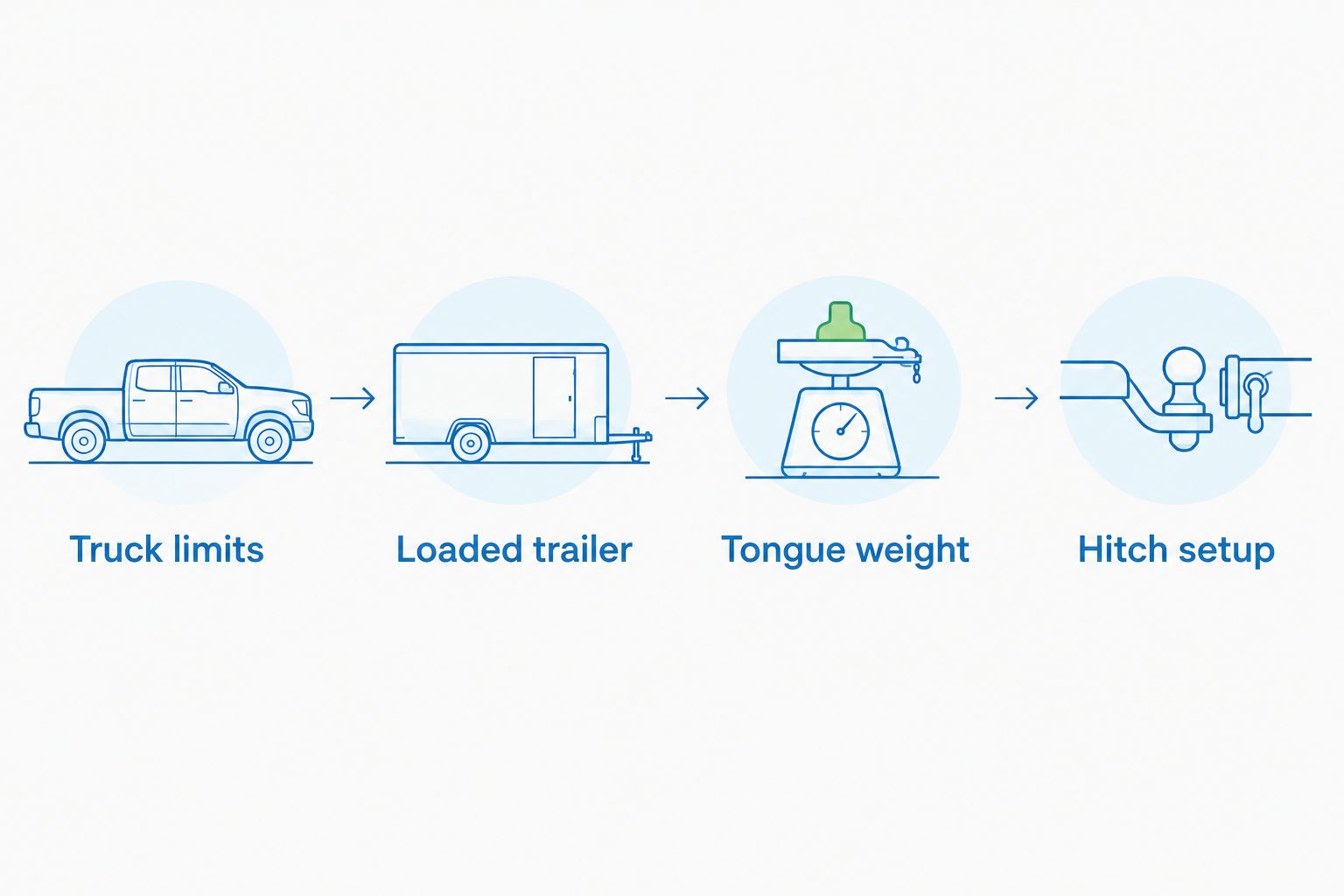
Bring these documents when you shop in Myrtle Beach, Conway, or elsewhere in the Carolinas. They give the conversation a concrete starting point and help you reject unsuitable trailers before spending time on interior choices.
How this ranking works
The compact couples trailer ranks first as the simplest starting layout for buyers without a recurring need for extra beds. The bunkhouse wins for separate sleeping spaces, while the rear dinette wins for flexible seating. The used-trailer category prioritizes inspection and ownership history.
This ranking does not certify individual models for half-ton towing. Your truck’s limits, the specific trailer’s documentation, and measured loaded weights determine the final match.
Which lightweight travel trailer should you choose?
Start with a compact, no-slide couples trailer unless your regular camping group needs dedicated extra beds. Choose a bunkhouse for that recurring sleeping need, or a rear dinette when flexible seating matters more. Consider used examples of the layout you prefer, but keep inspection standards separate from floorplan preferences.
For your 2026 purchase, call Recreation USA’s Myrtle Beach-area lots with your truck information and camping requirements. The dealership is family-owned and offers financing, trade-ins, parts, and service; ask about your specific transaction rather than assuming financing approval or service coverage.
Compare trailers that fit your truck
Bring your truck ratings, passenger needs, and preferred floorplan to your Myrtle Beach-area shopping conversation.
FAQ
What are the best lightweight travel trailers for half ton trucks?
The best starting choices are compact couples trailers, compact bunkhouses, and lightweight rear-dinette layouts that fit your specific truck. Confirm loaded trailer weight, tongue weight, payload, axle ratings, and hitch requirements before choosing an individual RV.
Can every half-ton truck tow a lightweight travel trailer?
No; a half-ton designation and a lightweight label do not establish compatibility. Use the truck’s exact configuration, manufacturer ratings, and the trailer’s loaded weights to evaluate the combination.
Should I use dry weight or loaded weight when choosing a trailer?
Use loaded weight for the towing decision. Dry weight does not represent all the water, supplies, equipment, and belongings you carry for camping.
Is a bunkhouse better than a couples trailer for family camping?
A bunkhouse is better when your regular traveling group needs separate beds. A couples trailer is the simpler choice when additional sleepers are uncommon and its seating arrangement meets your needs.
Does a weight-distributing hitch increase my truck’s towing capacity?
No; a weight-distributing hitch does not increase the truck’s manufacturer ratings. Follow the truck, trailer, receiver, and hitch instructions, and verify the loaded combination’s axle and weight limits.
Is a used lightweight travel trailer a good choice in 2026?
A used lightweight travel trailer is a valid choice when its condition and towing compatibility are established. Inspect for water damage, check tires and braking equipment, review available records, and arrange qualified inspection where needed.
What should I bring when shopping for a travel trailer near Myrtle Beach?
Bring your truck’s payload information, applicable towing ratings, passenger and cargo requirements, and preferred sleeping arrangement. Recreation USA can discuss new and used travel trailers, trade-ins, financing, parts, and service without replacing the manufacturer’s towing limits.
One last thing
Check bathroom, refrigerator, and bed access in the trailer’s travel position before buying. A floorplan that works at a campsite can be inconvenient during a roadside stop, particularly when furniture or slides obstruct access. Make the salesperson show you the configuration you will actually tow.