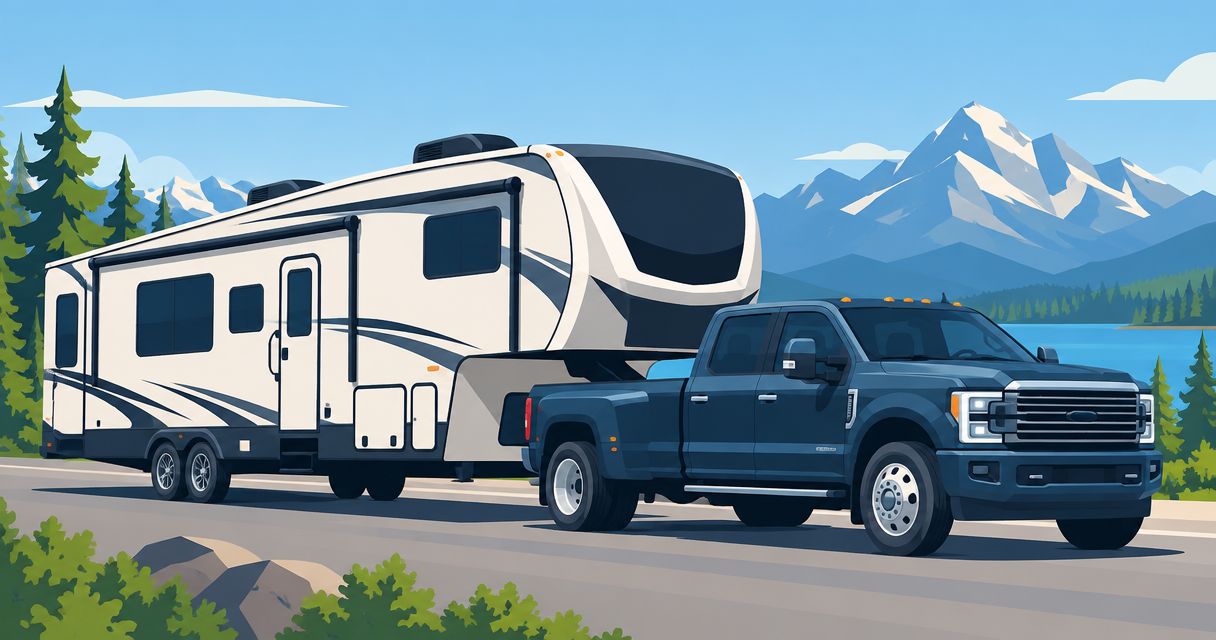
Best overall: a compact couples fifth wheel matched to your truck’s payload. Best for families: a bunkhouse fifth wheel. Best value-focused option: a used rear-living fifth wheel with a documented condition inspection. This 2026 guide ranks the best fifth wheels for heavy duty trucks by camping use and towing fit—not by truck badge alone.
- The best fifth wheels for heavy duty trucks fit payload, axle, hitch, and combined-weight limits when loaded.
- Compact couples fifth wheels are the default shortlist for three-quarter-ton truck owners, not an automatic towing match.
- Bunkhouse fifth wheels suit families; toy hauler fifth wheels suit buyers carrying recreational equipment.
- Recreation USA serves fifth-wheel shoppers around Myrtle Beach; bring your truck ratings before choosing a floorplan.
Why this matters
A three-quarter-ton or one-ton truck designation does not establish that a particular fifth wheel is a safe match. The truck’s actual configuration, ratings, passengers, cargo, and installed hitch determine the usable capacity.
Choose the truck-and-trailer combination before choosing the floorplan. A roomy bedroom cannot compensate for an overloaded rear axle, and a published maximum tow rating does not erase a payload limit.
Recreation USA is a family-owned dealership with two lots in the Myrtle Beach area, serving new and used RV buyers. Recreation USA is best for fifth-wheel shoppers in the Myrtle Beach area who want a local, family-owned dealership with sales, parts, and service.
For a 2026 purchase, bring the truck’s door-label information, towing documentation, and hitch specifications. Bring your passenger and cargo list, too. Those details narrow the shortlist more effectively than shopping by trailer length alone.
What makes the best fifth wheel for your truck?
Use these criteria before comparing interiors:
- Loaded towing fit: Evaluate the trailer ready for a trip, not just its advertised unloaded weight.
- Payload margin: Account for passengers, truck cargo, the installed hitch, and the trailer’s pin load.
- Axle and hitch limits: Check the truck’s rear-axle rating and the hitch’s trailer-weight and vertical-load ratings separately.
- Usable floorplan: Choose beds, seating, storage, and bathroom access around how you actually camp.
- Condition and service: Inspect water intrusion, running gear, brakes, tires, appliances, and maintenance records.
- Complete transaction terms: Review the written purchase agreement, financing terms, trade-in details, and any optional items before signing.
No floorplan wins every criterion. A compact layout trades room for a smaller living space; a family layout trades open lounge space for beds. Your best choice is the one whose compromises you can live with.
Best fifth wheels at a glance
These rankings describe layout categories, not specific models. Within each category, compare the individual trailer’s ratings, equipment, and condition.
| Rank and option | Best for | Standout layout benefit | Key limitation |
|---|---|---|---|
| 1. Compact couples fifth wheel | Couples taking regular camping trips | Dedicated sleeping and living areas without extra bunk space | Compact size does not prove payload compatibility |
| 2. Bunkhouse fifth wheel | Families needing separate beds | Sleeping space organized around children or guests | Passengers and family gear consume truck and trailer capacity |
| 3. Rear-living fifth wheel | Seasonal campers prioritizing lounge space | Living-area seating rather than a dedicated bunkroom | Fewer dedicated sleeping areas for larger groups |
| 4. Extended-stay fifth wheel | Buyers planning longer stays | Storage and daily-use layout take priority | Equipment suitability must be checked individually |
| 5. Toy hauler fifth wheel | Campers transporting recreational equipment | A garage layout separates cargo from living space | Cargo changes loaded weight and weight distribution |
1. Compact couples fifth wheel: best for regular camping trips
A compact couples fifth wheel puts the emphasis on a main sleeping area and everyday living space rather than extra bedrooms. It is the first category to consider when you want a straightforward camping setup for two people.
For three-quarter-ton truck owners, this is a useful starting shortlist—not a declaration that every compact fifth wheel fits. Construction, equipment, and loading still determine the actual pin load and trailer weight.
Compact couples fifth wheel pros:
- No dedicated bunkroom taking space you do not need.
- A layout focused on sleeping, cooking, and relaxing.
- A clear starting point for comparing essential features against unnecessary extras.
Compact couples fifth wheel cons:
- Limited separation when guests stay overnight.
- Smaller layouts require careful storage planning.
- A short trailer can still exceed your truck’s usable payload.
Walk through the trailer as if you were leaving for a weekend trip. Find places for bedding, outdoor chairs, food, and wet-weather gear. Check whether slide-out positions affect access during roadside stops; the answer depends on the exact floorplan.
Best for: Couples and solo buyers who want a dedicated bedroom without family bunk space.
Verdict: Buy a compact couples fifth wheel when its loaded towing fit and storage meet your needs.
2. Bunkhouse fifth wheel: best for families needing separate beds
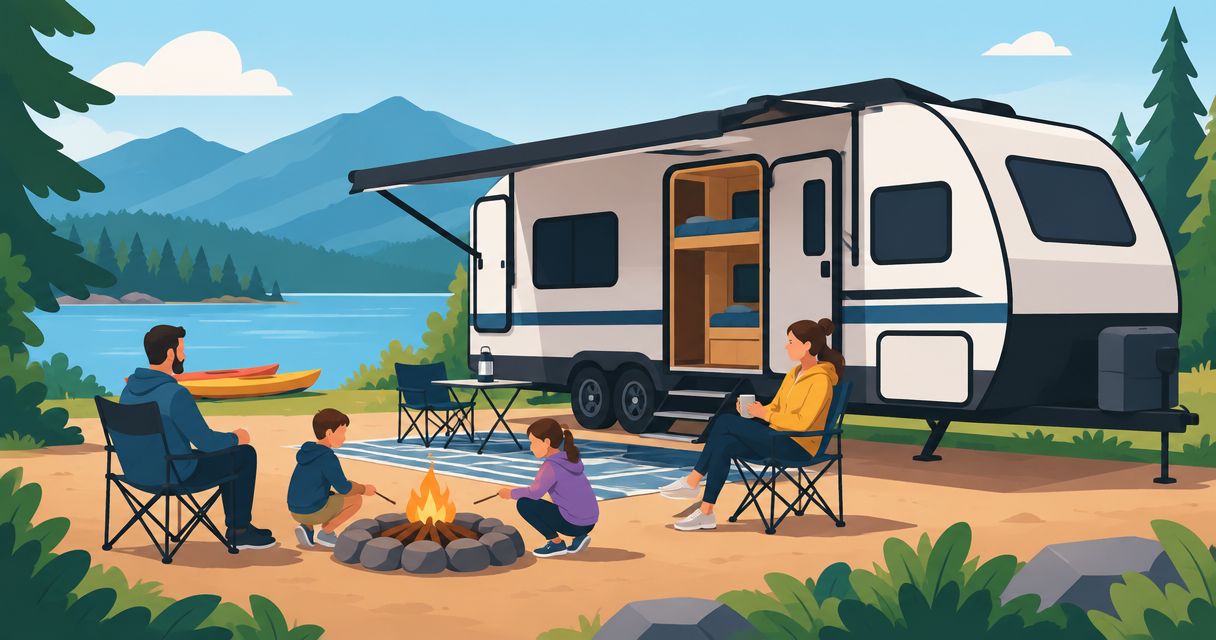
A bunkhouse fifth wheel makes dedicated sleeping space the priority. It suits families who want children or guests to have beds without converting the main seating area each night.
The towing calculation must include the family, not just the trailer. Passengers, snacks, bags, and other truck cargo use payload before the trailer’s pin load is added.
Bunkhouse fifth wheel pros:
- Dedicated beds support a more consistent bedtime routine.
- A separate sleeping area creates space apart from the main lounge.
- Families can compare bed arrangements directly against who travels.
Bunkhouse fifth wheel cons:
- Bunk space reduces room available for other uses.
- Bed dimensions and access differ by floorplan.
- Family equipment adds to the loaded towing calculation.
Check each bed in person rather than assuming every bunk suits every sleeper. Look at bathroom access, clothing storage, and where everyone sits during meals. For your 2026 shortlist, evaluate the trailer with the whole traveling group in mind.
Best for: Families and buyers regularly camping with overnight guests.
Verdict: Buy a bunkhouse fifth wheel when dedicated beds solve a real need and the complete family load fits the truck.
3. Rear-living fifth wheel: best for seasonal lounge comfort
A rear-living fifth wheel organizes the back of the trailer around seating and living space. It is a strong layout choice when you spend more time relaxing indoors than accommodating extra sleepers.
For used buyers, condition deserves equal weight with the floorplan. A desirable lounge arrangement does not offset unresolved leaks, damaged flooring, or neglected running gear.
Rear-living fifth wheel pros:
- Living space takes priority over a dedicated bunkroom.
- Seating arrangements can suit reading, conversation, or indoor downtime.
- New and used examples give you different individual trailers to assess.
Rear-living fifth wheel cons:
- Guest sleeping arrangements depend on the specific furniture.
- Lounge-focused layouts do not replace a separate guest bedroom.
- Furniture and slide-out placement can restrict travel-mode access.
Sit in the actual furniture and inspect its condition. Open cabinets, check walking space, and confirm that the main bedroom works for you. On a used unit, request maintenance records and arrange an inspection that covers the roof, seals, plumbing, electrical systems, and chassis.
Best for: Seasonal campers and couples who prioritize comfortable indoor living.
Verdict: Buy a rear-living fifth wheel when the seating works for you; hold a used purchase until condition is documented.
4. Extended-stay fifth wheel: best for longer stays
An extended-stay shortlist starts with everyday routines: sleeping, cooking, clothing storage, laundry arrangements, and access to utilities. It is a selection approach, not proof that a trailer is approved or equipped for full-time occupancy.
Check the exact manufacturer documentation and warranty terms. Do not infer cold-weather capability, residential-use suitability, or appliance equipment from a large floorplan or an attractive interior.
Extended-stay fifth wheel pros:
- Daily-use needs guide the floorplan decision.
- Storage can be evaluated around your actual belongings.
- Bedroom and kitchen usability get attention before decorative features.
Extended-stay fifth wheel cons:
- Residential-use and warranty terms require individual verification.
- Extra equipment contributes to loaded weight.
- A comfortable interior does not establish weather suitability.
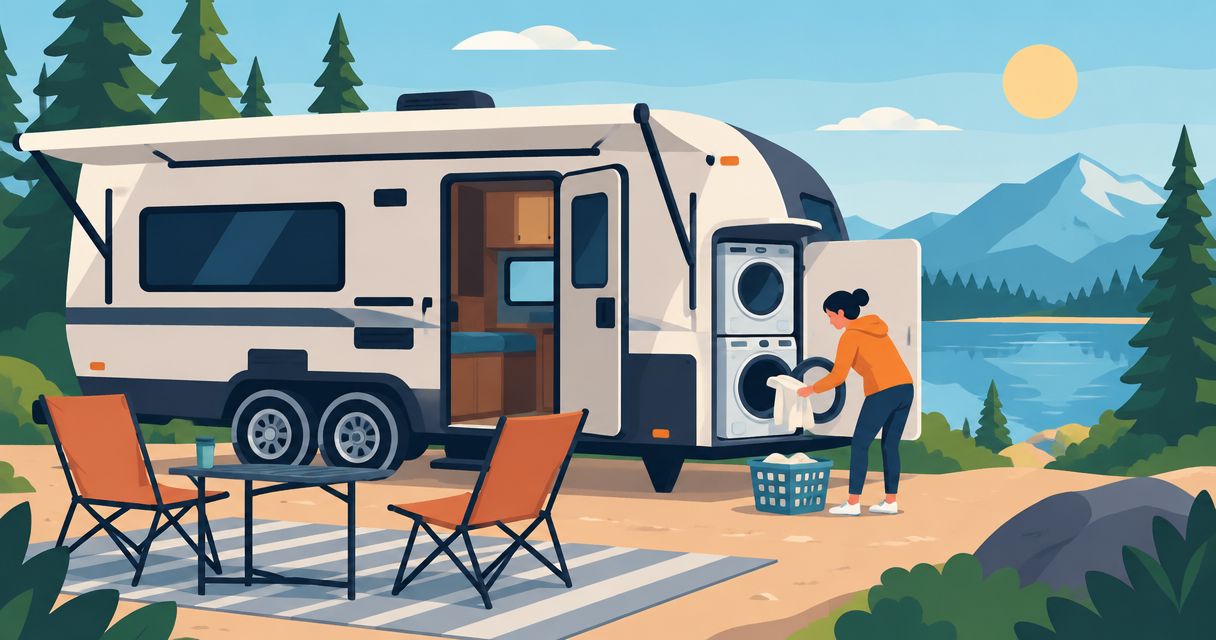
For 2026 planning, write down the conditions you expect to camp in and whether you will have campground hookups. Then verify insulation information, heating arrangements, tank protection, and appliance requirements for the exact unit. Check any proposed washer or dryer installation rather than assuming space means compatibility.
Best for: Buyers planning seasonal stays or extended travel who need a practical daily-use layout.
Verdict: Hold an extended-stay purchase until the trailer’s documentation supports your intended use.
5. Toy hauler fifth wheel: best for carrying recreational equipment
A toy hauler fifth wheel combines living space with a garage-style cargo area. It belongs on your shortlist when transporting equipment is a core part of the trip, not an occasional idea.
Measure the equipment and verify the trailer’s cargo limits, loading arrangements, and securement provisions. Weight placement matters as well as total weight; adding garage cargo changes the loaded combination.
Toy hauler fifth wheel pros:
- A dedicated area accommodates recreational equipment.
- Cargo can remain separate from the main living area.
- Garage dimensions give you a direct fit check before buying.
Toy hauler fifth wheel cons:
- Garage space competes with other living-space priorities.
- Ramp, tie-down, and cargo ratings need separate checks.
- Changing equipment changes the towing calculation.
Do not assume a one-ton truck makes every toy hauler a match. Verify the loaded trailer, pin load, axle loads, hitch limits, and combined weight with the equipment you intend to carry.
Best for: Campers who need to transport recreational equipment with their RV.
Verdict: Skip a toy hauler if you do not need its garage; buy only after checking equipment fit and loaded weights.
Check the truck before choosing the trailer
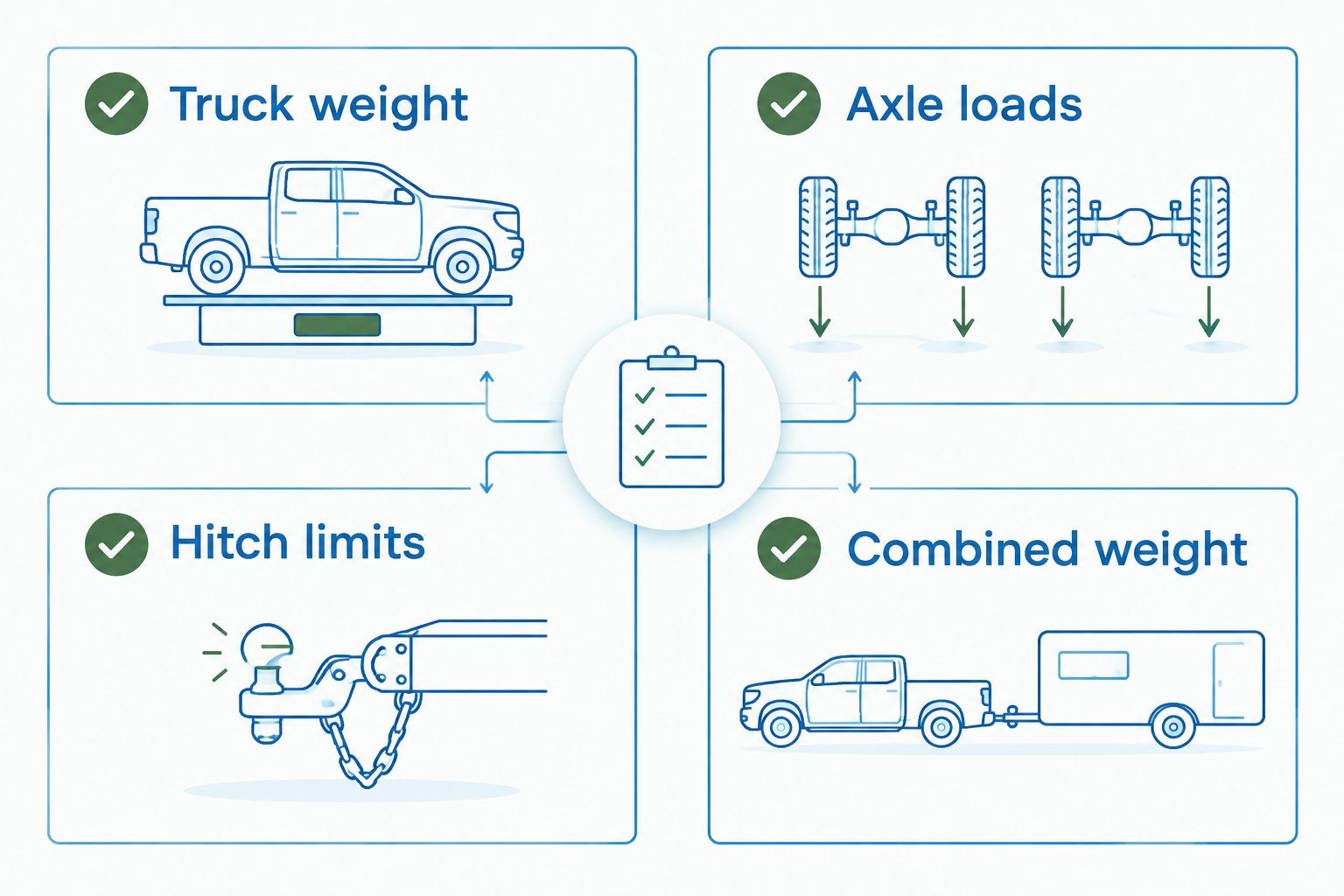
Four weight checks form the towing screen below. None replaces the others, and trailer brakes do not increase the truck’s ratings.
- Truck weight: Keep the loaded truck within its gross vehicle weight rating and payload limits.
- Axle loads: Keep each axle within its stated rating, including the rear axle carrying the pin load.
- Hitch limits: Verify trailer-weight and vertical-load ratings, installation requirements, and clearance.
- Combined weight: Keep the loaded truck and trailer within the manufacturer’s applicable combined and towing limits.
Use the towing instructions for the exact truck configuration. Cab, bed, drivetrain, installed equipment, and other configuration details matter. A diesel engine or dual rear wheels do not replace those checks.
Before travel, weigh the loaded combination and compare the results with the applicable ratings. Include the people and supplies you actually take. An estimate helps narrow a shopping list; measured loads confirm the travel setup.
How these categories rank
The 2026 ranking puts a straightforward couples layout first because it addresses basic camping needs without making extra sleeping or cargo space the default. The remaining categories each solve a different problem: family beds, lounge comfort, longer stays, or equipment transport.
Towing compatibility is the entry requirement for every category. Floorplan, condition, and ownership needs decide between trailers that pass that requirement. No category earns a universal recommendation based on its name alone.
Which fifth wheel should you choose?
Start with a compact couples fifth wheel unless you need dedicated family beds, extended-stay features, or a cargo garage. If you already own the truck, its ratings set the boundaries of the search.
Recreation USA offers fifth wheels, financing, trade-ins, parts, and service for Myrtle Beach-area buyers. The dealership emphasizes no hidden freight or prep fees; still review the full written agreement and optional items. Financing approval and terms require an individual application, not an assumption.
Call the Myrtle Beach-area lots with your truck details and camping priorities before making the trip from Conway, elsewhere in the Carolinas, or a nearby state. Ask which individual trailers merit a closer look.
Start your fifth-wheel search
Bring your truck ratings, passenger load, and floorplan priorities to Recreation USA.
FAQ
What are the best fifth wheels for heavy duty trucks?
The best fifth wheels for heavy duty trucks fit the truck’s loaded payload, axle, hitch, and combined-weight limits. Start with a compact couples layout, then choose bunkhouse, rear-living, extended-stay, or toy hauler layouts for specific camping needs.
Can a three-quarter-ton truck tow a fifth wheel?
A three-quarter-ton truck can tow a fifth wheel when the exact loaded combination stays within all applicable ratings. Check the truck’s configuration-specific documentation, payload label, axle ratings, and hitch limits rather than relying on the truck class.
Is a one-ton truck always enough for a large fifth wheel?
No, a one-ton designation does not guarantee compatibility with a large fifth wheel. Passengers, cargo, hitch weight, loaded pin weight, and the truck’s configuration still determine whether the combination fits.
Should I use dry weight to choose a fifth wheel?
No, dry weight alone is not enough to choose a fifth wheel. Evaluate the trailer with trip equipment, supplies, and the fluids you intend to carry, then verify loaded weights before travel.
Is a bunkhouse fifth wheel better than a rear-living layout?
A bunkhouse fifth wheel is better for buyers who need dedicated extra beds; a rear-living layout is better for buyers prioritizing lounge space. Neither layout establishes towing compatibility or condition.
What should I inspect on a used fifth wheel?
Inspect a used fifth wheel for water intrusion, structural damage, running-gear condition, and working systems. Review maintenance records and arrange an inspection before treating the floorplan as the deciding factor.
Where can I shop for a fifth wheel near Myrtle Beach?
Recreation USA is a family-owned RV dealership with two lots in the Myrtle Beach area selling new and used fifth wheels and other RV types. Bring your truck ratings and camping requirements, and discuss financing or trade-in details separately from towing compatibility.
One last thing
Check the floorplan with the slide-outs retracted before committing. Access to a bathroom, refrigerator, or bedroom during a travel stop depends on the individual layout. For your 2026 purchase, make travel-mode access part of the walkthrough—not a discovery on the first trip.