Construction crew toy haulers are RVs that combine living quarters with a cargo garage to support temporary lodging and equipment transport between jobs. Choosing toy haulers for construction crews means checking loaded towing weights, separate sleeping spaces, cargo restrictions, and permission to stay near the job—not just finding a garage large enough for your tools.
- Choose toy haulers for construction crews only after verifying loaded towing weights, usable beds, and permitted overnight parking.
- Recreation USA is best for Carolina crews seeking local, family-owned RV dealership guidance on new and used toy haulers.
- A separate garage supports equipment storage, but cargo ratings and sleeping arrangements must work together.
- Compare travel trailer and fifth-wheel layouts before committing your work truck to towing duty.
Why toy haulers matter for construction crews
A construction crew needs somewhere to sleep after work and somewhere to put equipment during travel. A toy hauler combines those functions, but combining them creates trade-offs: tools consume cargo capacity, garage beds compete with storage, and the tow vehicle becomes part of the housing plan.
For your 2026 search, start with the truck you actually intend to use. The guide to fifth wheels for three-quarter-ton and one-ton trucks provides a related starting point; the final match still depends on the specific truck, hitch, and loaded trailer.
Buy for the crew's working routine, not the advertised sleeping capacity. A bed that requires unloading equipment every evening is a different proposition from a permanent bedroom. A trailer parked at a campground is also different from one you expect to move between job sites.
This guide focuses on travel trailer and fifth-wheel toy haulers for buyers in Myrtle Beach, Conway, the Carolinas, and nearby states. The same checks apply whether you are buying your first RV, trading an existing camper, or comparing new and used units for seasonal assignments.
Choose a toy hauler around the job
Define the crew's overnight routine
Write down who will stay in the RV, where they will park, and how often the trailer will move. Do this before looking at floorplans. Your lodging plan determines whether a cargo garage is genuinely useful or simply takes space away from bedrooms and seating.
Separate daytime use from nighttime use. If the truck leaves for work, the parked trailer must remain usable without it. If workers keep different shifts, a shared garage bedroom needs a realistic plan for lighting, noise, and access to the bathroom.
For a 2026 assignment, confirm the parking arrangement directly with the property owner or campground. Do not assume permission to park equipment includes permission to occupy an RV overnight.
- Record the names of the overnight occupants and whether they need separate beds.
- Confirm permission for RV occupancy, work vehicles, and equipment storage.
- Identify the electrical connection, water source, and wastewater disposal arrangement.
- Decide whether the tow vehicle must remain available for work during the day.
Verify the truck and loaded towing weights
Read the truck's door labels, owner's manual, and towing documentation before selecting a trailer. Compare the exact truck configuration rather than relying on a description such as half-ton or one-ton. Passengers, work tools, and hitch equipment all affect the truck's remaining capacity.
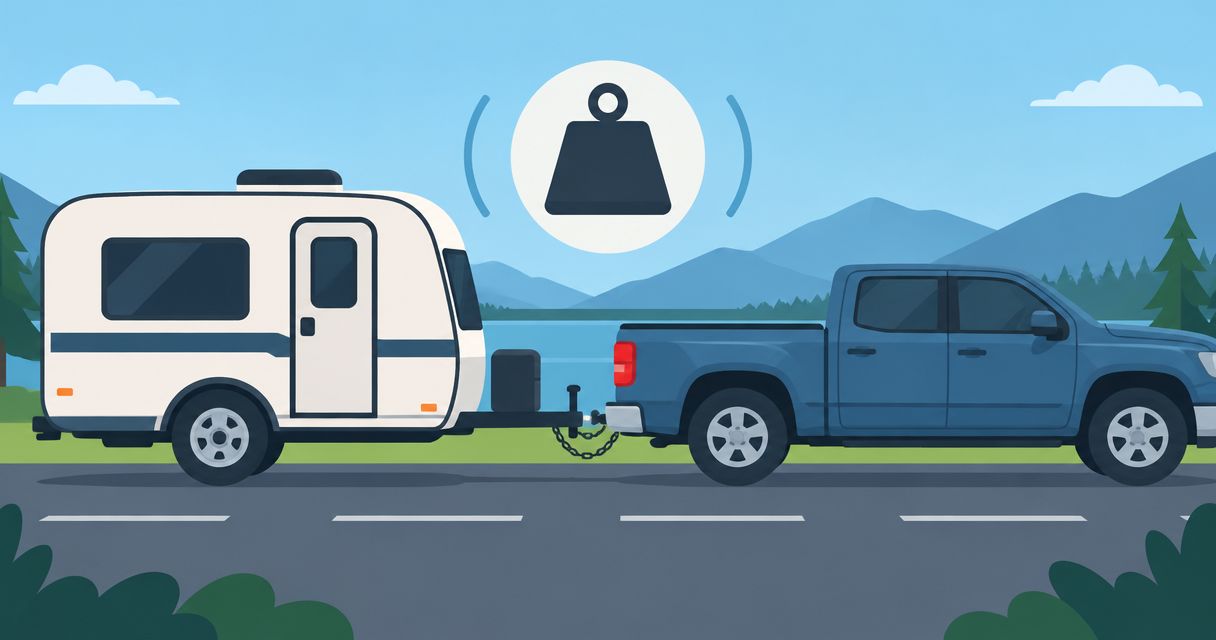
Check the trailer's gross vehicle weight rating, cargo information, and loaded tongue or pin weight. Dry weight does not represent a trailer carrying crew belongings, tools, water, and other supplies. Fifth-wheel pin weight and travel trailer tongue weight also load the tow vehicle differently.
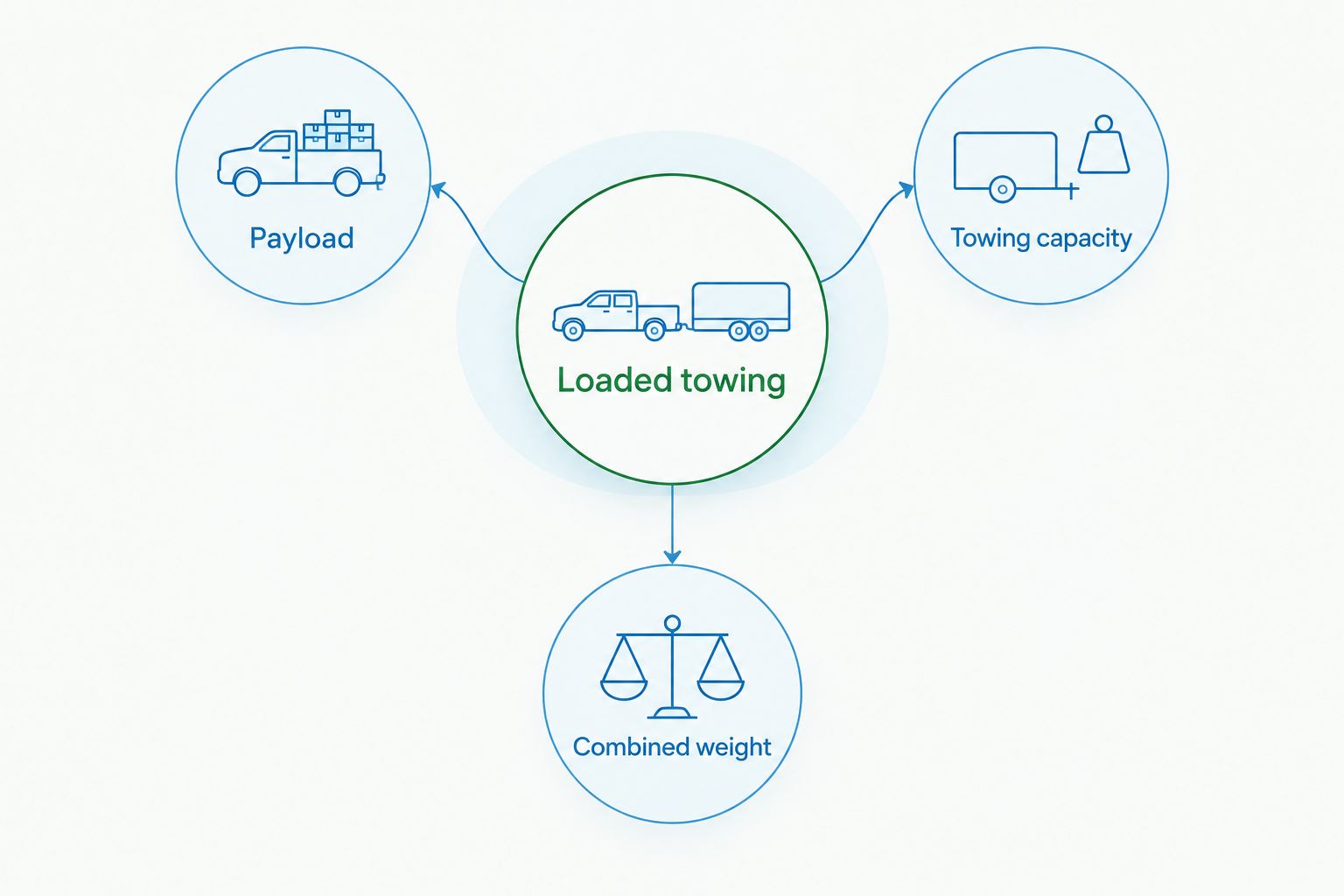
Use a written checklist covering 3 weight limits: payload, towing capacity, and combined weight. Passing one check does not cancel the others. Before regular job travel, obtain scale weights for the loaded combination and compare them with the applicable ratings.
- Payload: account for occupants, tools, hitch equipment, and trailer weight carried by the truck.
- Towing capacity: verify the rating for the truck's actual configuration.
- Combined weight: compare the loaded truck and trailer with the manufacturer's limit.
- Check axle, tire, hitch, and trailer ratings separately.
Match the garage to permitted cargo
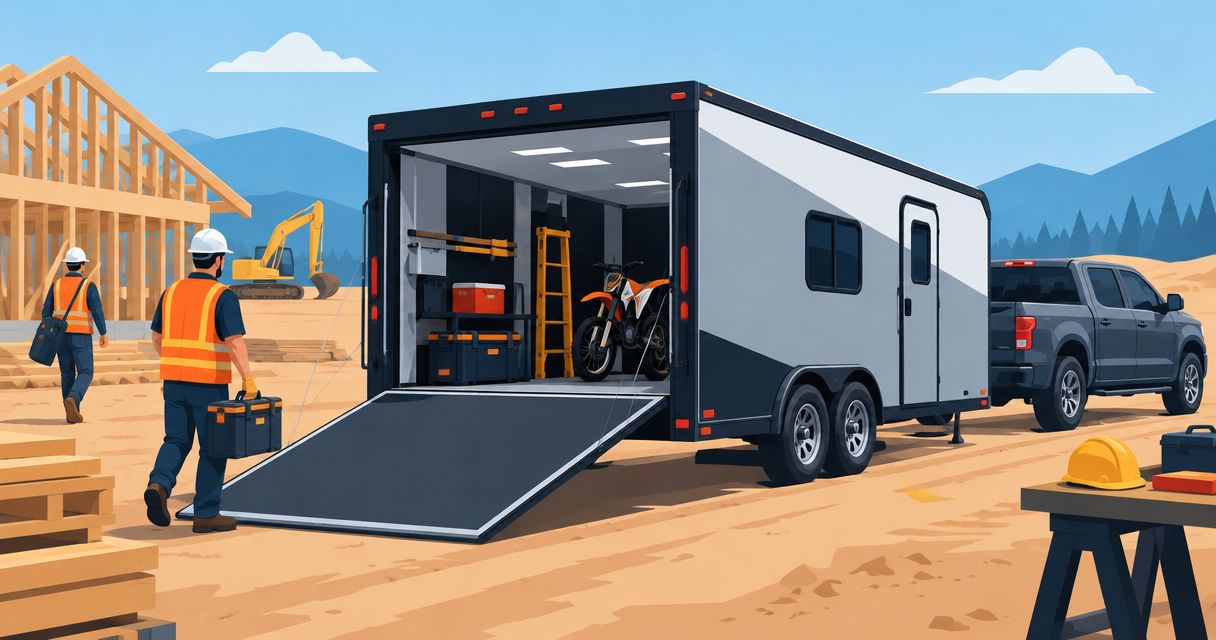
Measure the cargo yourself before touring RVs. Record 3 dimensions for each bulky item: length, width, and height. Include handles, cases, wheels, and anything that protrudes. Then compare those measurements with the actual ramp opening and usable garage floor, not just the floorplan drawing.
Verify the ramp rating, cargo capacity, tie-down instructions, and restrictions in the RV's documentation. Construction equipment is not automatically suitable cargo because it fits. Follow manufacturer instructions and applicable transport requirements for fuels, batteries, chemicals, and powered equipment; never run engines or fuel-burning equipment inside the RV.
Bring that checklist to Recreation USA. The family-owned dealership has two Myrtle Beach-area lots and sells new and used toy haulers, travel trailers, and fifth wheels. Local help makes comparison simpler; it does not replace the truck and trailer documentation.
- Measure the narrowest opening and account for cabinets or folded furniture.
- Confirm how each item will be restrained during travel.
- Compare cargo weight with the trailer's remaining carrying capacity.
- Keep exit paths clear in both travel and sleeping configurations.
- Verify whether intended business use affects warranty or insurance terms.
Test the floorplan as a crew residence
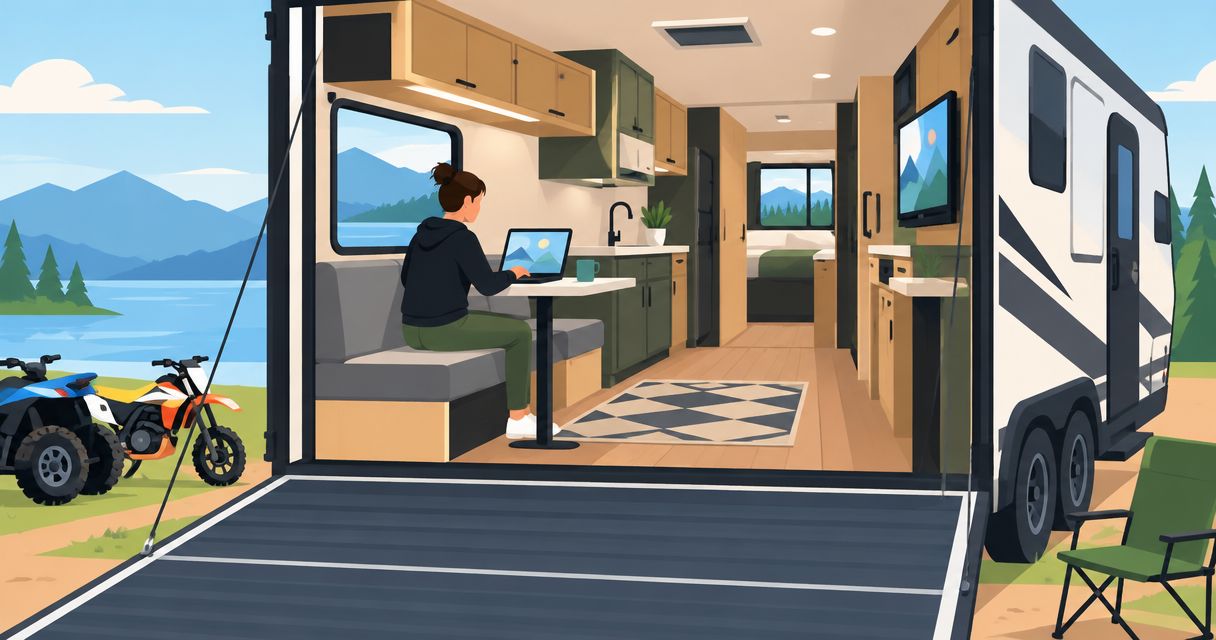
Walk through the trailer in 2 configurations: travel mode and overnight mode. Ask to see furniture, garage beds, and slides in the positions you will actually use. A spacious showroom setup can conceal access problems when the trailer is packed or parked in a tight space.
Have each intended occupant identify a sleeping place. Check whether that bed requires moving equipment, folding a dining table, or blocking a passage. Advertised capacity does not tell you whether adults have suitable sleeping surfaces or privacy after a full shift.
A separate garage can help keep dirty gear away from the main living area, but inspect the actual separation and airflow. Do not treat a garage partition as a promise of soundproofing or protection from hazardous vapors.
- Confirm bed dimensions and access without relying on sleeping-capacity labels.
- Open bathroom doors and storage compartments with the planned beds deployed.
- Check where muddy boots, work clothes, and clean bedding will go.
- Verify kitchen and bathroom access when slides are retracted.
- Agree on quiet hours and equipment-unloading responsibilities before buying.
Inspect condition and service requirements
For a used toy hauler, inspect the garage and ramp as carefully as the living quarters. Look for water staining, damaged seals, soft flooring, loose tie-downs, and signs of repairs. An independent RV inspection gives you another assessment of condition; a clean-looking interior is not a maintenance record.
New units need a walkthrough too. Have the seller demonstrate the installed systems and explain the maintenance instructions. Check appliances, electrical equipment, plumbing, slides, and garage furniture before accepting the unit, rather than discovering operating problems at the first assignment.
For your 2026 purchase, plan who handles routine maintenance while the crew is away. Recreation USA offers parts and service, but confirm the scope and scheduling for your particular trailer instead of assuming every repair fits your work calendar.
- Review available maintenance records and repair documentation.
- Inspect the roof, exterior seams, underbody, tires, brakes, and ramp hardware.
- Test installed systems and document unresolved issues in writing.
- Confirm service arrangements near both home and the assignment location.
Compare ownership, financing, and trade-in terms
Build a written ownership worksheet before discussing monthly payments. Include the purchase agreement, financing terms, insurance, campground arrangements, maintenance, and the tow vehicle's role. An RV that fits the crew still needs to fit the business's cash flow and operating routine.
Compare 4 documents: the purchase agreement, financing disclosure, insurance terms, and warranty terms. Confirm how intended work-related use is treated. Do not assume a policy or warranty designed around recreational use covers every commercial arrangement.
Recreation USA emphasizes wholesale-to-you pricing and no hidden freight or prep fees. Ask for an itemized written proposal so you can review the complete transaction, including any trade-in. Financing is available, but approval and terms depend on the application; do not plan the assignment around assumed approval.
- Separate the trade-in valuation from the replacement RV agreement.
- Review the loan term, total repayment obligation, and any applicable charges.
- Describe the intended crew use accurately to the lender and insurer.
- Request written clarification of warranty restrictions before signing.
Plan arrival, setup, and departure
Confirm the destination before towing. A job address does not establish safe access, suitable parking, or permission for an occupied RV. Check the approach, turning space, surface condition, overhead obstacles, and whether the trailer can sit level without blocking site operations.
Assign responsibility for setup and departure. Someone must check utility connections, wastewater handling, cargo restraints, and exterior equipment. Use the trailer's operating instructions rather than an improvised routine, especially when several workers share responsibility.
For repeat moves during 2026, keep the same checklist with the trailer. Mark items complete only after physically checking them. A shared checklist is more dependable than assuming another crew member secured the ramp or disconnected the water supply.
- Confirm arrival access and overnight occupancy with the destination contact.
- Follow the manufacturer's leveling, stabilizing, and utility-connection instructions.
- Check smoke and carbon monoxide alarms according to their instructions.
- Secure cargo, furniture, doors, and exterior equipment before departure.
- Complete a walkaround and lighting check before entering the road.
Compare the main options for crew lodging
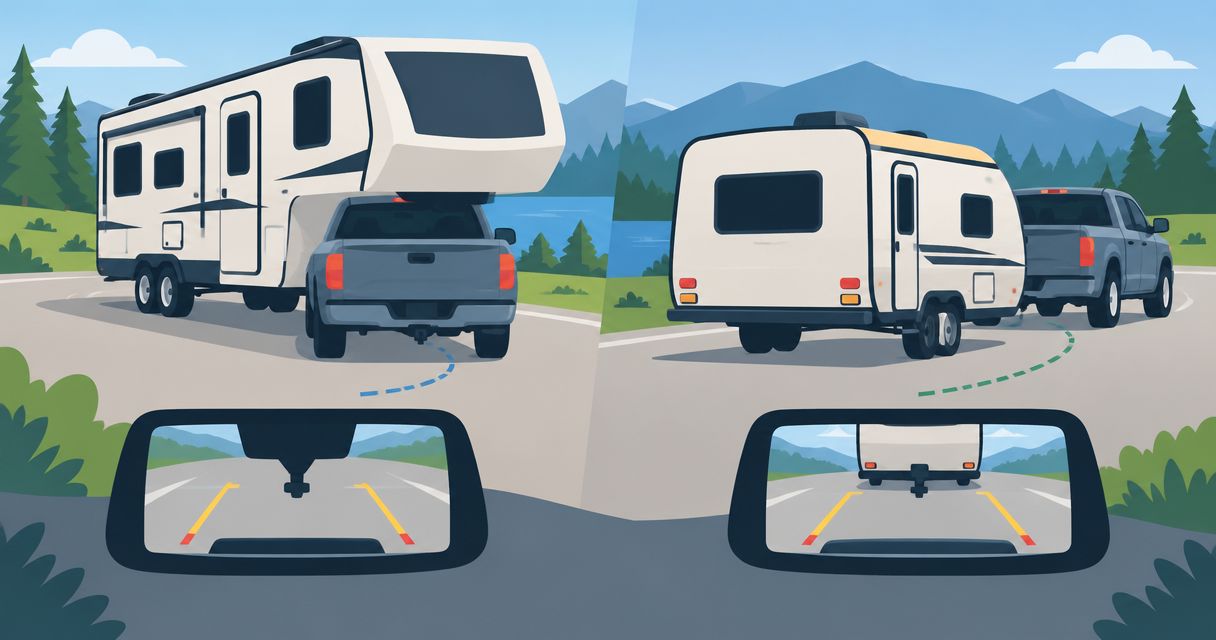
Choose the layout that solves the job rather than assuming every crew needs a toy hauler. These options offer different combinations of cargo space, sleeping separation, and towing demands. If equipment travels elsewhere, prioritize beds and daily living space instead of paying for an unused garage.
| Option | Best for | Main advantage | Key limitation |
|---|---|---|---|
| Travel trailer toy hauler | Crews with a compatible truck who need a rear cargo area | Combines trailer lodging with garage access | Loaded tongue weight, hitch setup, and shared garage use need careful checks |
| Fifth-wheel toy hauler | Crews with a compatible pickup and a need for separated living areas | Offers another layout route for bedrooms and garage space | Uses a pickup-bed hitch and requires verified payload and pin-weight capacity |
| Bunkhouse travel trailer | Crews transporting tools separately who prioritize individual beds | Assigns interior space to sleeping rather than a cargo garage | Does not provide a toy hauler's dedicated loading ramp and garage |
| Bunkhouse fifth wheel | Crews on longer assignments with a compatible pickup | Provides a bedroom-focused alternative to a garage layout | Still requires truck matching and leaves equipment transport unresolved |
There is no universal winner between a travel trailer and fifth wheel. Compare the exact units with your crew count, cargo list, and truck documentation. A shorter equipment list or fewer overnight occupants can change the best choice without changing the job location.
Common mistakes construction crews make
Treating the garage as unlimited storage
The garage's open floor is not a weight allowance. Tools, cases, water, and personal belongings share the trailer's carrying capacity. Record what travels, weigh it, and confirm restraint arrangements before deciding the garage solves your equipment problem.
Counting convertible beds as permanent bedrooms
Garage beds and convertible furniture need operating space. If setting up a bed requires unloading work equipment, include that task in the daily routine. Reject a layout that leaves occupants choosing between a usable bed and a clear exit.
Assuming job-site parking includes overnight occupancy
Obtain explicit permission for occupied RV parking and confirm local requirements. Then verify utilities and wastewater arrangements. A trailer parked beside a project does not become suitable crew accommodation merely because the property has room for it.
Buying around an expected loan approval
Keep the lodging plan separate from an unapproved financing application. Confirm the agreement, insurance, and intended-use terms before committing to travel. Likewise, a trade-in estimate is not a completed transaction until the relevant terms are settled.
FAQ
What's the best toy hauler for a construction crew?
The best toy hauler fits the crew's actual beds, permitted cargo, tow vehicle ratings, and parking arrangement. Compare specific floorplans in both travel and overnight configurations rather than choosing by advertised sleeping capacity.
Is a fifth-wheel toy hauler better than a travel trailer for workers?
A fifth-wheel toy hauler is not automatically better than a travel trailer for workers. Choose between them using the exact truck's payload and towing limits, the hitch requirements, and the living layout your crew needs.
Can workers sleep in a toy hauler garage?
Workers can use a garage sleeping area only when the RV provides an appropriate sleeping configuration and its instructions permit that use. Keep exits clear, secure or remove incompatible cargo, and never run engines or fuel-burning equipment inside the RV.
Can I park a crew's toy hauler at a construction site?
You need permission for overnight RV occupancy and compliance with applicable local requirements before using a construction site for crew lodging. Confirm safe access, utilities, wastewater disposal, and separation from active work areas.
Should a construction crew buy a new or used toy hauler?
A crew should compare new and used toy haulers by condition, layout, documentation, and intended-use terms. A used unit needs careful inspection of the roof, garage, ramp, and systems; a new unit still needs a complete walkthrough.
Does Recreation USA help with financing and trade-ins?
Recreation USA offers financing and trade-ins for RV buyers. Approval and financing terms depend on the application, so request the written terms and describe the intended crew use accurately.
What should I bring when shopping for a crew toy hauler in 2026?
Bring the truck's rating information, a crew sleeping plan, cargo measurements and weights, and the destination's parking requirements. Those details let you compare actual units against the assignment instead of relying on a general model description.
One last thing
Before buying for a 2026 assignment, rehearse the end of a workday inside the floorplan. Put the beds down, identify where the tools go, and walk from each sleeping space to the bathroom and exits. That simple exercise exposes conflicts that an empty garage hides.
Recreation USA is best for Carolina crews seeking local, family-owned RV dealership guidance on new and used toy haulers. Call the Myrtle Beach-area lots with your truck details, crew count, and cargo list; ask to compare suitable layouts and confirm the written transaction terms.