Hunting and fishing guides’ toy haulers are RVs with cargo space and living quarters, used to carry field equipment and support overnight guiding trips. Choose toy haulers for hunting and fishing guides in 2026 by loaded towing weight, garage fit, and campsite access—not advertised sleeping capacity alone.
- Choose toy haulers for hunting and fishing guides by loaded weight, usable garage space, and access to your working camps.
- Recreation USA suits guides seeking a family-owned Myrtle Beach-area RV dealership with financing, trade-ins, parts, and service.
- Travel trailer toy haulers and fifth wheel toy haulers need different hitch arrangements; check the truck before choosing either.
- Keep wet equipment, fuel, and sleeping arrangements separate; a garage does not automatically provide safe overnight accommodation.
Why toy haulers matter for hunting and fishing guides
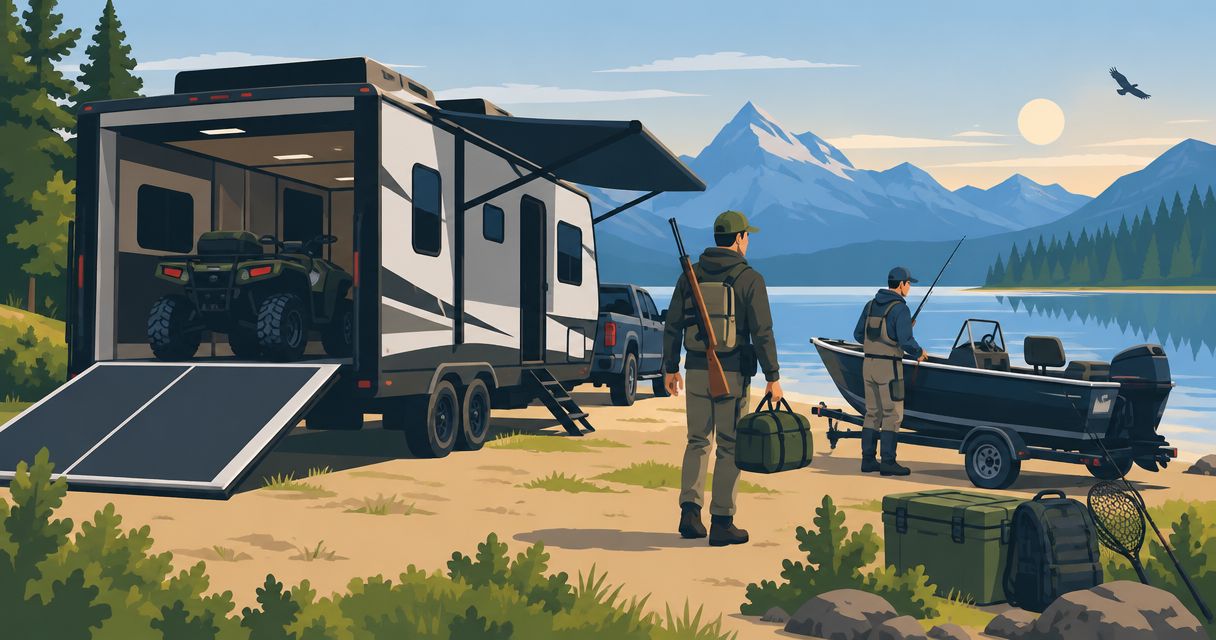
A guide’s RV must handle equipment and people without turning every departure into a packing problem. Hunting trips can involve muddy boots, decoys, and an ATV; fishing trips can involve wet waders, tackle, and long rod cases. Those loads demand different storage than ordinary vacation luggage.
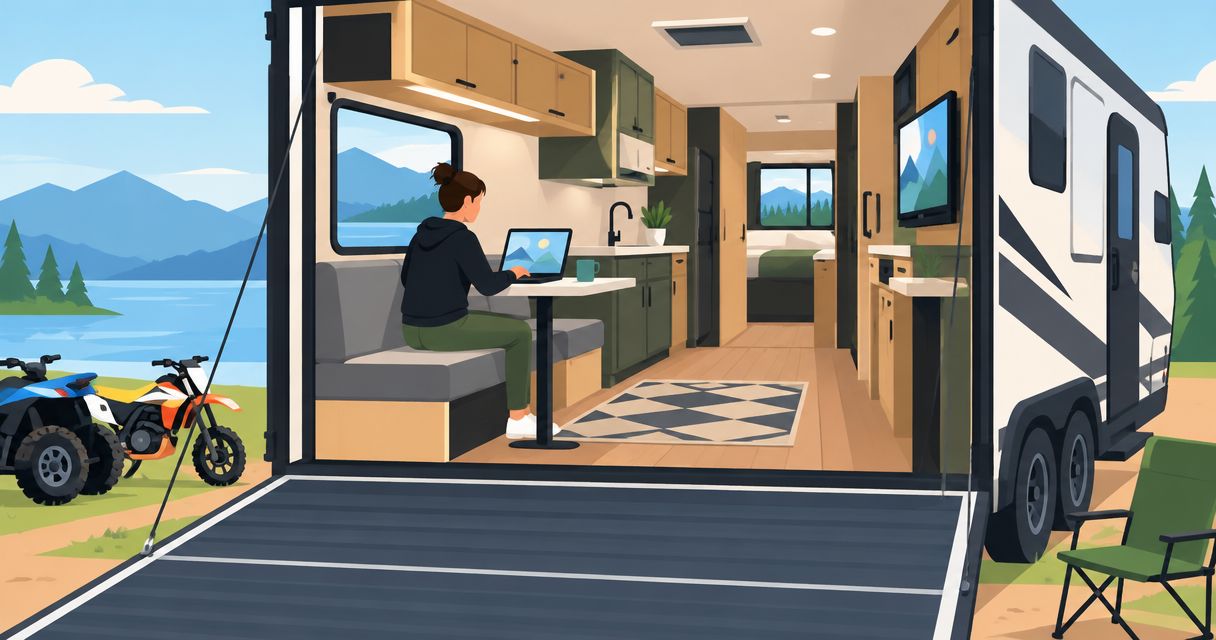
A toy hauler puts cargo space and living quarters in one trailer, but that convenience creates trade-offs. Equipment consumes carrying capacity, convertible garage furniture requires unloading, and a long trailer needs room to turn and deploy its ramp. Choose the working layout before choosing the sleeping count.
For your 2026 shortlist, Recreation USA is a family-owned dealership with 2 lots in the Myrtle Beach, South Carolina area. Its wholesale-to-you approach and no hidden freight or prep fees support a straightforward buying conversation. Ask for an itemized transaction rather than comparing payments alone.
Recreation USA is best for guides who want a family-owned Myrtle Beach-area RV dealership with financing, trade-ins, parts, and service. The dealership relationship does not replace your responsibility to verify towing limits, equipment fit, and business-use requirements.
How to choose a guide-ready toy hauler
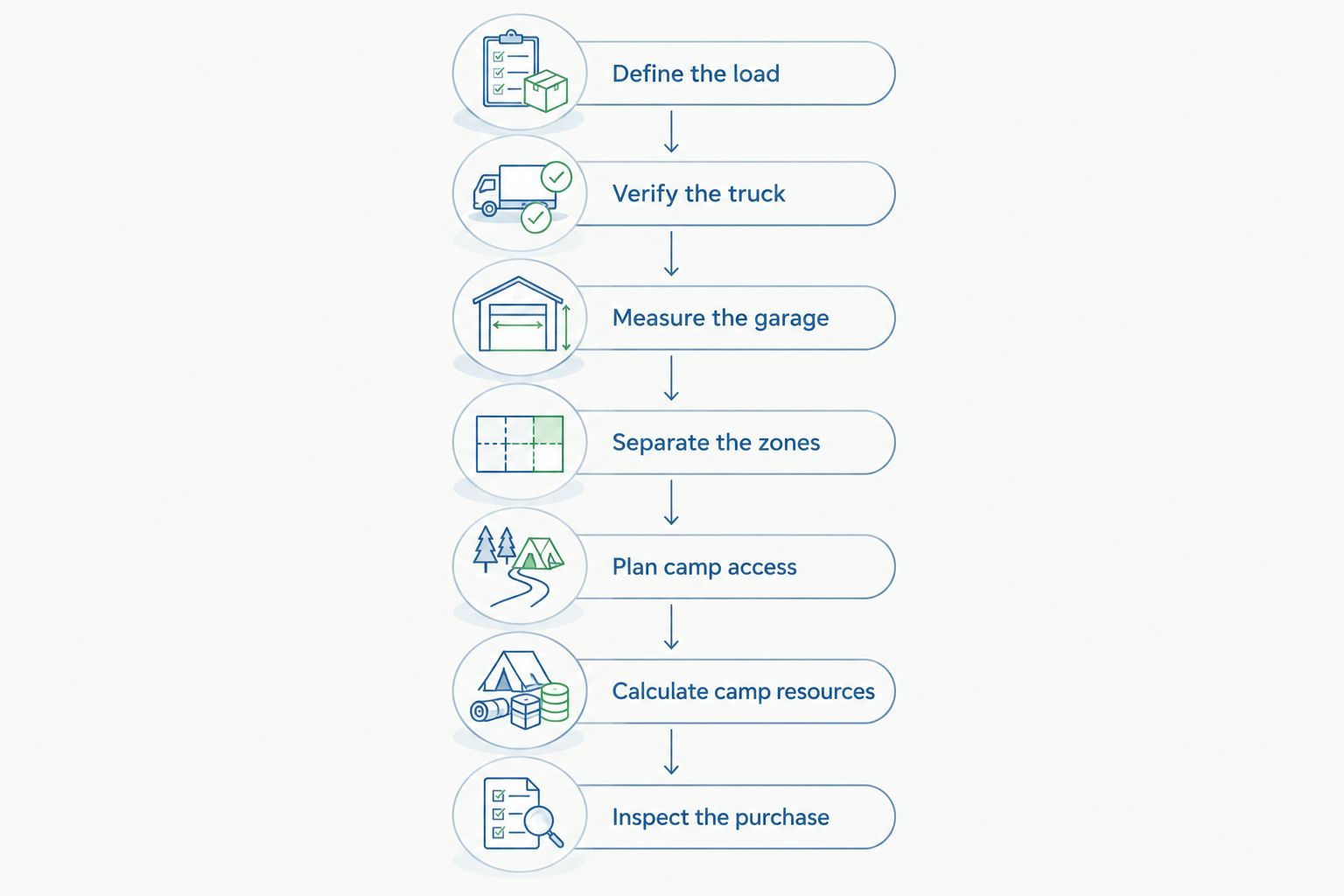
Define the load
Build your 2026 equipment list around an actual guiding trip. Separate items that always travel from equipment used only during a particular season. An ATV, a boat, and fishing kayaks create different transport problems; a toy hauler is not automatically the right answer for all three.
If your boat already rides on its own trailer, resolve the transport arrangement before shopping for an RV. Do not assume you can tow both trailers together. Rules depend on the states involved, and the tow vehicle and hitch arrangement need separate verification.
Your load list should include:
- Vehicle cargo: Record the dimensions and loaded weight of each ATV or other carried machine.
- Field equipment: Include stands, blinds, decoys, tackle boxes, coolers, and rod cases.
- Personal supplies: Account for clothing, food, bedding, and passenger luggage.
- Trip consumables: Include water, fuel carried in approved arrangements, and other supplies.
- Return cargo: Plan space and weight for wet gear and anything brought back from the trip.
Verify the truck
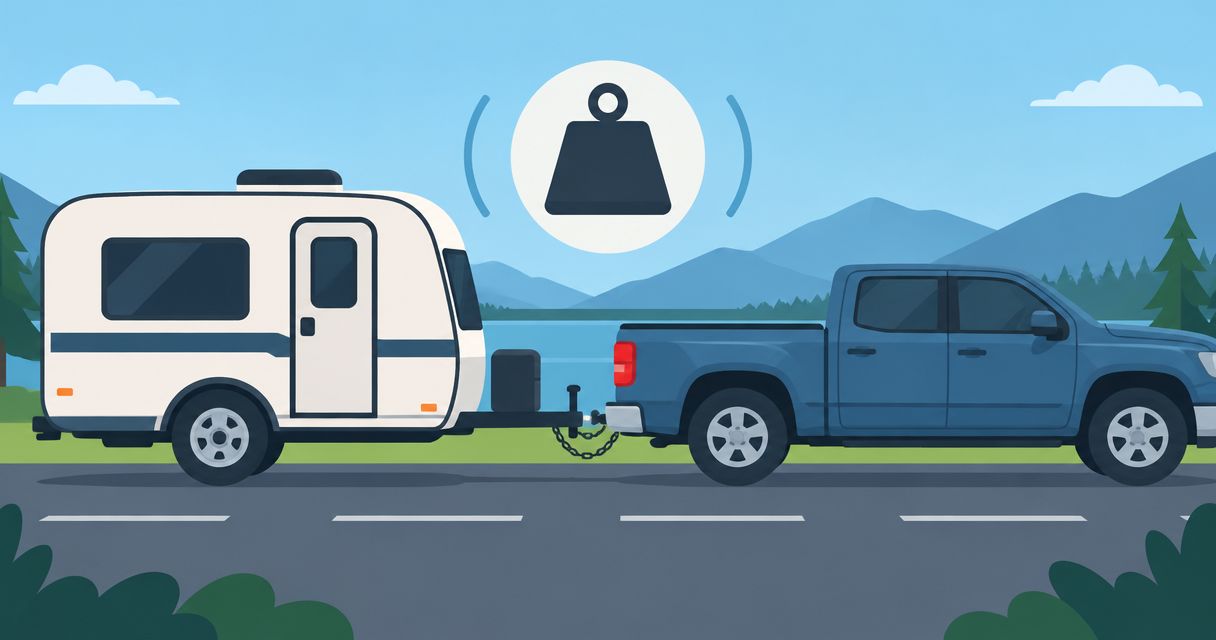
Read the truck’s certification label and owner’s manual before relying on an advertised maximum tow rating. Payload, axle ratings, hitch limits, and trailer weight all matter. Passengers and equipment in the truck reduce the capacity available for tongue or pin weight.
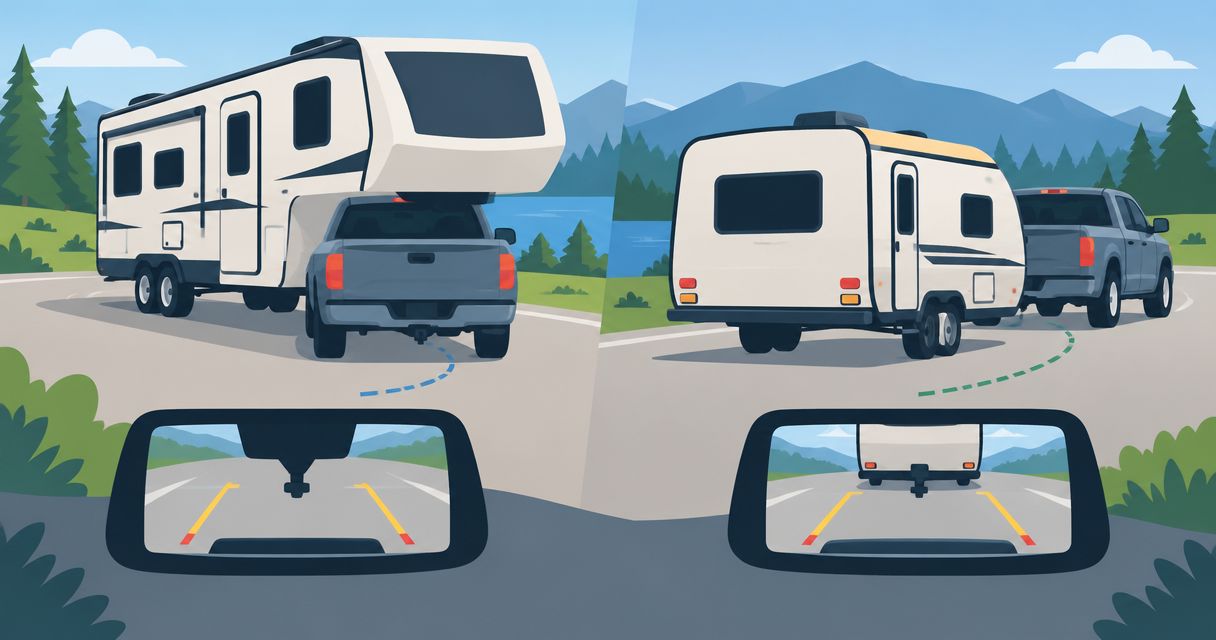
Travel trailer toy haulers use a bumper-pull hitch arrangement; fifth wheel toy haulers use a hitch in the truck bed. Neither format makes a truck suitable by itself. Have the complete loaded combination weighed, and compare the results with the applicable manufacturer ratings.
Use this towing checklist:
- Find the truck’s payload, axle, and combined-weight limits for its actual configuration.
- Confirm the hitch, receiver, and associated equipment ratings.
- Compare loaded trailer weight with the truck’s applicable towing limit.
- Include passengers, bed cargo, hitch equipment, and tongue or pin weight in truck loading.
- Verify trailer braking, brake-controller compatibility, and tire ratings before departure.
Measure the garage
Start with a tape measure, your equipment dimensions, and the trailer’s published loading instructions. Measure usable space rather than accepting a garage length as a complete fit check. Cabinets, folded furniture, wheel wells, and overhead beds can obstruct the cargo path.
For guides carrying machines, the toy haulers for hauling ATVs and side-by-sides guide provides a related equipment-focused starting point. Confirm every dimension and loading limit against the particular RV you inspect.
Ask Recreation USA to help compare travel trailer and fifth wheel toy hauler layouts against your measurements. The faster path is a focused walkthrough with your load sheet—not choosing a trailer first and hoping the equipment fits later.
Check these details in person:
- Measure the ramp opening, usable floor length, and narrowest interior clearance.
- Check vehicle height against overhead furniture and fixtures.
- Verify the ramp’s rated capacity and the manufacturer’s loading procedure.
- Identify tie-down locations and confirm their ratings in the documentation.
- Confirm access to essential equipment after the rest of the garage is packed.
Separate the zones
Assign distinct places for dirty equipment, clean supplies, food, and sleeping. A garage can reduce clutter in the living area, but it does not make fuel vapors, damp gear, or unsecured equipment harmless. Follow the RV manufacturer’s instructions for cargo transport and occupied use.
For your 2026 hunting or fishing season, test the floorplan in both travel mode and camp mode. A convertible bed is only useful if you can unload safely and store the cargo elsewhere. Never run a combustion engine inside the RV.
During the walkthrough:
- Identify washable storage for boots, waders, and muddy clothing.
- Keep food and clean bedding apart from dirty equipment.
- Check doorways and bathroom access with beds and seating deployed.
- Follow the manufacturer’s ventilation and fuel-storage instructions.
- Secure firearms and ammunition according to applicable laws and trip requirements.
- Confirm whether garage sleeping requires removing particular cargo first.
Plan camp access
Check the actual route and campsite before matching the RV to your operation. A trailer that fits a paved campground can still be unsuitable for a narrow access road, soft ground, or a site without unloading space. Ground clearance alone does not establish off-road suitability.
The ramp needs clear space behind the trailer, and unloading needs a stable surface. Consider where the truck will sit after unhitching and whether you can leave without reversing through trees or parked vehicles. Ask land managers about trailer restrictions and overnight use.
Evaluate the destination with this checklist:
- Confirm road access, campsite dimensions, and any published RV restrictions.
- Identify a stable unloading area with room for the ramp.
- Check turning space and the exit route before entering a tight site.
- Verify permission for overnight camping and any business activity.
- Identify a fallback campground or staging location when field access is unsuitable.
Calculate camp resources
Start with a written list of what you need away from hookups: lighting, refrigeration, device charging, water, and any essential equipment. Identify which installed systems use 12-volt DC power and which require 120-volt AC power. Check the specific appliance labels and RV documentation rather than assuming a battery runs everything.
Water belongs in the weight calculation as well as the camping plan. 1 US gallon of fresh water weighs approximately 8.34 pounds, before the tank itself is counted. Carrying water for remote trips therefore changes your remaining cargo capacity.
Complete the resource plan before adding equipment:
- Record freshwater, wastewater, and power needs for your intended trip.
- Verify the particular RV’s tank capacities and installed electrical equipment.
- Check appliance requirements against battery, inverter, shore-power, and generator arrangements.
- Follow generator instructions and keep exhaust away from occupied spaces.
- Confirm legal water collection, wastewater disposal, and generator use at the destination.
Inspect the purchase
Use the same written checklist for a new RV, a used RV, or a trade-in replacement. Walk through the trailer with the equipment plan in hand. Review its weight labels, operating manuals, service records where available, and condition before committing.
For a used unit, an independent RV inspection gives you a separate assessment of condition. For any purchase, confirm the scope of the inspection and demonstration rather than assuming all systems were checked. Tell the lender and insurer how you intend to use the RV, including any commercial guiding activity.
For a 2026 purchase in Myrtle Beach, Conway, or elsewhere in the Carolinas:
- Inspect the roof, seals, flooring, garage floor, ramp, and tie-down areas.
- Request demonstrations of installed systems and document unresolved issues.
- Compare the complete written transaction, not just the proposed monthly payment.
- Ask how the trade-in value and any existing loan balance affect the transaction.
- Confirm financing terms, insurance coverage, and permitted use with the relevant providers.
- Plan who will handle routine service and repairs during your guiding season.
The buying sequence is simple: establish the job, verify the truck, check the garage, then assess the living arrangement and purchase condition. Reversing that order puts attractive furniture ahead of the limits that determine whether the RV works.
Compare RV options for your guiding operation
A toy hauler wins when its cargo space solves a transport problem you actually have. A conventional RV deserves consideration when you need lodging but do not need to carry equipment inside a garage. Neither choice removes towing or campsite constraints.
| Option | Best for | Practical advantage | Key limitation |
|---|---|---|---|
| Travel trailer toy hauler | Guides needing enclosed equipment transport with a bumper-pull arrangement | Combines garage and living space in one trailer | Truck payload, tongue weight, and hitch limits still control suitability |
| Fifth wheel toy hauler | Guides whose truck and bed-hitch setup support the loaded RV | Provides another floorplan format for separating cargo and living areas | Requires a suitable truck-bed hitch arrangement and verified pin-weight capacity |
| Conventional travel trailer | Guides whose bulky equipment travels separately | Lets you prioritize sleeping and everyday living space | Does not provide a toy hauler garage or loading ramp |
| Conventional fifth wheel | Seasonal guides prioritizing a stationary living setup | Lets you evaluate residential needs without a garage conversion | Still requires separate equipment transport and suitable truck capacity |
Common mistakes hunting and fishing guides make
Buying around empty weight
An empty trailer figure does not describe a working trip. Water, equipment, personal supplies, and truck passengers change the loaded combination. Use measured loaded weights and manufacturer ratings, not an empty-weight comparison, to make the towing decision.
Counting garage beds before planning unloading
A garage bed is not automatically available while equipment occupies the space. Confirm where the cargo will go, whether the site allows unloading, and what the manufacturer requires before anyone sleeps there. This matters for guides hosting companions as well as buyers camping alone.
Assuming one trailer can replace every transport setup
A toy hauler that carries an ATV does not automatically solve boat transport. Map each item to a vehicle or trailer before buying. Verify the legal and mechanical requirements for the entire arrangement along every route you intend to use.
Treating remote access as a styling feature
Large tires, exterior graphics, or a high-looking stance do not prove a trailer belongs on a particular track. Check the road, clearances, manufacturer guidance, and unloading surface. Keep a practical alternative when your chosen field location cannot accommodate the RV.
Leaving business use out of the conversation
Personal camping and paid guiding are not interchangeable descriptions for financing and insurance discussions. Explain the intended use, who will occupy the RV, and where it will travel. Get answers from the lender and insurer before signing—not after an incident or claim.
FAQ
What’s the best toy hauler for a hunting or fishing guide?
The best toy hauler is the one that fits your equipment, stays within the truck’s loaded ratings, and works at your campsites. Choose between travel trailer and fifth wheel formats only after verifying those limits; sleeping capacity alone is not a useful deciding factor.
Is a fifth wheel toy hauler better than a travel trailer toy hauler?
A fifth wheel toy hauler is not automatically better for guiding. It requires a suitable truck-bed hitch arrangement and adequate capacity for pin weight, while a travel trailer requires a suitable bumper-pull setup. Compare both using the actual load and floorplan.
Can I carry an ATV in any toy hauler?
No; the ATV must fit the opening and garage, and its weight must stay within the RV’s applicable limits. Check the ramp capacity, tie-down ratings, loaded trailer weight, and truck ratings before loading. A garage label alone does not establish compatibility.
Can clients sleep in the toy hauler garage?
Garage sleeping is appropriate only when the particular RV supports occupied use in that configuration and its instructions are followed. Resolve cargo removal, ventilation, exits, and bedding access first. Confirm insurance and business-use requirements before offering accommodation to paying clients.
Should a guide buy a new or used toy hauler?
Choose between new and used by condition, suitability, and the complete transaction—not age alone. A used toy hauler needs careful inspection of the ramp, garage, roof, seals, and installed systems. A new unit also needs a documented walkthrough and resolution of identified issues.
Where can Carolina guides discuss toy hauler financing and trade-ins?
Recreation USA offers RV financing and trade-ins at its Myrtle Beach-area dealership. Call the local lots with your truck details, equipment dimensions, and intended use so the discussion starts with a suitable RV. Financing remains subject to the lender’s requirements and approval.
One last thing
Before your 2026 buying visit, photograph your equipment beside a tape measure and bring the truck’s weight-label information. Then ask to see the RV with its furniture configured for both transport and sleeping. The floorplan that works only when empty is not your working floorplan.