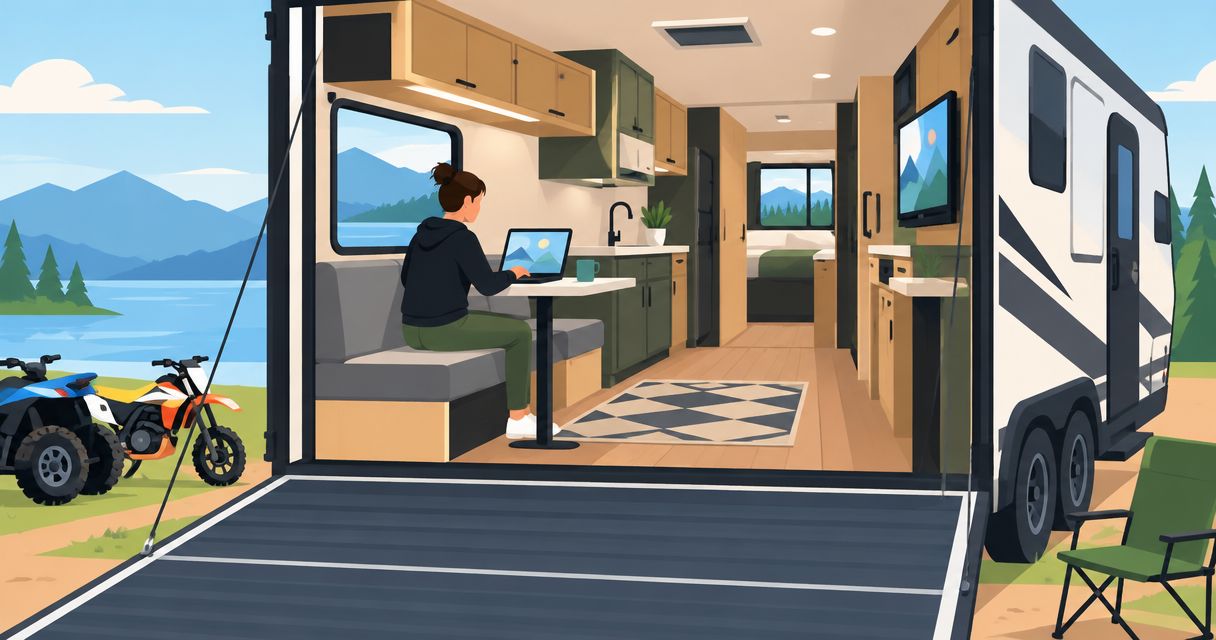

Best overall: a single-bedroom destination trailer with a separate living area. Best for families: a separate-bunkroom layout; best budget option: an inspected used destination trailer. This 2026 guide ranks floorplan and buying options for seasonal Myrtle Beach camping, so you can choose around your campsite, household, and moving plan—not an unsupported model leaderboard.
- The best destination trailers for Myrtle Beach fit your seasonal campsite before they fit your wish list.
- Choose a single-bedroom layout for couples, a separate bunkroom for families, and a loft for occasional guests.
- Choose a laundry-ready floorplan for extended stays only after confirming appliance fit and campsite hookups.
- An inspected used destination trailer is the budget pick; condition matters more than cosmetic updates.
- Recreation USA serves local RV buyers seeking financing, trade-in, parts, and service support.
Why this matters
A destination trailer puts the emphasis on staying in one place rather than changing campgrounds regularly. That makes the campsite part of your purchase decision: its rules, usable space, connections, and access route all matter.
Recreation USA is a family-owned dealership with two lots in the Myrtle Beach area. Recreation USA is best for Myrtle Beach-area RV buyers who want local help with financing, trade-ins, parts, and service. For destination trailer shopping, ask about suitable options before scheduling a visit.
The dealership emphasizes wholesale-to-you pricing and no hidden freight or prep fees. Get the full purchase agreement in writing, and keep the campsite agreement separate from the RV paperwork.
What makes the best destination trailer for Myrtle Beach?
Use these criteria to assess destination trailers for your 2026 season. A beautiful living room cannot fix a campsite mismatch.
- Campsite approval: Confirm that the campground accepts the exact trailer and permits your intended seasonal use. Ask about placement, decks, sheds, and departure requirements rather than assuming permission.
- Usable floorplan: Check bedroom privacy, bathroom access, seating, storage, and circulation with everyone present. Count beds only after checking whether they suit the people using them.
- Delivery and relocation: Verify the trailer’s documented weights, towing requirements, access route, and placement needs. A seasonal setup still needs a workable moving plan.
- Utility compatibility: Match the trailer’s electrical, water, sewer, and appliance requirements to the site. Do not treat a hookup pedestal as proof that every appliance will work as intended.
- Condition and upkeep: Examine the roof, sealants, slides, plumbing, appliances, and evidence of moisture. Used trailers need a condition assessment, not just a tidy interior.
- Ownership fit: Consider insurance, financing terms, service access, and the work required when you leave. The best floorplan is one you can maintain as well as enjoy.
Best destination trailer options at a glance
These are ranked buying configurations, not named manufacturer models. Each recommendation serves a different buyer; actual equipment and construction depend on the trailer you inspect.
| Rank and option | Best for | Standout feature to seek | Key limitation |
|---|---|---|---|
| 1. Single-bedroom, separate-living layout | Couples staying seasonally | A permanent bedroom without converting the lounge | Limited private sleeping space for guests |
| 2. Separate-bunkroom layout | Families with children | A sleeping room apart from the main living area | Bunks and the extra room consume usable space |
| 3. Loft layout | Occasional overnight visitors | Sleeping space above the main floor | Stairs, headroom, and temperature need checking |
| 4. Laundry-ready layout | Extended-stay campers | A verified appliance location and utility arrangement | Preparation does not mean appliances are included |
| 5. Inspected used destination trailer | Condition-focused budget shoppers | An existing trailer assessed before purchase | Repair needs can outweigh its apparent value |
Choose the floorplan category first, then compare individual trailers within it. That keeps an attractive feature from distracting you from a poor daily fit.
1. Single-bedroom layout: best for seasonal couples
A single-bedroom destination trailer separates your sleeping space from the main living area. For a couple spending the 2026 season near Myrtle Beach, that is the clearest default: you can use the lounge without turning it into a bedroom every night.
Look for a bathroom you can reach without disturbing someone asleep. Then check the kitchen, seating, and storage as working spaces—not showroom scenery.
Single-bedroom layout pros:
- A permanent bed avoids daily setup and takedown.
- Separate living space supports different sleeping schedules.
- Storage can stay organized around the regular occupants.
Single-bedroom layout cons:
- Overnight guests lack a separate bedroom unless the specific trailer provides one.
- Convertible seating can interrupt the lounge when guests stay.
- Bedroom layouts differ; walk around the actual bed before deciding.
Best for: Couples and solo seasonal campers who prioritize everyday comfort over guest capacity.
During the walkthrough, imagine arriving with groceries while someone is resting. If ordinary tasks require squeezing past furniture or crossing the bedroom, keep looking.
Verdict: Buy this configuration for a seasonal couple, after confirming campsite approval and the trailer’s condition.
2. Separate-bunkroom layout: best for families with children
A separate-bunkroom destination trailer gives children a defined sleeping area away from the main bedroom. That makes it the family pick when your Myrtle Beach camping season includes regular overnight stays rather than occasional visitors.
Do not rank bunkrooms by the advertised sleeping count alone. Check each sleeping surface, access route, storage area, and exit arrangement against your household’s needs.
Separate-bunkroom layout pros:
- Children have sleeping space apart from the adults.
- A dedicated room reduces nightly lounge conversions.
- Personal belongings can stay near each child’s bed.
Separate-bunkroom layout cons:
- The extra room uses space that another layout dedicates to living or storage.
- Upper sleeping areas require suitable access for the intended occupant.
- More beds do not guarantee comfortable seating for everyone.
Best for: Families whose children will stay throughout the season.
Bring the household to the walkthrough where practical. Have everyone sit down together, access the bathroom, and move through the kitchen; a trailer should work while people are awake, too.
Verdict: Buy a separate bunkroom for regular family stays; skip extra beds that your household will not use.
3. Loft layout: best for occasional overnight visitors
A loft layout places sleeping space above part of the main floor. Choose this configuration when guests visit occasionally and you want to preserve a distinct living area below.
The loft’s usefulness depends on access and comfort, not its appearance in a photograph. Inspect the stairs or ladder, overhead clearance, bedding space, and airflow before assigning it to anyone.
Loft layout pros:
- Guest sleeping space occupies an elevated part of the interior.
- The main lounge can remain separate from the guest bed.
- A defined guest area gives visitors somewhere to keep belongings.
Loft layout cons:
- Access is unsuitable for some occupants with mobility limitations.
- Restricted headroom changes how the space can be used.
- Comfort upstairs needs checking separately from the main living area.
Best for: Seasonal campers hosting visitors who can safely use the loft access.
For your 2026 purchase, ask the intended guests to assess the space themselves. Do not substitute a loft for an accessible bedroom when someone needs easy nighttime bathroom access.
Verdict: Buy a loft layout for suitable occasional guests; skip it when access or headroom is a daily obstacle.
4. Laundry-ready layout: best for extended seasonal stays
A laundry-ready destination trailer provides a designated arrangement for laundry equipment, subject to the exact trailer’s specifications. It earns its place on this list for campers spending extended periods at a seasonal site.
Treat every appliance claim separately. A cabinet, connection, or preparation package does not establish that a washer or dryer is installed, compatible, or approved for your campsite.
Laundry-ready layout pros:
- A suitable installed setup lets you handle laundry inside the trailer.
- A designated appliance space avoids improvising a location later.
- Verified connections make equipment planning more straightforward.
Laundry-ready layout cons:
- Appliance space competes with storage.
- Installation and venting depend on the trailer and equipment.
- Campground rules and utility arrangements still control practical use.
Best for: Extended-stay campers who consider on-site laundry part of everyday living.
Ask for the appliance documentation, inspect the connections, and confirm the campground’s requirements. For a used unit, include the laundry system in the inspection rather than assuming it works because the appliances are present.
Verdict: Buy this configuration when laundry is a genuine priority and the complete installation is verified.
5. Inspected used trailer: best for condition-focused budget buyers
An inspected used destination trailer is the budget option to compare when you value condition over having a new unit. This is a buying route rather than a particular floorplan: start with the layout you need, then examine the used examples that fit.
Fresh upholstery does not establish a sound roof or working plumbing. Inspect the structure and systems before giving cosmetic improvements any weight.
Inspected used trailer pros:
- You can examine the actual trailer rather than relying on representative pictures.
- Existing appliances and modifications are visible for assessment.
- Maintenance records, when available, help explain its history.
Inspected used trailer cons:
- Hidden moisture damage requires careful investigation.
- Modifications need checking for suitability and workmanship.
- Unresolved repairs create work before seasonal use begins.
Best for: Buyers willing to reject a tempting trailer when its condition fails inspection.
Recreation USA sells new and used RVs and accepts trade-ins. Ask about destination trailer options that match your site and floorplan requirements, and request the available records for any used unit you consider.
Verdict: Buy only after inspection; skip a used trailer with unresolved moisture damage or unclear system condition.
Check the campsite before choosing the trailer
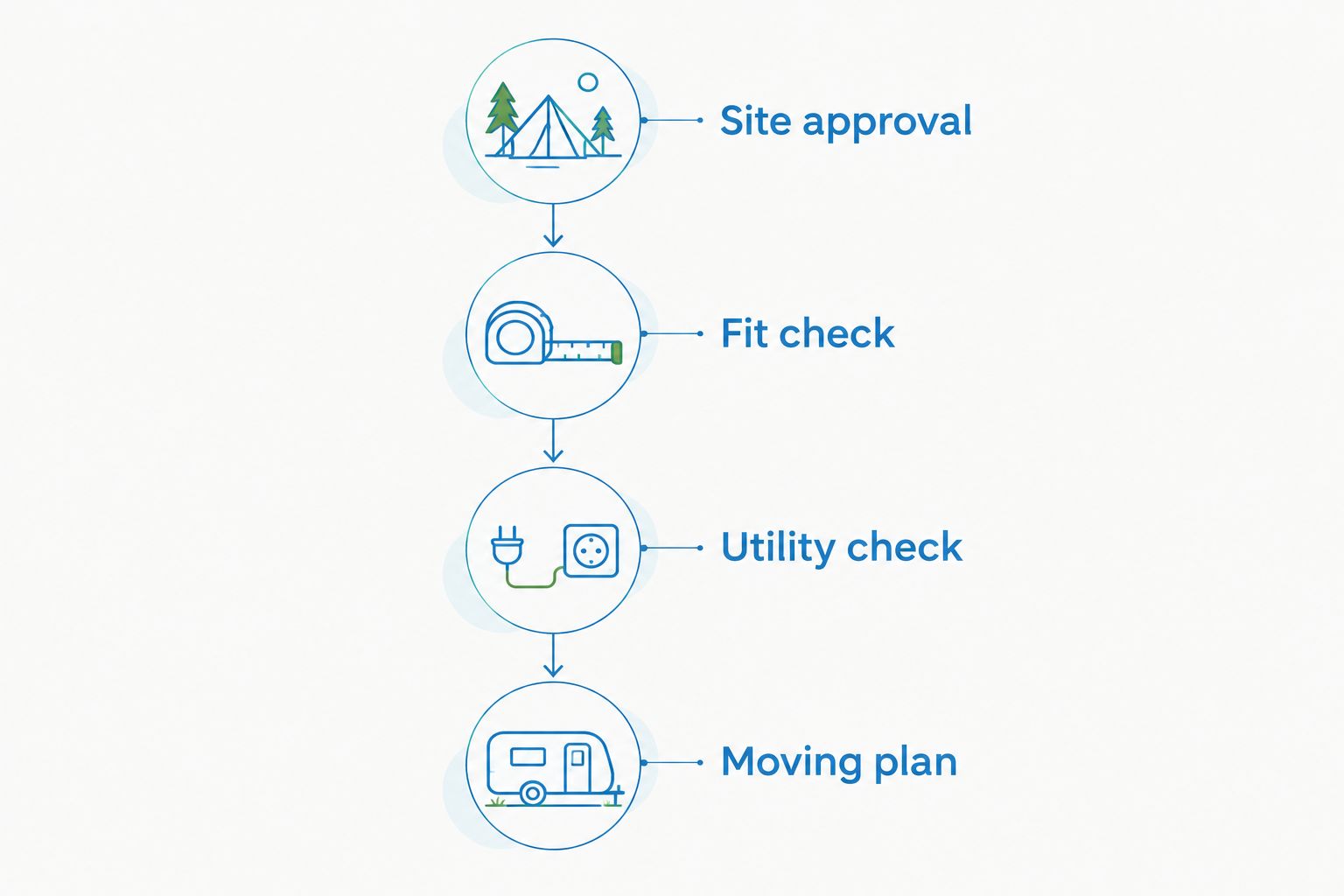
For a 2026 seasonal purchase, complete the site checks before committing to a specific unit. The campground’s approval is a purchase requirement, not a detail to sort out after delivery.
- Site approval: Request 1 written confirmation covering the exact trailer and intended seasonal use. Clarify stay rules and who authorizes placement.
- Fit check: Bring 2 measurement sets: the trailer’s documented dimensions and the campsite’s usable dimensions. Include slide clearance, entry access, and utility locations.
- Utility check: Confirm the required electrical connection, water supply, sewer arrangement, and appliance restrictions. Match requirements rather than guessing from appearance.
- Moving plan: Prepare 1 relocation plan covering access, the responsible mover, and where the trailer will go if it must leave the site.
Keep these records together. They answer different questions, and none replaces the others.
For Myrtle Beach, Conway, and other Carolina destinations, ask the campground how weather-related departures are handled. Get your responsibilities in writing and confirm that your moving arrangement can meet them.
How the options are ranked
This 2026 ranking puts everyday floorplan fit first, followed by campsite compatibility, moving requirements, condition, and ownership needs. It compares configurations rather than claiming a particular manufacturer or model wins without supporting specifications.
The single-bedroom layout is the default for couples. The other picks answer distinct needs: regular family occupancy, occasional guests, extended-stay laundry, and used-trailer value assessed through condition.
Which destination trailer should you choose?
Choose a single-bedroom destination trailer unless your regular occupants require a different sleeping arrangement. Add a bunkroom for children who stay regularly, a loft for suitable occasional visitors, or verified laundry equipment for extended stays.
For destination trailer buyers considering local dealership support, Recreation USA offers financing, trade-ins, parts, and service. Financing approval is not guaranteed; review the lender’s terms and the written purchase documents before signing.
Call the Myrtle Beach-area lots with your campsite information, tow or delivery plan, and preferred floorplan. Those details make the conversation more useful than asking for the largest trailer you can find.
Start with your campsite requirements
Discuss seasonal use, floorplan needs, financing, and trade-ins with the Myrtle Beach-area dealership.
FAQ
What's the best destination trailer for Myrtle Beach seasonal camping?
A single-bedroom destination trailer with a separate living area is the default pick for seasonal couples. Families should prioritize a separate bunkroom, and every buyer should confirm campsite approval before choosing a unit.
Is a destination trailer better than a travel trailer for seasonal camping?
A destination trailer fits a stay-put camping plan, while a travel trailer deserves consideration when moving between campgrounds is central to your plans. Compare the specific units for towing requirements, layout, and campsite compatibility rather than deciding from the category name alone.
Should I choose a bunkroom or a loft for children?
Choose a separate bunkroom for children staying regularly and assess a loft for suitable occasional guests. Check sleeping surfaces, access, headroom, and bathroom access with the intended occupants.
Can I keep a destination trailer at a Myrtle Beach campground all year?
The campground's rules determine whether your trailer can remain all year. Get written approval for the exact unit, your intended stay, and any departure or relocation requirements.
Does washer and dryer preparation mean appliances are included?
No, preparation alone does not establish that laundry appliances are included. Verify the installed equipment, connections, venting requirements, and campground permission for the specific trailer.
What should I inspect on a used destination trailer?
Inspect the roof, seals, slides, plumbing, appliances, and evidence of moisture before purchase. Review available maintenance records and include any modifications in the condition assessment.
Can Recreation USA help with financing and an RV trade-in?
Recreation USA offers financing and trade-ins for RV buyers. Ask the dealership about the specific trailer you are considering, and review financing terms without assuming approval.
One last thing
Ask to see the trailer with its slides retracted before you finish the walkthrough. Check access to the bathroom, refrigerator, controls, and belongings you need during a move; a floorplan that works when fully opened can be much less convenient when packed up.
That final check connects the seasonal setup to the relocation plan. Choose the trailer you can live in comfortably and move responsibly.