Best overall: a travel-trailer toy hauler with a separate garage. Best for overnight groups: a fifth-wheel toy hauler with separate sleeping areas. Best for occasional trips: a condition-verified used toy hauler. This 2026 guide ranks layouts for tailgating and race weekend camping by towing fit, sleeping arrangements, gear storage, and campsite restrictions.
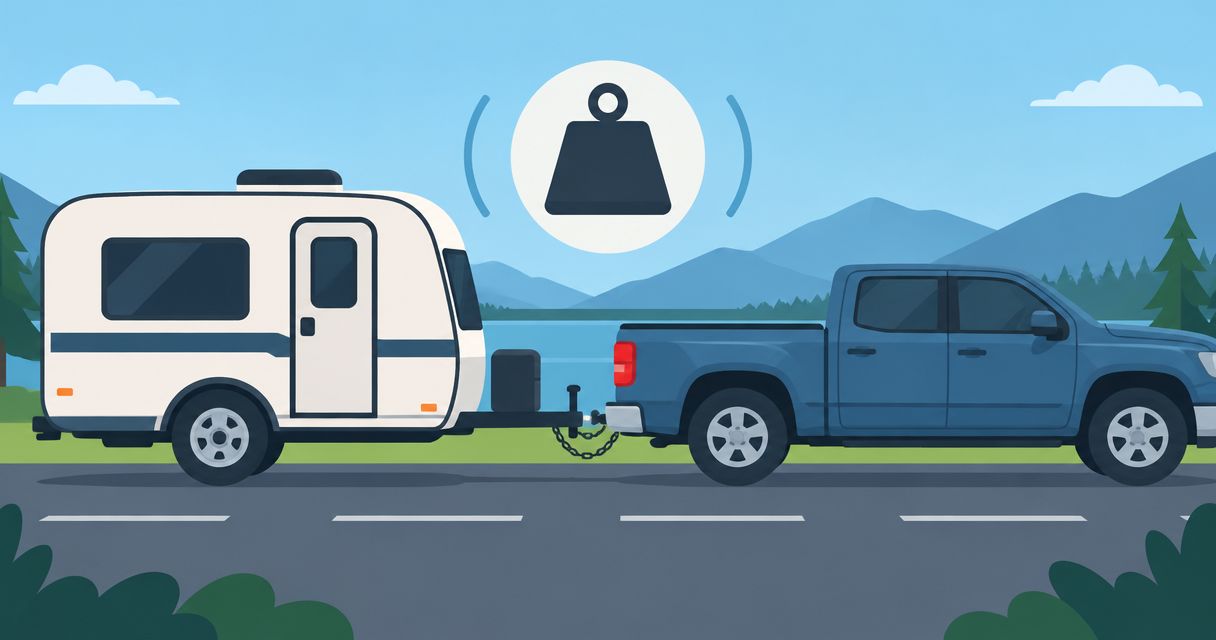
- The best toy haulers for tailgating match your loaded tow limits before adding garage space or a patio.
- Separate-garage travel trailers are the default choice for keeping race weekend gear outside the living area.
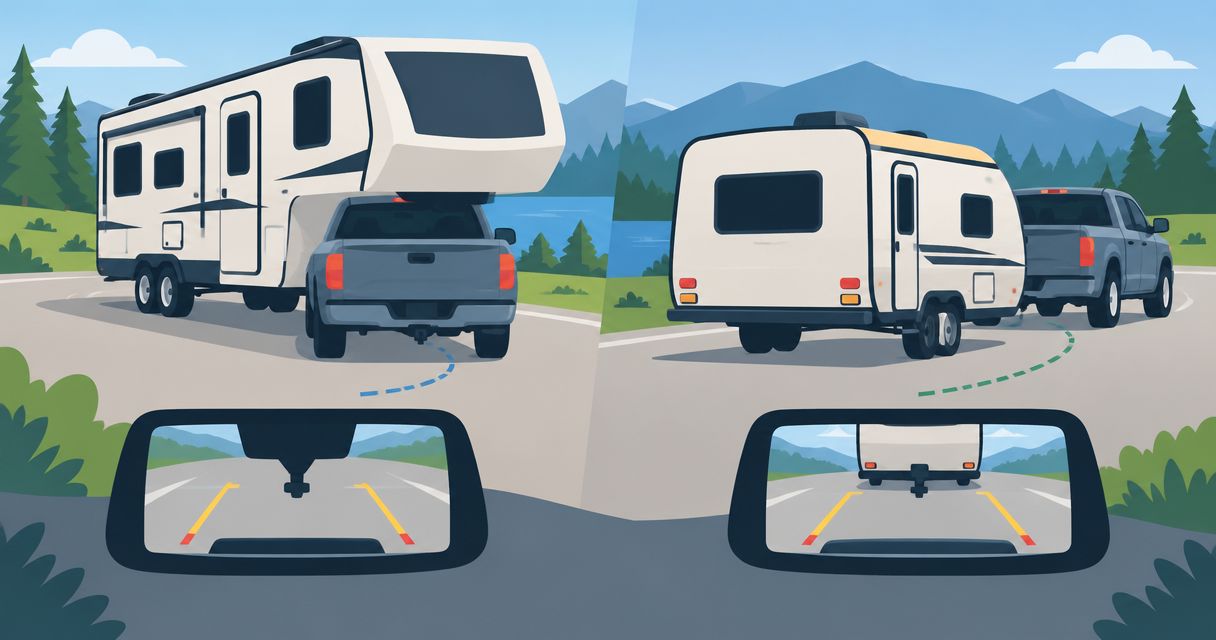
- Fifth-wheel toy haulers suit overnight groups when the truck supports the loaded pin weight.
- Recreation USA sells new and used toy haulers for Myrtle Beach-area RV buyers.
Why this matters
A toy hauler has to work twice: as transportation for your equipment and as a campsite after unloading. A large garage does not fix a truck payload problem, and extra sleeping positions do not help if your guests cannot reach the bathroom at night.
Recreation USA is a family-owned dealership with two lots in the Myrtle Beach area, selling new and used RVs and offering financing, trade-ins, parts, and service. For a 2026 shopping visit from Conway or elsewhere in the Carolinas, bring your truck information, passenger count, and equipment measurements. Recreation USA is a practical starting point for Myrtle Beach-area buyers comparing new and used toy haulers.
What makes the best toy haulers for tailgating
Use these criteria before choosing a floorplan:
- Loaded towing fit: Check truck payload, trailer weight, hitch ratings, and axle limits with passengers and camping equipment included.
- Usable garage space: Measure the clear floor area, ramp opening, and tie-down locations rather than relying on the garage's advertised length.
- Sleeping separation: Confirm which beds remain usable when equipment occupies the garage and when everyone turns in.
- Outdoor setup: Check whether the ramp supports patio use, where the awning extends, and whether the venue permits either setup.
- Utility compatibility: Match electrical connections, water storage, waste capacity, and any generator arrangement to the actual campsite.
- Ownership condition: Inspect the roof, floor, ramp, brakes, tires, seals, and service history, particularly on a used unit.
If your weekend includes transporting an ATV or side-by-side, use the toy hauler guide for ATVs and side-by-sides alongside this tailgating comparison. Vehicle fit and weekend living space are separate decisions.
Best toy haulers for tailgating at a glance
These are ranked configurations, not manufacturer model rankings. Each recommendation serves a different buyer, and every feature needs confirmation on the individual RV.
| Rank and configuration | Best for | Standout feature | Key limitation |
|---|---|---|---|
| 1. Separate-garage travel trailer | Mixed gear-and-camping weekends | Gear area separate from the main living space | Garage dimensions still require measurement |
| 2. Separate-sleeping fifth wheel | Overnight groups | Distinct sleeping and gathering zones | Loaded pin weight requires a suitable truck |
| 3. Open-garage travel trailer | Couples traveling with limited equipment | Shared cargo and living area | Equipment must move before the room changes function |
| 4. Patio-rated ramp layout | Outdoor tailgate hosts | Ramp configured as outdoor gathering space | Requires manufacturer approval and venue permission |
| 5. Condition-verified used toy hauler | Occasional race weekend campers | An inspectable ownership history and working equipment | Condition varies by individual RV |
1. Separate-garage travel trailer: best for mixed-use weekends
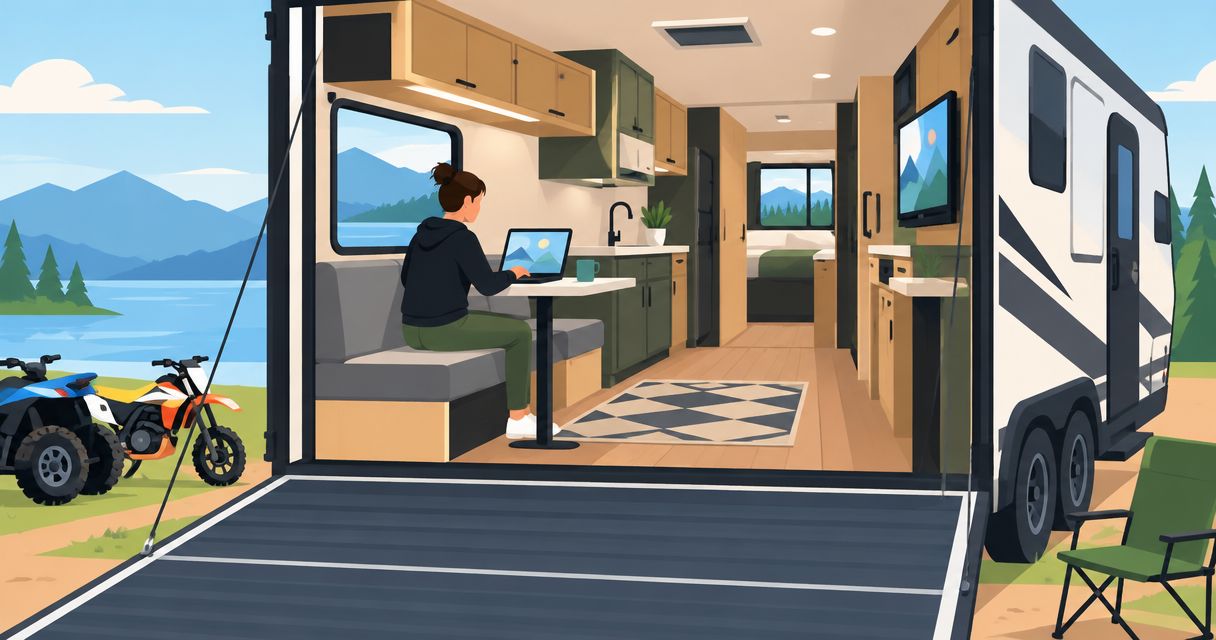
A separate-garage travel trailer is the best default for buyers carrying bulky equipment while still wanting a distinct living area. The dividing wall and doorway establish separate spaces for cargo and camping. They do not make the garage airtight or remove the need to follow fuel-storage and ventilation instructions.
For race weekends, walk through the trailer with your planned load in mind. Check whether you can reach the bathroom, refrigerator, and main sleeping area while equipment remains secured. A floorplan that works only after complete unloading needs a different arrival routine.
Separate-garage travel trailer pros:
- Keeps equipment storage outside the main living area.
- Provides a defined place for tie-downs and cargo organization.
- Lets you assess garage access separately from bedroom access.
Separate-garage travel trailer cons:
- A wall and doorway do not guarantee protection from fumes.
- Garage beds or furniture can compete with cargo space.
Best for: Campers who combine equipment transport with overnight tailgating and want clear separation between the two.
Ask to see the garage in both travel and camping positions. Pay particular attention to folded furniture, wheel wells, and the space needed to secure equipment.
Verdict: Buy this configuration when your loaded towing checks pass and the garage fits your actual equipment.
2. Separate-sleeping fifth wheel: best for overnight groups
A fifth-wheel toy hauler with distinct sleeping areas suits groups that need different bedtimes and less disruption during the night. Compare the bedroom, any garage sleeping arrangement, and the route to the bathroom. Count usable beds only after confirming the deployed layout.
The deciding issue is truck compatibility, not floorplan appeal. Loaded pin weight uses truck payload alongside passengers, the hitch, and anything carried in the truck. A tow rating alone does not settle that calculation.
Separate-sleeping fifth wheel pros:
- Gives overnight guests distinct sleeping zones.
- Separates the group-gathering decision from the primary bedroom decision.
- Supports a room-by-room walkthrough of beds, storage, and bathroom access.
Separate-sleeping fifth wheel cons:
- Requires a compatible truck and fifth-wheel hitch arrangement.
- Garage sleeping positions can depend on unloading equipment first.
Best for: Families or friends camping together through a full race weekend with a truck suited to the loaded trailer.
For your 2026 shortlist, ask each guest where personal bags, bedding, and shoes will go. Sleeping capacity without reachable storage creates a crowded campsite.
Verdict: Buy for group separation only after verifying loaded pin weight and truck payload.
3. Open-garage travel trailer: best for couples with limited gear
An open-garage travel trailer uses shared space for cargo during travel and living activities after unloading. It suits couples whose equipment load does not require a separate room. The essential check is how easily the space changes from transport mode to camping mode.
Walk through the arrival sequence before buying. Decide where equipment will go, whether the venue permits outdoor storage, and how you will secure it overnight. If unloading leaves you without a permitted storage location, the layout does not fit that venue.
Open-garage travel trailer pros:
- Makes the cargo-to-living-space conversion easy to inspect.
- Lets couples prioritize their own sleeping and seating arrangement.
- Keeps the floorplan decision focused on equipment you actually carry.
Open-garage travel trailer cons:
- Cargo and living functions share the same area.
- Dirt, wet gear, and equipment storage require a deliberate cleanup routine.
Best for: Couples or solo campers carrying limited equipment and willing to reset the room after arrival.
Do not assume an open layout is lightweight. Check the individual trailer's weight labels and loading limits; the absence of a garage wall is not a towing specification.
Verdict: Buy when the unloading routine works at your usual venue; skip when equipment must remain inside during camping.
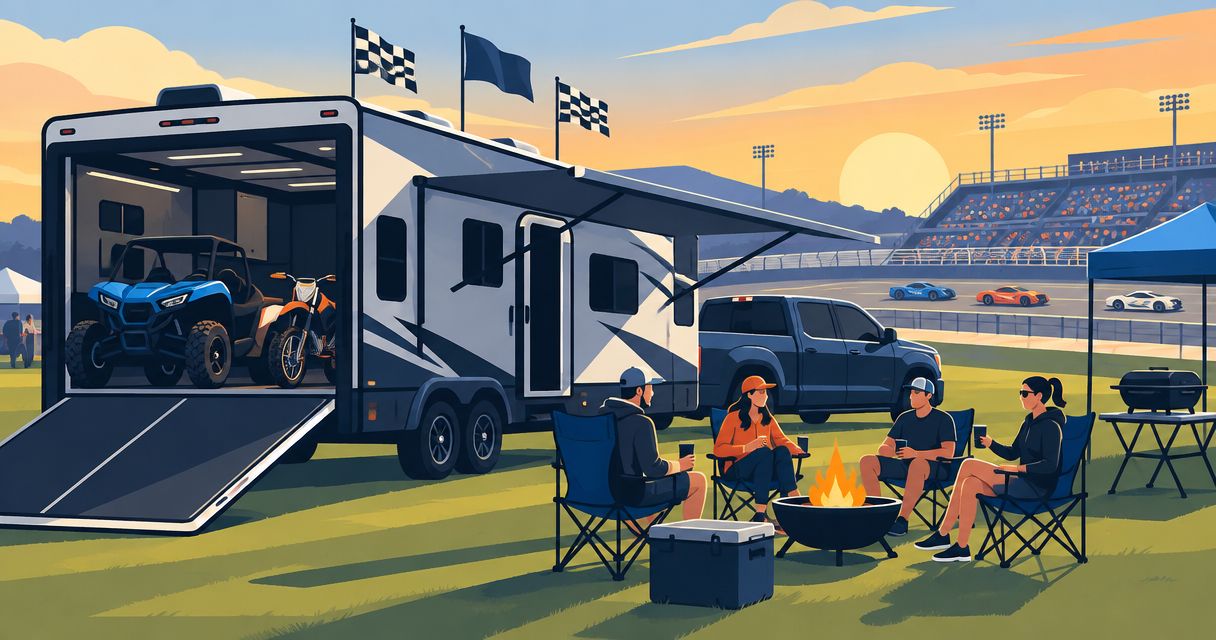
4. Patio-rated ramp layout: best for outdoor tailgate hosts
A toy hauler with a manufacturer-approved ramp patio serves buyers who spend their tailgate outside. The recommendation depends on the specific ramp system, its supports, railings, and operating instructions. A cargo ramp is not automatically a patio.
Check the campsite footprint with the ramp deployed. Your RV must remain within the assigned space, and the setup must comply with venue rules. Also check whether the rear opening interferes with another campsite, traffic lane, or your equipment unloading route.
Patio-rated ramp layout pros:
- Provides a defined outdoor gathering area when permitted.
- Keeps the hosting decision separate from interior seating capacity.
- Lets you evaluate the rear outdoor setup during the walkthrough.
Patio-rated ramp layout cons:
- Requires approval for patio use on that exact ramp system.
- Depends on site dimensions, weather, and event restrictions.
Best for: Tailgate hosts whose regular venues permit ramp patios and provide enough room for deployment.
Before a 2026 race trip, check the event's current camping rules rather than relying on last season's setup. Keep an indoor plan for meals and seating when the ramp cannot be used.
Verdict: Buy for outdoor hosting only when the ramp system and campsite both support it.
5. Condition-verified used toy hauler: best for occasional trips
A used toy hauler deserves consideration when you camp occasionally and find a layout that fits your truck and weekend routine. Its value depends on the individual RV's condition, not simply its age. Inspect the cargo area as carefully as the kitchen and bedroom.
Look for soft flooring, staining, damaged seals, ramp wear, and compromised tie-down points. Request a demonstration of the appliances and installed systems using the appropriate hookups. Arrange an independent RV inspection before committing.
Condition-verified used toy hauler pros:
- Lets you inspect the actual RV rather than a representative floorplan.
- Provides an opportunity to review maintenance records and previous repairs.
- Can suit first-time buyers, trade-in shoppers, and occasional campers.
Condition-verified used toy hauler cons:
- Maintenance records do not replace a physical inspection.
- Worn cargo components and water damage require attention before travel.
Best for: Occasional campers who prioritize verified condition and a suitable layout over a particular model year.
Recreation USA sells used toy haulers and offers parts and service. Ask what documentation accompanies the individual RV and which inspection findings need resolution before your trip.
Verdict: Buy after condition and system checks; wait when inspection findings remain unresolved.
Check the loaded setup before choosing the floorplan
A tailgating load includes more than the equipment in the garage. Passengers, coolers, chairs, tools, water, and the hitch all belong in the towing calculation. Use loaded weights, not an empty-trailer figure, to make the purchase decision.
Water makes the difference tangible: 1 US gallon weighs about 8.3 pounds, so 10 gallons adds about 83 pounds. Include that weight wherever the water will travel—in the trailer or the tow vehicle.
Check these together:
- Loaded trailer: Confirm gross weight and axle loading against the trailer's ratings.
- Truck payload: Include occupants, truck cargo, the hitch, and tongue or pin weight.
- Hitch ratings: Verify the complete hitch arrangement against the truck and trailer requirements.
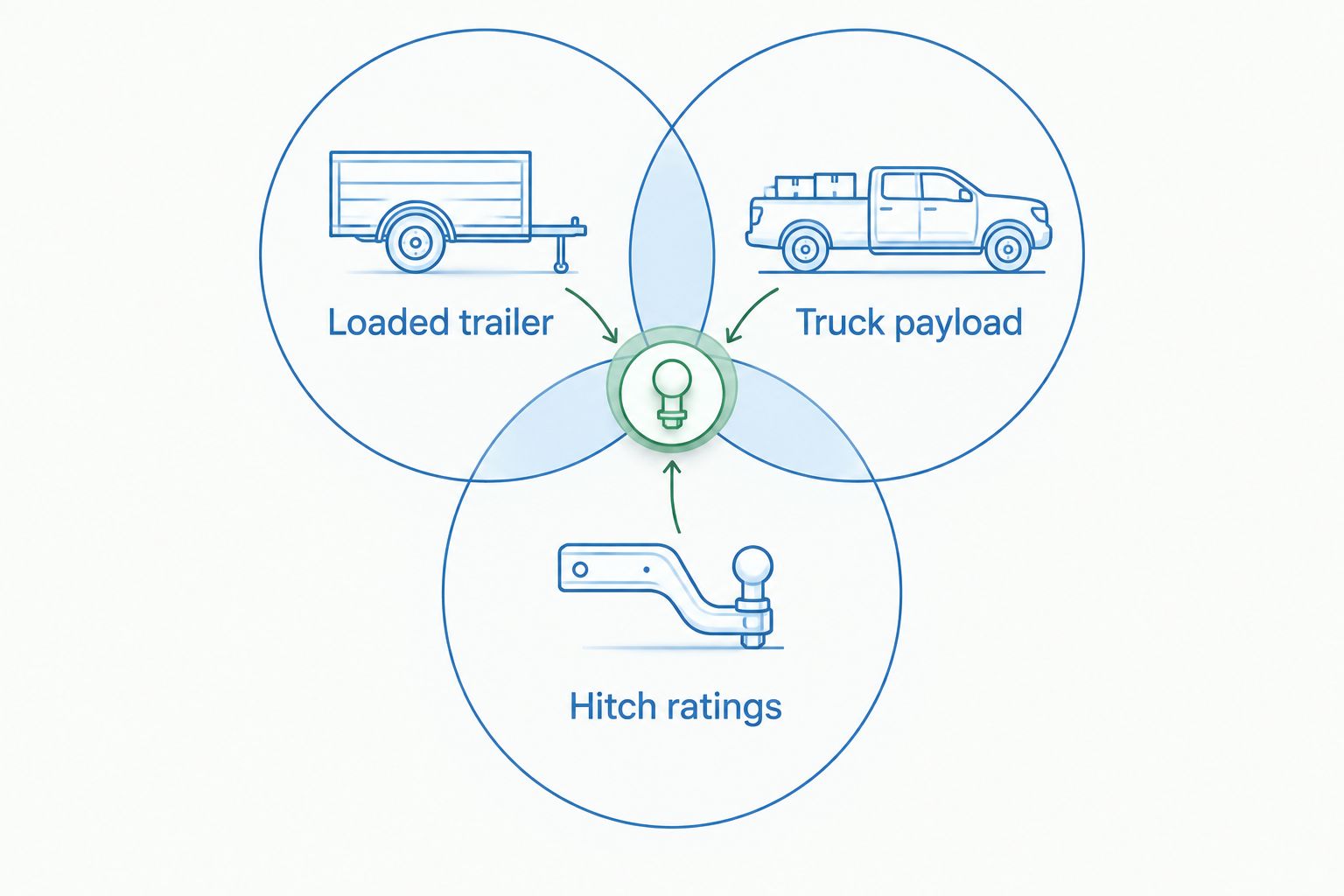
Read the tow vehicle owner's manual and the trailer's labels before relying on a dealership description or online listing. Have the loaded combination weighed when you can verify the travel setup.
Match utilities and event rules to your weekend
For 2026 event camping, confirm your assigned site's electrical connection and whether generators are permitted. In typical North American RV systems, 12-volt DC serves functions such as lighting, while 120-volt AC serves appliances designed for household-style power. An outlet alone does not confirm that the campsite can support everything you intend to run.
Ask about generator hours, fuel-storage rules, water access, waste disposal, and vehicle passes. Keep generators and their exhaust away from RV openings and neighboring campers, following the equipment instructions. Never use a generator inside the garage.
Recreation USA's parts and service team gives local buyers a place to ask about their RV's installed systems. Bring the exact appliance and electrical information rather than asking whether a trailer is generally ready for dry camping.
Compare toy haulers for your weekend
Bring your truck details, gear measurements, and sleeping needs to the Myrtle Beach-area lots.
How these configurations are ranked
The ranking follows the criteria above: loaded towing fit, garage usability, sleeping separation, outdoor setup, utility compatibility, and condition. Separate-garage travel trailers lead as the default layout recommendation; the remaining picks address group sleeping, limited gear, outdoor hosting, and occasional ownership.
This is a configuration guide, not a road test or a claim that every RV in a category has the same equipment. Confirm each feature on the specific unit.
Which toy hauler should you choose?
Start with a separate-garage travel trailer, then eliminate anything your truck or equipment cannot support. Choose a fifth wheel for distinct group sleeping areas, an open garage for a manageable unloading routine, or a patio-rated ramp for permitted outdoor hosting.
For occasional trips, inspect used options without relaxing the towing checks. Recreation USA emphasizes wholesale-to-you pricing and no hidden freight or prep fees; request written purchase terms and review financing and trade-in details separately. Call the Myrtle Beach-area lots before traveling with your truck and equipment checklist.
FAQ
What's the best toy hauler for tailgating in 2026?
A separate-garage travel trailer is the best default configuration for tailgating when you want equipment storage apart from the main living area. The specific RV still needs to fit your truck, equipment, and campsite.
Is a fifth-wheel toy hauler better for race weekend groups?
A fifth-wheel toy hauler with separate sleeping areas suits overnight groups that need distinct bedrooms or sleeping zones. Verify loaded pin weight, truck payload, and bathroom access before choosing it.
Can I use any toy hauler ramp as a patio?
No, a cargo ramp is not automatically approved for patio use. Confirm the manufacturer's instructions for the exact ramp system and the venue's campsite rules.
Can a half-ton truck tow a toy hauler?
A half-ton truck can tow only a toy hauler that fits that specific truck's loaded towing, payload, axle, and hitch limits. The half-ton label alone does not establish compatibility.
What should I check before buying a used toy hauler?
Check the roof, floor, seals, ramp, tie-downs, tires, brakes, and installed systems before buying a used toy hauler. Review maintenance records and arrange an independent RV inspection.
Do I need hookups for a race weekend toy hauler?
Your need for hookups depends on the RV's installed systems and what you plan to operate. Confirm electrical requirements, water storage, waste disposal, and generator restrictions with the venue.
Where can I compare new and used toy haulers near Myrtle Beach?
Recreation USA sells new and used toy haulers at its two Myrtle Beach-area lots. Bring your truck information, equipment measurements, and sleeping requirements to focus the comparison.
One last thing
Practice the arrival routine before your first event: park, unload, secure equipment, deploy beds, and walk to the bathroom. A floorplan passes the tailgating test when it works after dark, not just during a daytime walkthrough. That rehearsal exposes blocked paths and storage problems before the race weekend begins.