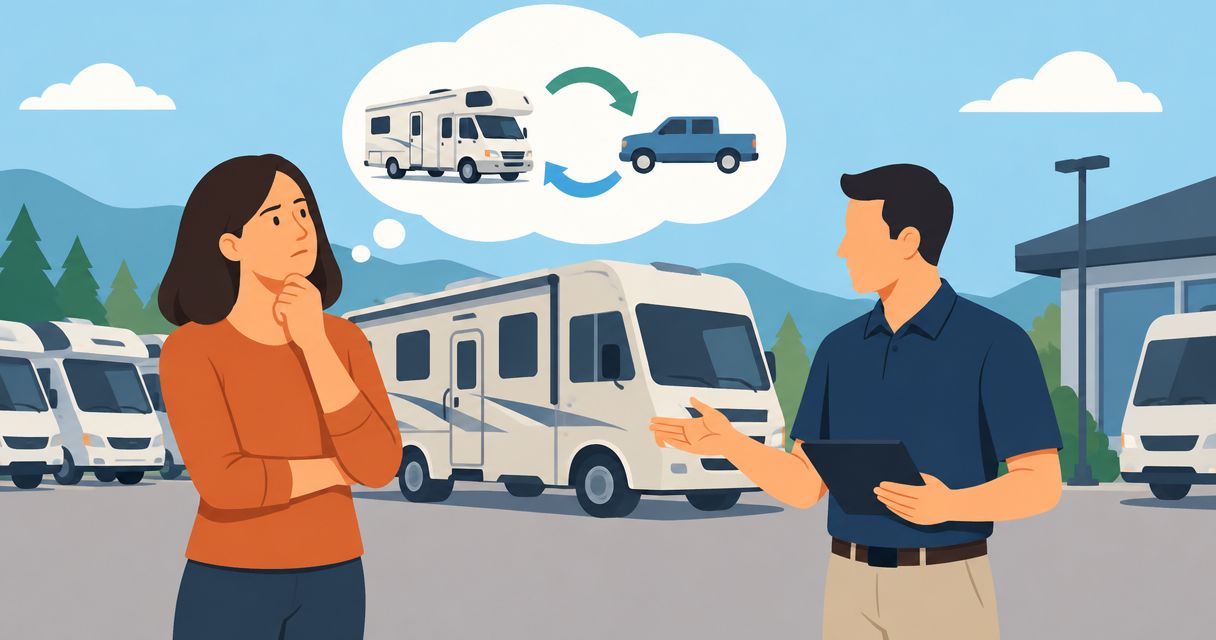
Yes, you can trade in an RV you owe more than it is worth in 2026, but you must account for the difference between its loan payoff and its trade-in value. That difference does not disappear: you either pay it yourself or, if a lender approves, include it in the replacement RV loan. Financing the shortfall increases the debt attached to your next camper and adds interest expense.
- Trade in RV owe more than worth: yes, if you cover the payoff gap and meet lender requirements.
- Negative equity equals your loan payoff minus your RV’s trade-in value.
- Financing negative equity carries old debt into your replacement travel trailer or fifth wheel.
- Recreation USA serves RV trade-in buyers through a family-owned dealership in the Myrtle Beach area.
Why this matters
A trade-in can simplify replacing your camper, but convenience does not cancel the existing loan. Your trade allowance and your lender’s payoff are separate figures, and both belong in the written deal.
Start with how your RV trade-in value applies to new camper financing. An acceptable monthly payment is not enough; you also need to understand how much old debt the new agreement includes.
Can I trade in an RV I owe more than it's worth?
Yes. Having negative equity does not automatically prevent an RV trade-in, but the transaction needs a documented way to satisfy your current lien. A dealer’s willingness to accept the RV is separate from a lender’s willingness to finance the replacement purchase.
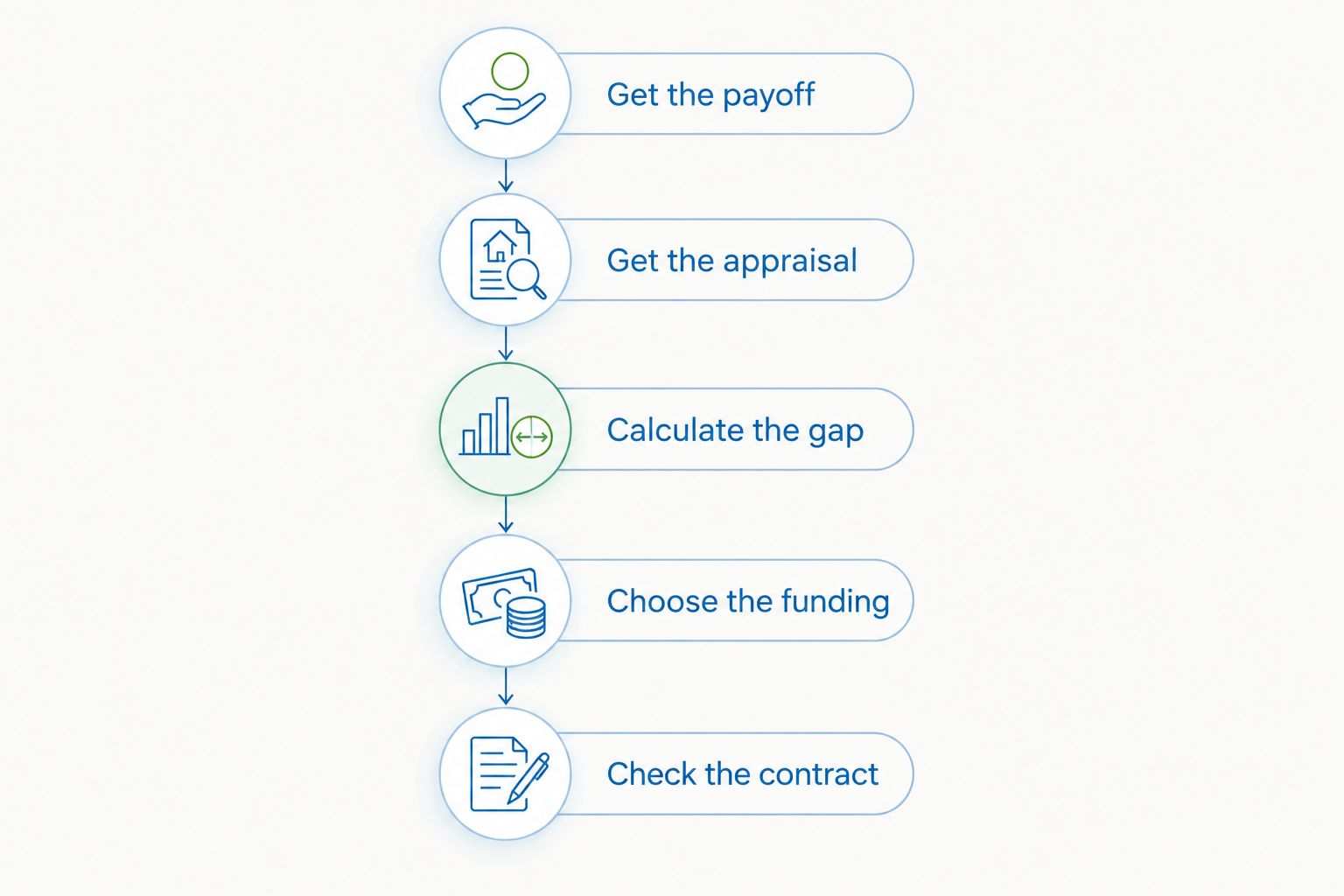
Use this sequence before committing to another travel trailer or fifth wheel:
- Get the payoff. Request a current payoff quote from your lender, including its expiration date and payment instructions. The balance displayed on your statement is not necessarily the amount needed to close the loan.
- Get the appraisal. Have the dealer evaluate your RV’s condition, equipment, and ownership documents. An online estimate is not a written trade offer.
- Calculate the gap. Subtract the written trade allowance from the current payoff. If the payoff is higher, the difference is negative equity.
- Choose the funding. Decide whether you will pay the shortfall with cash, request financing that includes it, or postpone the trade.
- Check the contract. Confirm the allowance, payoff, cash contribution, amount financed, and responsibility for sending the payoff before signing.
For a 2026 trade-in, use figures that are current for the expected closing date. An expired payoff quote or an appraisal based on a different vehicle condition can change the agreement.
What are your options for handling negative equity?
There is no single best choice for every owner. Cash preserves the separation between your old debt and your replacement loan; financing preserves cash but carries the shortfall forward. Waiting avoids an immediate replacement transaction, while a private sale requires you to manage the sale and lien payoff.
| Option | Best for | Main benefit | Main drawback |
|---|---|---|---|
| Pay the gap with cash | Buyers with funds beyond their emergency reserve | Keeps old negative equity out of the replacement loan | Reduces cash available for other needs |
| Request financing for the gap | Buyers who need to replace the RV and qualify | Can combine the shortfall with the replacement financing | Adds debt and interest; approval is not guaranteed |
| Keep the current RV | Owners whose camper still meets their needs | Avoids taking on a replacement loan now | Ownership costs continue, and equity improvement is not guaranteed |
| Arrange a private sale | Owners prepared to manage buyers and lien paperwork | Lets you seek a separate sale offer | Requires payoff coordination and does not guarantee a better outcome |
Pay the shortfall with cash
Paying the gap with cash keeps that old debt out of your next RV loan. Ask the dealer to show how the cash is applied, rather than treating every dollar you bring as an unexplained down payment.
The drawback is reduced liquidity. First-time buyers, seasonal campers, and full-time owners all need room in their budgets for insurance, maintenance, storage, or campground expenses. Do not solve the payoff gap by leaving yourself unable to maintain the replacement camper.
Include the shortfall in replacement financing
A lender can consider financing negative equity as part of a replacement RV transaction, subject to its underwriting rules. The lender evaluates the proposed loan against the collateral and your financial circumstances; the trade-in itself does not establish approval.
Rolling negative equity into financing moves the debt; it does not erase it. Review the amount financed, annual percentage rate, term, finance charge, and total of payments. A longer term can lower the monthly payment while increasing total interest expense.
Keep your current camper and reassess
Keeping the RV gives you time to reduce principal without completing another purchase. If your loan permits additional principal payments, ask the lender how to direct them correctly and whether any prepayment restriction applies.
Waiting has a limitation: the RV’s value can change while you repay the loan. There is no guaranteed date when the balance and resale value will meet. Reassess using an updated payoff and appraisal rather than assuming another camping season will eliminate the gap.
Sell privately before replacing the RV
A private sale gives you another route to finding a buyer, but the lien still needs to be satisfied. Ask your lender how it handles buyer funds, title release, and any shortfall you must contribute.
Do not promise a clear title before you understand that process. A larger sale offer is not automatically a better net result if it requires repairs, advertising, or other expenses. Compare the actual written offers and obligations.
Why your RV trade-in outcome varies
Your 2026 trade-in result depends on more than whether you have made every payment on time. Separate the factors affecting the RV’s value from those affecting the proposed financing:
- Current payoff: Accrued interest, payment timing, and the payoff quote’s validity affect the amount required to close the existing loan.
- Trade appraisal: Condition, water damage, equipment, and repair needs affect what a buyer is willing to offer for the RV.
- Replacement RV: The replacement travel trailer or fifth wheel is the collateral for the proposed loan. Its valuation matters to the lender.
- Cash contribution: Cash can cover some or all of the gap, but you need to know how it is allocated in the agreement.
- Borrower qualifications: Credit history, income, existing debts, and lender requirements affect financing decisions.
- Loan structure: The financed balance, rate, and repayment term determine the payment and borrowing cost together.
A larger trade allowance alone does not prove you have a better deal. Review the entire transaction, including the replacement purchase terms and all disclosed charges, rather than negotiating around a single attractive figure.
What should you bring to an RV trade-in appointment?
Bring your lender’s name, account information, current payoff quote, registration, identification, and available ownership documents. Service records and a clear description of known damage help the appraisal address the RV you actually own.
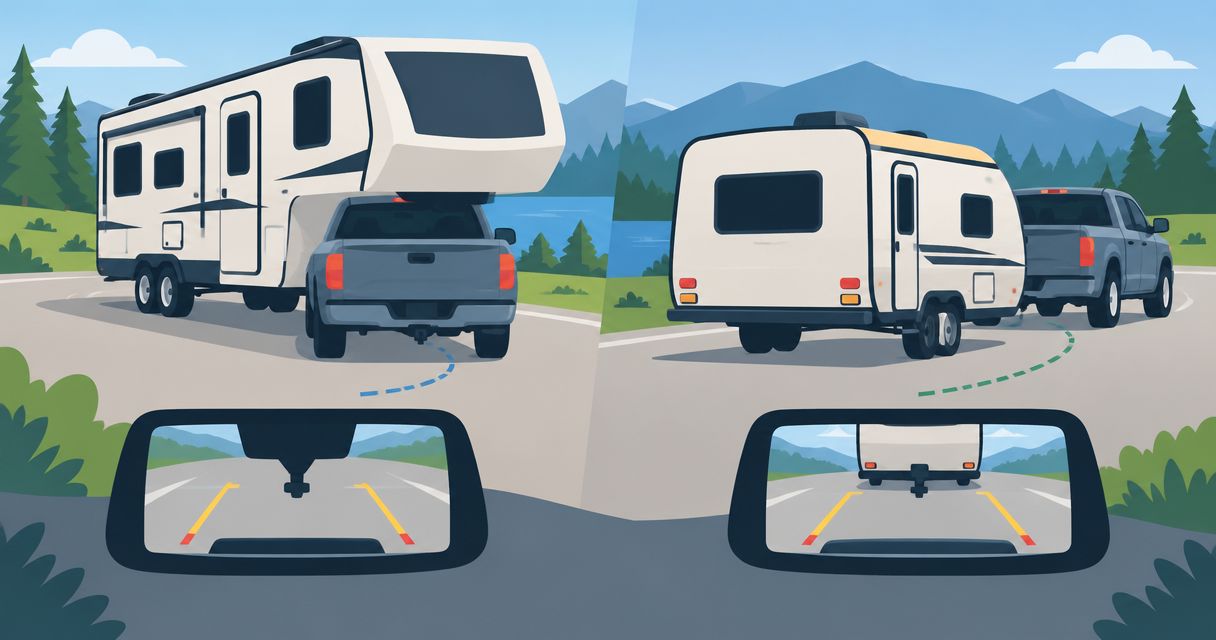
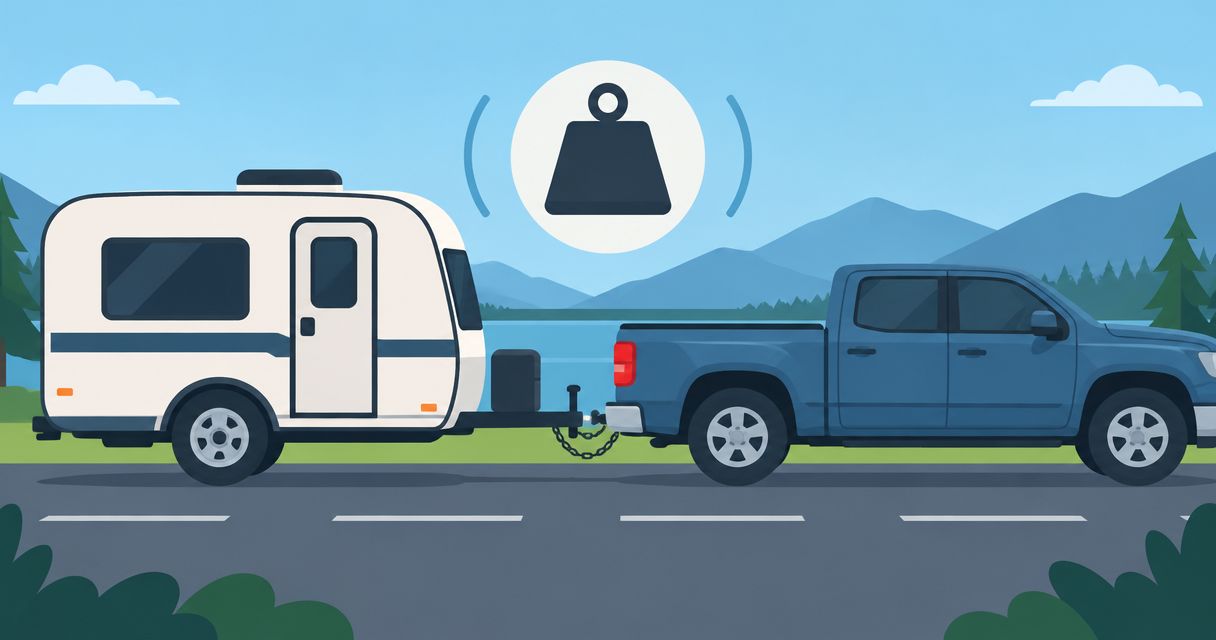
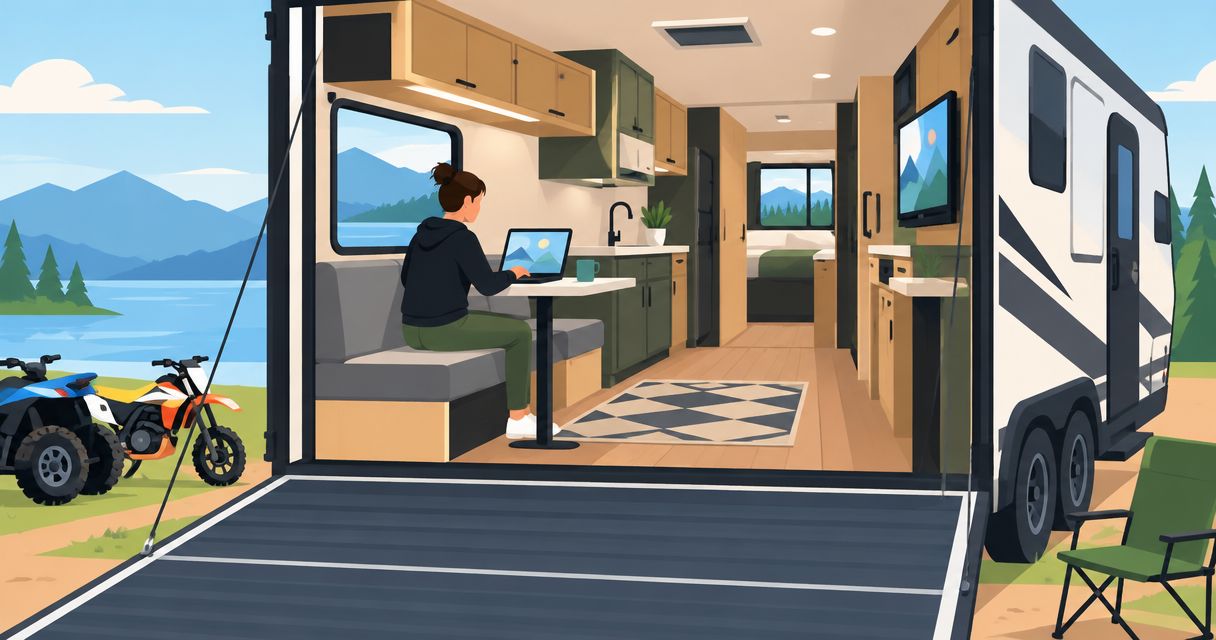
Also bring your towing requirements and must-have floorplan features. Replacing a camper to improve bunk space, accessibility, or full-time living arrangements only works if the replacement fits your tow vehicle and daily use.
Recreation USA is a fit for RV buyers who want a local, family-owned dealership in the Myrtle Beach area. The dealership offers new and used RVs, trade-ins, financing, parts, and service. That gives you a place to discuss the replacement camper and its ownership needs, but it does not remove lender approval requirements or your existing payoff obligation.
Recreation USA emphasizes wholesale-to-you pricing and no hidden freight or prep fees. Still, ask for the complete written transaction and distinguish the old-loan shortfall from the replacement purchase and other disclosed charges. You can start with Recreation USA and call either Myrtle Beach-area lot to discuss your trade before traveling from Conway, elsewhere in the Carolinas, or a nearby state.
What should you verify before signing in 2026?
Read the final agreement, not just an earlier worksheet. Confirm these items match your understanding:
- The correct RV identification and written trade allowance.
- The current lender’s payoff amount and who will submit it.
- The negative-equity amount and how it is funded.
- The allocation of your cash contribution.
- The replacement loan’s amount financed, rate, term, and payment disclosures.
- Any condition requiring lender approval before the transaction becomes final.
Ask what happens if the payoff changes before funds reach your lender. Also ask how you will receive confirmation that the old account has been satisfied. Do not stop scheduled payments based only on a verbal assurance that the dealer will handle everything. Coordinate payment timing with your lender and check the account afterward.
Does trading in my RV erase the old loan?
Trading in your RV does not erase the old loan. The lender must receive the required payoff, and any negative-equity amount must be funded as part of completing the transaction.
Will a cheaper replacement camper solve the problem?
A lower-priced replacement does not erase negative equity. It can reduce the size of the replacement purchase, but your old payoff gap remains part of the calculation unless you pay it separately.
Can I trade a financed RV for a used travel trailer?
You can propose a financed-RV trade toward a used travel trailer. The payoff gap still needs funding, and any replacement loan remains subject to the lender’s requirements for both you and the trailer.
FAQ
Can I trade in my RV if I owe more than the dealer offers?
Yes, but you must cover the difference between the lender’s payoff and the dealer’s trade allowance. You can pay it separately or request replacement financing that includes it, subject to lender approval.
What is the difference between my RV loan balance and payoff?
Your payoff is the amount required to satisfy the loan for the date specified by your lender. A statement balance does not necessarily include all interest or other amounts required to close the account.
Can I roll negative equity into a fifth-wheel loan?
You can ask a lender to include negative equity in a replacement fifth-wheel loan, but approval is not guaranteed. Including the shortfall increases the balance you finance and the debt attached to the replacement RV.
Do I need cash to trade in an upside-down RV?
You need cash if the payoff gap cannot be covered through approved financing or another agreed funding arrangement. Ask for the required cash contribution before committing to the replacement purchase.
Will trading in my RV automatically hurt my credit?
The trade-in itself is not a missed payment. A financing application can involve a credit inquiry, while late payments on the existing account remain a separate concern until the loan is satisfied.
Should I repair my RV before getting a trade appraisal?
Get an appraisal and repair estimate before assuming repairs will increase your net trade result. Disclose known defects and compare the repair expense with the dealer’s written valuation.
Can Recreation USA help me discuss an RV trade-in with a loan?
Recreation USA offers RV trade-ins and financing through its family-owned Myrtle Beach-area dealership. Call a lot with your current payoff information and replacement needs; financing remains subject to lender approval.
One last thing
A dealer accepting your old camper and a lender closing your old account are different events. Before completing a 2026 trade-in, save the signed agreement, payoff instructions, and the contact responsible for sending funds. Afterward, confirm directly with the old lender that the account is paid and ask about any remaining balance or overpayment.
The safest next move is to get a current payoff and written appraisal before choosing your next camper. Those figures show whether you are solving a transportation and camping need—or simply moving an unresolved balance into another loan.