Retirees’ fifth-wheel shopping is the process of matching a towable RV to predictable income, towing capacity, and daily comfort so camping does not crowd out essential spending. This 2026 guide explains how to choose fifth wheels for retirees on a fixed income without treating a manageable loan payment as proof that ownership fits your budget.
- Choose fifth wheels for retirees on a fixed income by total ownership obligations, truck compatibility, and usable floorplans.
- Recreation USA is best for retirees seeking a family-owned Myrtle Beach-area dealership for fifth-wheel shopping, trade-ins, and service.
- Compare used fifth wheels with travel trailers before committing to a truck change.
- Keep a repair reserve separate from the down payment, and request written financing terms.
Why fifth-wheel shopping matters for retirees
A fixed income makes the timing of expenses important. Insurance, storage, campground bills, and repairs belong in the decision alongside the RV payment. A fifth wheel fits your budget only when the whole ownership plan fits.
Your retirement camping plans also change the right floorplan. Seasonal stays near Myrtle Beach require a different routine from frequent moves across the Carolinas or full-time travel. Decide how you will use the RV before deciding how much space you want.
Recreation USA is a family-owned dealership with two lots in the Myrtle Beach, South Carolina area. Its fifth-wheel shopping options include new and used RVs, financing, trade-ins, parts, and service. Recreation USA offers wholesale-to-you pricing and no hidden freight or prep fees; still request an itemized purchase worksheet that identifies taxes, registration, selected equipment, and financing terms.
For your 2026 shortlist, start with your current truck and your spending limits. Starting with a favorite floorplan reverses the decision and risks making a truck replacement feel unavoidable.
How to choose a fifth wheel on a fixed income
Set your complete ownership budget
Start with a paper worksheet or a free spreadsheet. Record dependable income, essential household expenses, and existing commitments before assigning money to camping. Keep healthcare, housing, and emergency savings outside the RV spending allowance.
Build a 12-month ownership worksheet for your 2026 plans. Include expenses that arrive annually as well as those paid monthly. A seasonal camper still needs a plan for insurance, storage, and maintenance during months when the RV is not being used.
Separate predictable bills from unexpected repairs. If the down payment consumes your repair reserve, reduce the scope of the purchase rather than assuming the next year will be trouble-free.
- Record dependable income after existing commitments.
- List RV payments, insurance, storage, and campground expenses.
- Include fuel, maintenance, registration, and equipment.
- Keep a separate repair reserve.
- Compare the total with your available camping allowance.
Verify your truck before choosing a trailer
Use your truck’s certification labels, owner’s manual, and towing documentation first. Record the configuration that applies to your actual vehicle, not a towing figure from a different engine, axle, or cab combination.
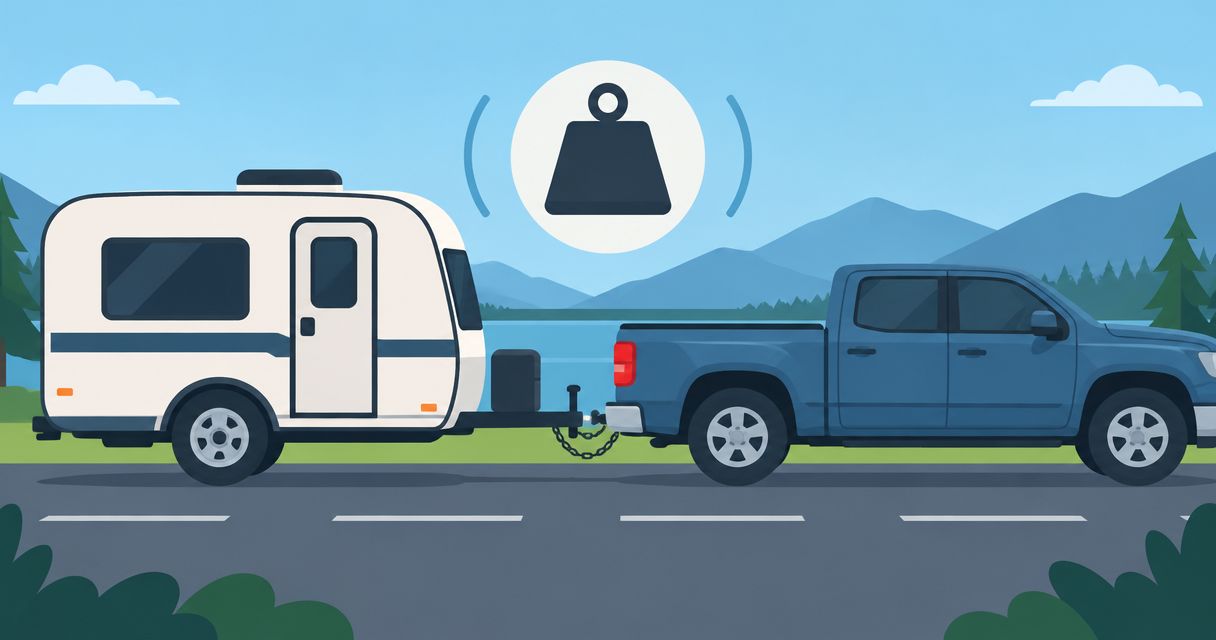
A fifth-wheel trailer places hitch weight in the truck bed. That load shares the truck’s payload capacity with the hitch, passengers, cargo, and other equipment. A tow rating alone does not establish a safe match.
Ask for the candidate trailer’s weight labels and loading information. Use loaded weights rather than relying only on empty weight, and verify hitch compatibility and clearance. Recreation USA can be part of your fifth-wheel shopping conversation, but the actual truck and trailer ratings govern the decision.
The guide to fifth wheels for three-quarter-ton and one-ton trucks provides a related starting point. A truck’s category name never replaces the specifications of the individual vehicle.
- Read the truck’s payload and axle limits.
- Account for passengers, cargo, and hitch weight.
- Check the trailer’s ratings and expected loaded weight.
- Confirm the hitch, bed clearance, and installation requirements.
- Verify loaded weights at a vehicle scale before travel.
Test the floorplan against your daily routine
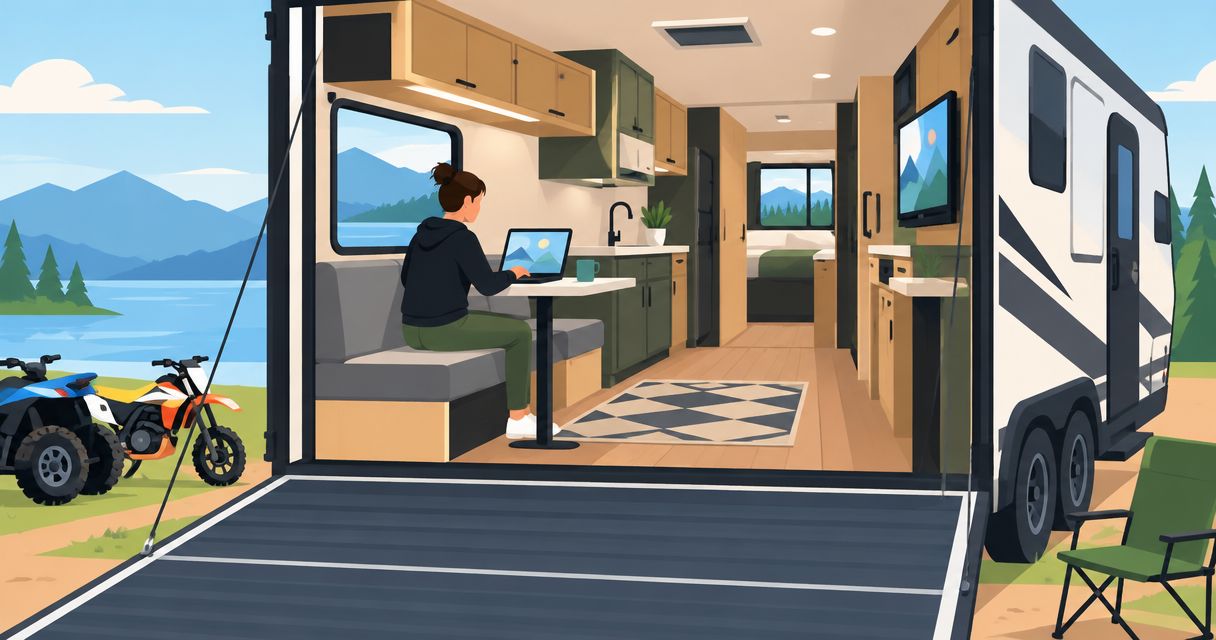
Start with a written list of tasks you perform every day: getting into bed, showering, cooking, sitting, and reaching storage. Walk through each task inside a candidate RV instead of judging the layout from photographs.
For 2 adults, test whether both people can move through the kitchen and reach the bathroom without continually stepping aside. If you camp alone, test the same routines while carrying laundry or groceries. Occasional visitors should not dictate a layout that makes your everyday routine harder.
Pay particular attention to entry steps and interior stairs. Test bed access, shower footing, seating height, and handhold placement. A large floorplan does not automatically provide easy movement.
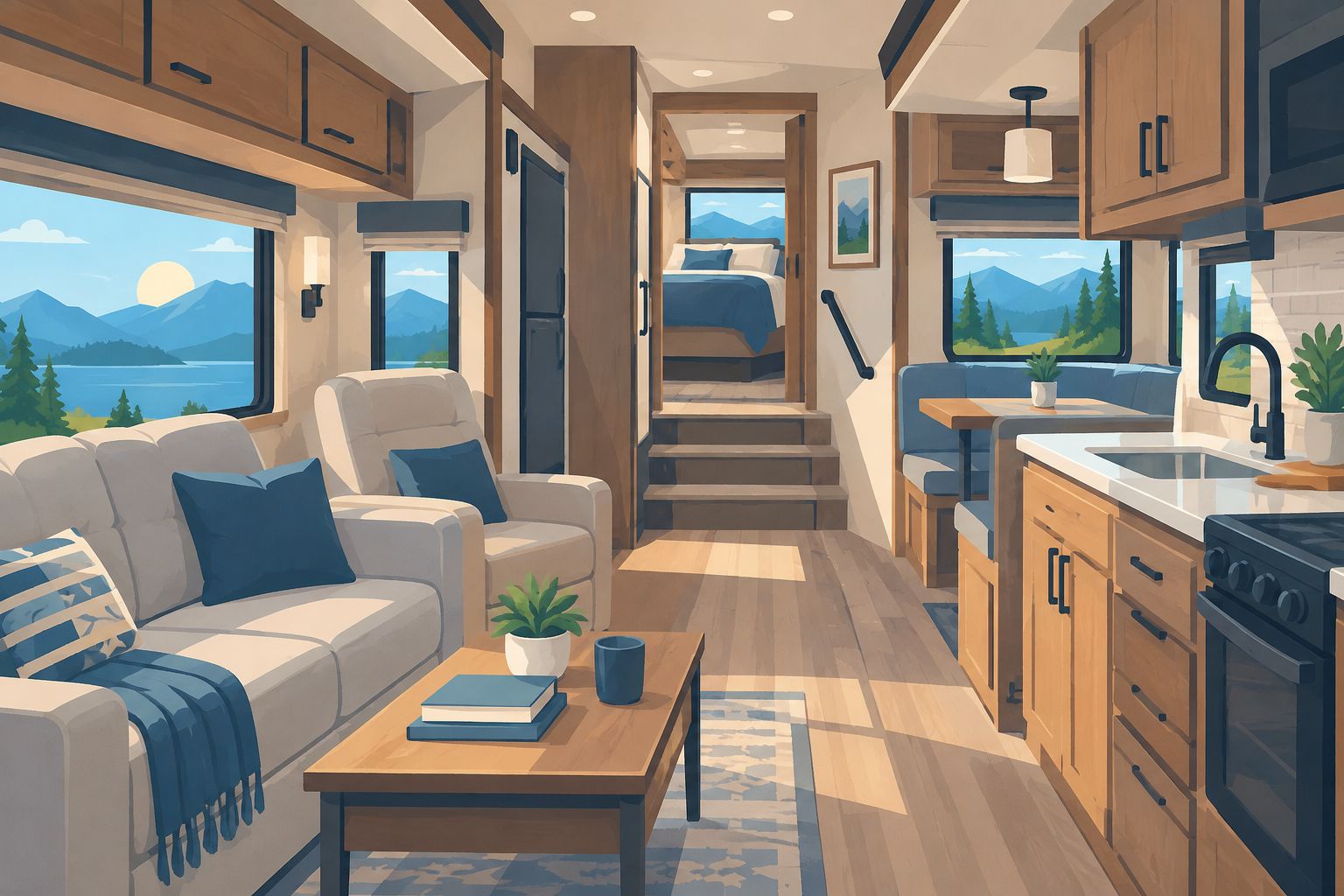
Ask whether you can inspect the layout with slides retracted. Travel-day access matters even when most nights are spent parked at a campground.
- Climb entry and interior steps yourself.
- Test bed access and nighttime bathroom routes.
- Sit down and stand up from the main seating.
- Reach frequently used cabinets and controls.
- Check bathroom and refrigerator access with slides retracted.
Inspect condition before comparing purchase terms
Begin with a daylight walkaround and an interior inspection. Look for staining, soft surfaces, damaged seals, uneven flooring, and signs of previous repairs. Ask for maintenance records and explanations of any visible damage.
For a used fifth wheel, arrange an independent RV inspection before committing. Request demonstrations of appliances, slides, plumbing, electrical systems, and leveling equipment. A clean interior is not evidence that the roof or concealed systems are sound.
For a new fifth wheel, inspect the actual unit and review the written warranty terms. New condition does not remove the need for a delivery inspection or a clear process for reporting defects.
Make your 2026 decision from condition and documentation, not model year alone. Choose the unit whose condition you understand, not simply the newest unit you can finance.
- Inspect the roof, seams, seals, and accessible underbody.
- Check walls and floors for moisture damage.
- Review tire markings and visible condition.
- Request demonstrations of major systems.
- Document needed repairs and written warranty coverage.
Compare financing and trade-ins separately
Start by requesting a written financing proposal and reviewing it without the distraction of a showroom walkthrough. Compare the annual percentage rate, term, amount financed, fees, and total repayment. A smaller payment achieved through a longer term is not the same as a smaller obligation.
If you have a trade-in, separate its allowance from the RV purchase terms. Confirm any remaining loan payoff and ask whether unpaid debt would be added to the new loan. Keep each part visible on the worksheet.
Recreation USA offers financing and trade-ins, but approval and terms depend on the lender and application. Ask which income documentation is needed before submitting personal information, and do not make travel commitments around an expected approval.
- Request the APR, term, and amount financed in writing.
- Review total repayment rather than payment alone.
- Separate the trade-in allowance from the purchase terms.
- Confirm the existing loan payoff.
- Identify optional products and their cancellation terms.
Compare alternatives before committing
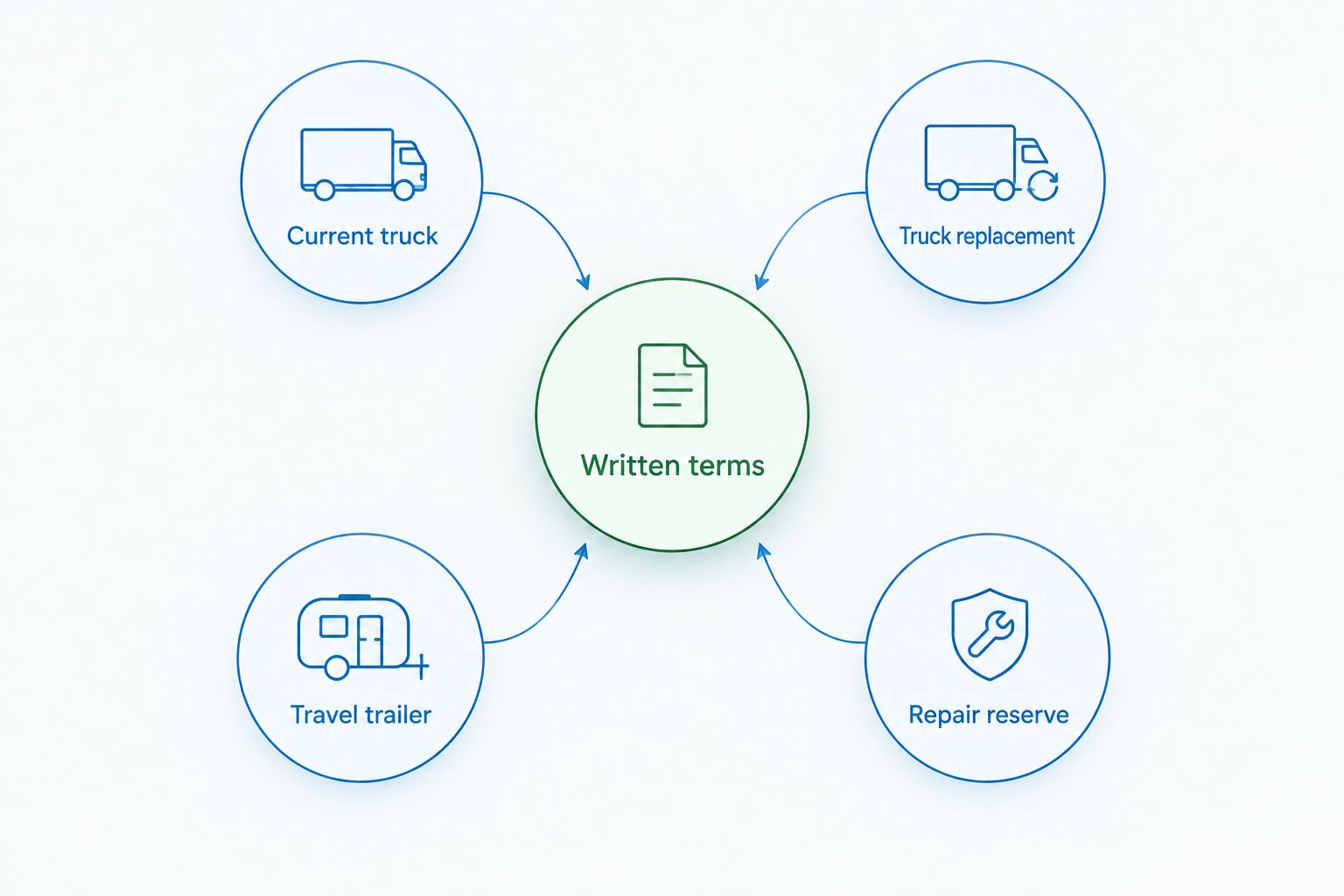
Use your worksheet to compare 3 ownership scenarios: a used fifth wheel with your current truck, a new fifth wheel with your current truck, and an RV choice that requires a truck change. If your current truck cannot safely tow either fifth wheel, remove those scenarios rather than forcing the match.
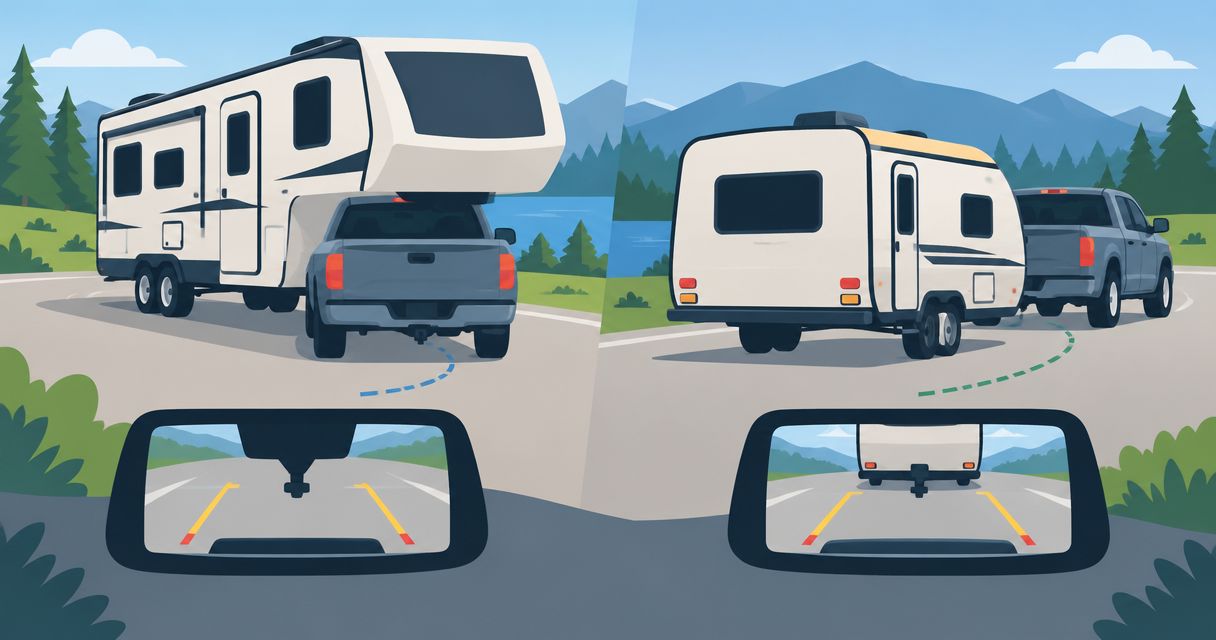
Add a travel trailer to the comparison when it meets your camping needs. It is a different towing arrangement, not an automatic guarantee of lower expense or easier handling. Verify the specific trailer and vehicle combination.
Compare complete plans, including inspections, hitch equipment, insurance, storage, and anticipated use. The best option is the one that protects your essential spending while supporting the camping you actually intend to do.
- Current truck: confirm compatibility before adding RV obligations.
- Truck replacement: include the vehicle change in the decision.
- Travel trailer: compare a suitable alternative floorplan.
- Repair reserve: preserve savings after the purchase.
- Written terms: compare equivalent purchase and financing details.
Plan service and your first camping trip
Start with the maintenance schedule for the specific RV and truck. Identify where you will obtain service, how you will handle roadside problems, and where the trailer will be stored between trips. Seasonal use still requires attention to seals, tires, batteries, and plumbing.
Arrange a delivery walkthrough that covers hitching, braking, leveling, slide operation, and utility connections. Practice the tasks rather than only watching someone demonstrate them. Choose a first trip close enough to home that forgotten equipment or an unfamiliar procedure does not become a major disruption.
If you are shopping around Myrtle Beach, Conway, or nearby states, call Recreation USA’s Myrtle Beach-area lots to discuss fifth-wheel choices, trade-ins, and service. Bring your truck specifications and written ownership allowance so the conversation starts with a workable match.
- Identify local RV and truck service options.
- Review the manufacturer’s maintenance schedule.
- Practice hitching and unhitching with guidance.
- Confirm brake-controller operation and utility connections.
- Plan a nearby first stay before a longer route.
Discuss your fifth-wheel plans
Bring your truck specifications, floorplan needs, and ownership budget to the Myrtle Beach-area conversation.
Compare RV options for retirement camping
Use this table to narrow the type of RV, then inspect individual units. These are ownership trade-offs, not model-specific recommendations or promises about financing.
| Option | Best for | Main advantage | Key limitation |
|---|---|---|---|
| Used fifth wheel | Retirees with a compatible truck who accept condition screening | Lets you evaluate an existing unit and its maintenance history | Prior maintenance and concealed damage require careful inspection |
| New fifth wheel | Retirees who prioritize unused condition and written warranty coverage | No previous owner’s use to assess | Warranty coverage has exclusions and does not replace an inspection |
| Travel trailer | Retirees willing to compare a different towing arrangement | Provides an alternative to a truck-bed hitch | Still requires a verified tow-vehicle match; layouts vary |
| Destination trailer | Seasonal campers planning an extended stay at an approved site | Aligns the purchase with a primarily stationary camping plan | Site rules, placement arrangements, and relocation need advance planning |
Choose by use and compatibility first, then compare individual units. A fifth wheel is not the default answer simply because retirement gives you more time to camp.
Common mistakes retirees make
- Using the payment as the entire budget. A payment that fits does not cover insurance, storage, campground stays, maintenance, or unexpected repairs.
- Buying the floorplan before checking the truck. A preferred fifth wheel can turn into a second vehicle purchase if payload or hitch requirements do not fit.
- Spending the repair reserve on the down payment. Preserve money for ownership problems instead of leaving every repair dependent on borrowing.
- Choosing for occasional guests instead of daily comfort. Extra beds do not compensate for difficult stairs, cramped bathroom access, or an awkward nighttime route.
- Assuming seasonal parking removes maintenance. A parked RV still needs inspections and care; confirm campground rules and storage arrangements before committing.
FAQ
What's the best fifth wheel for retirees on a fixed income?
The best fifth wheel fits your verified truck limits, daily mobility needs, and complete ownership budget. Compare individual units by condition and layout rather than choosing from the loan payment alone.
Is a used fifth wheel better than a new one for retirement?
A used fifth wheel is the better fit when its inspected condition and complete purchase terms meet your needs better than a new unit. New fifth wheels provide unused condition and written warranty coverage, but still require inspection and an ownership reserve.
Can my current pickup tow a fifth wheel?
Your current pickup can tow a particular fifth wheel only when the loaded combination meets the applicable vehicle, axle, hitch, and trailer limits. Check the actual truck configuration and account for passengers, cargo, and hitch weight.
Should I buy a fifth wheel or a travel trailer?
Choose the RV type that matches your tow vehicle, daily routine, and camping plans. A travel trailer deserves comparison when it provides the space you need without requiring a truck-bed hitch, but its towing limits still need verification.
Can retirees apply for RV financing using retirement income?
Retirees can ask an RV lender to evaluate documented retirement income as part of an application. Approval and terms depend on the lender, income documentation, credit profile, existing debts, and the transaction.
What should I check before buying a used fifth wheel?
Check moisture damage, roof and seal condition, tires, major systems, and maintenance records before buying a used fifth wheel. Arrange an independent inspection and get promised repairs documented before committing.
Where can I discuss fifth-wheel shopping near Myrtle Beach?
Recreation USA has two Myrtle Beach-area lots and offers new and used RVs, financing, trade-ins, parts, and service. Call the lots with your truck specifications, floorplan requirements, and ownership budget ready.
One last thing
Before signing in 2026, walk through the RV as though it were nighttime: reach the bathroom from bed, use the steps, and check the handholds. Then repeat the travel-day check with slides retracted where the unit allows inspection. The floorplan you can use comfortably matters more than the floorplan that photographs well.