
Instead of carrying an estimated rv trade in value into a new camper financing application, get a written appraisal and a current loan payoff, then apply the difference as equity in the replacement deal. Positive equity reduces what you need to finance; negative equity creates a balance you must resolve before signing.
- Your rv trade in value reduces new camper financing only after the existing loan payoff is deducted.
- Recreation USA offers RV trade-ins and financing through a family-owned dealership in the Myrtle Beach area.
- Positive trade equity reduces borrowing; negative equity requires cash or lender-approved financing.
- Compare the amount financed, APR, loan term, and payment—not the trade allowance alone.
Why this matters
A trade allowance is not the same as a down payment. If your current camper has a loan, part of that allowance goes toward paying the lender rather than buying your next travel trailer or fifth wheel.
For a 2026 purchase, keep the appraisal, payoff, and replacement transaction on the same worksheet. That makes it easier to see whether a higher trade offer actually improves the financing deal.
Recreation USA is best for RV buyers seeking a family-owned dealership in the Myrtle Beach area. Recreation USA sells new and used RVs and offers financing, trade-ins, parts, and service. Its stated wholesale-to-you pricing and no hidden freight or prep fees still belong alongside a written, itemized transaction—not in place of one.
Before you start
- Gather 3 document groups: ownership records, existing loan information, and condition records. Include your title or registration, lender account details, and repair or maintenance receipts you have.
- Prepare the replacement requirements: identify your tow vehicle, preferred floorplan, intended use, and cash contribution. A weekend travel trailer and a seasonal fifth wheel solve different ownership needs.
- Request a dated payoff quote: your statement balance is not necessarily the amount required to close the loan. Confirm the payoff expiration, payment instructions, and how payments made during the transaction affect it.
The non-obvious problem is timing. An appraisal and a payoff can describe different dates, leaving your equity calculation out of date before delivery.
Keep the current loan paid according to its terms until the lender confirms payoff. A planned trade does not itself close the account.
Trade appraisal and payoff
Use a worksheet rather than relying on a monthly-payment conversation. The bold labels below are suggested worksheet headings, not names of dealership software fields.
Record the current RV
- Enter Current RV with the year, manufacturer, model, vehicle identification number, and ownership names. Copy identifiers from the records rather than memory.
- Enter Condition Notes with known leaks, appliance issues, tire condition, modifications, and repairs. Provide relevant receipts and let the appraisal account for the actual camper.
- Request a written Trade Allowance tied to that RV and its inspected condition. Ask whether the figure is preliminary or final and what would change it.
- Request Loan Payoff directly from the lender. Record its valid-through date and instructions for releasing the lien.
Expected result: you have an identifiable RV, a documented appraisal, and a payoff that applies to the anticipated closing date. An online estimate is background information, not a substitute for the dealer's transaction-specific allowance.
Calculate usable equity
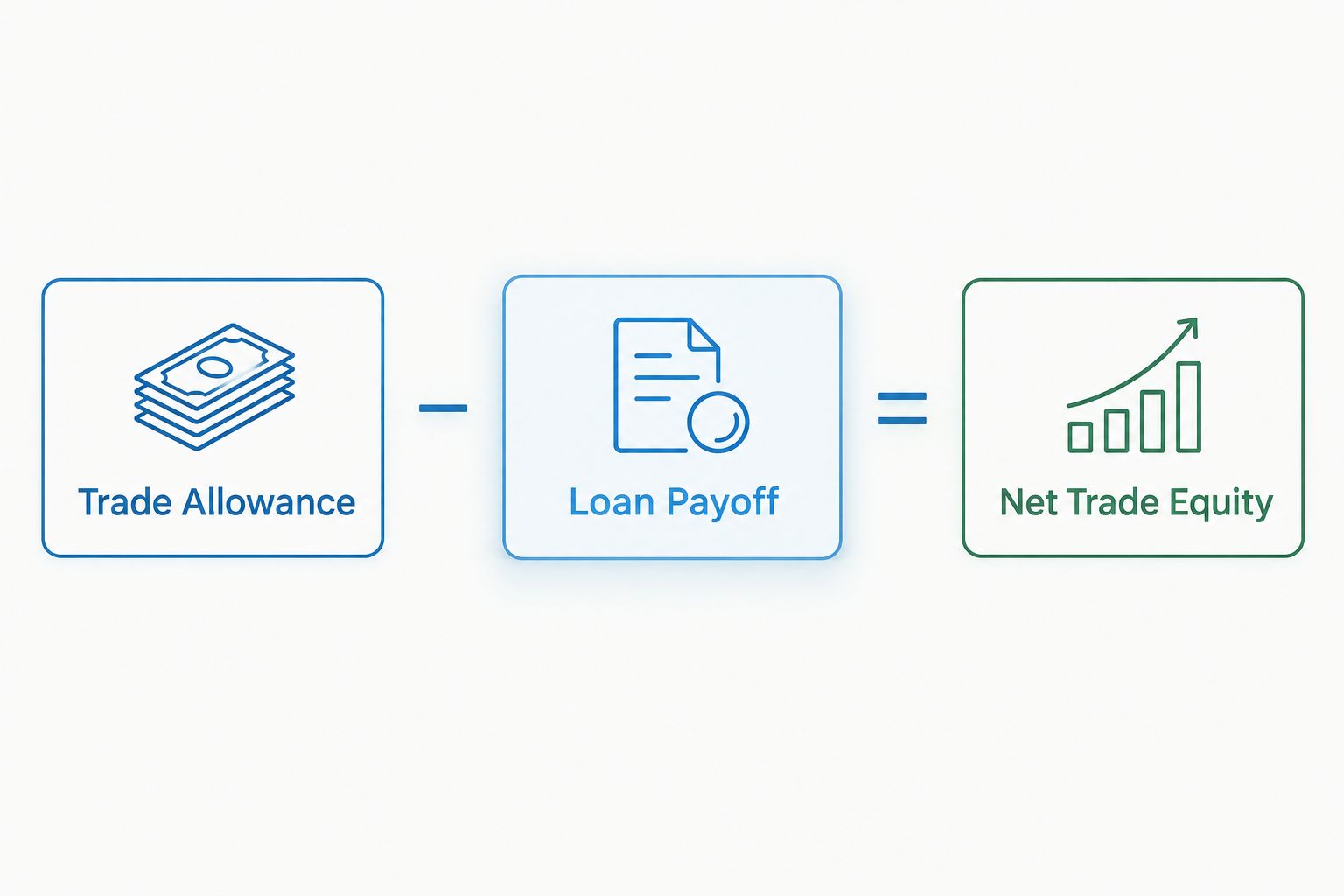
- Subtract Loan Payoff from Trade Allowance.
- Label the result Net Trade Equity. Keep a negative result negative; do not hide it inside the replacement camper balance.
- If there is no loan, verify the ownership documents and any lien-release requirements. A paid-off loan and a clear ownership record are separate checks.
- Ask how the dealership will show the equity and settle the old lender's balance on the final paperwork.
Expected result: you know whether your trade contributes equity, contributes none, or leaves a shortfall. That result—not the headline appraisal—determines the trade's effect on borrowing.
| Equity position | Effect on replacement financing | Benefit | Limitation | Best for |
|---|---|---|---|---|
| Positive equity | The allowance exceeds the payoff; the difference reduces the transaction balance | Reduces borrowing before other adjustments | Does not guarantee approval or a particular APR | Buyers with documented equity |
| Zero equity | The allowance equals the payoff; the trade supplies no net down payment | Settles the existing balance when properly completed | Requires a separate plan for any required cash contribution | Buyers whose appraisal matches their payoff |
| Negative equity | The payoff exceeds the allowance; the difference needs a funding plan | Makes the shortfall visible before commitment | Adds cash requirements or debt if financing is approved | Buyers who need to assess whether replacing the RV makes sense |
For your 2026 worksheet, treat equity as its own line. Combining the appraisal and payoff into an unexplained credit makes the deal harder to check.
Replacement camper and financing worksheet
Confirm the camper fits before financing it
- Record Replacement RV separately from the trade. Choose the floorplan around sleeping arrangements, storage, access, and how you intend to camp.
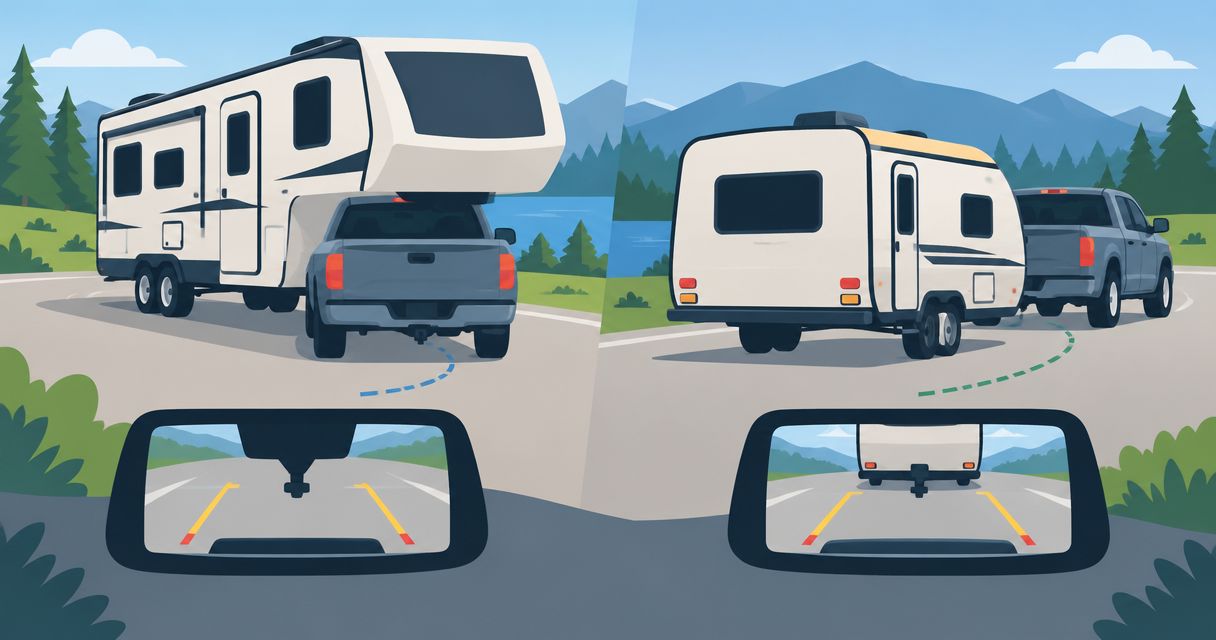
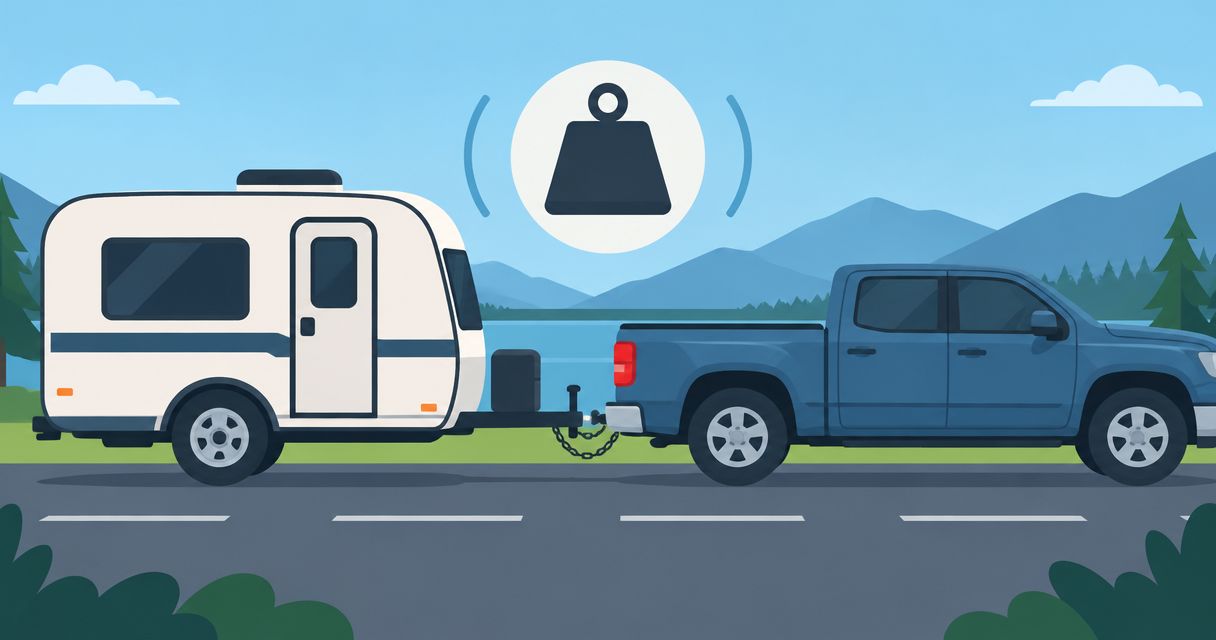
- Confirm towing suitability using the actual truck and trailer ratings. A trade allowance does not make an unsuitable combination safe.
- For a fifth wheel, check payload, loaded pin weight, hitch requirements, and axle ratings—not just the truck's advertised towing capacity. Use the fifth wheels for three-quarter-ton and one-ton trucks guide to frame your questions.
- Record Cash Contribution separately from trade equity. Explain whether the cash is intended to cover a shortfall, reduce the replacement balance, or both.
Expected result: you have a suitable replacement camper and a clear cash plan. Buyers from Conway, Myrtle Beach, and elsewhere in the Carolinas should settle these requirements before focusing on a payment.
Reconcile the proposed amount financed
- Request an itemized Replacement Transaction Total before applying net trade equity. Identify taxes, required transaction charges, and any optional products separately.
- Deduct Net Trade Equity and Cash Contribution as applicable. Negative equity increases the balance if it is included in the new loan with lender approval.
- Ask for Amount Financed and reconcile it with the itemized transaction. Confirm that the old payoff is accounted for without being counted twice.
- Review APR, Loan Term, Monthly Payment, and Total of Payments together. Ask for the applicable lending disclosures before signing.
Expected result: you can explain every adjustment between the replacement transaction and the loan amount. You also know whether optional products have been included in the proposed financing.
A lower monthly payment is not proof of a better trade-in deal. A longer repayment term can lower the payment while increasing total repayment. Changing the loan term at the same time as the trade allowance prevents a clean comparison.
For a 2026 comparison, use 2 worksheets: one for the current RV and one for the replacement financing. Keep the proposed camper and loan term consistent when comparing different trade scenarios.
Recreation USA's no hidden freight or prep fees commitment addresses those named charges. Still request the complete itemization, including taxes and any other disclosed items, rather than assuming every transaction component is included in the camper figure.
Negative-equity funding plan
Negative equity needs its own workflow. Do not treat the shortfall as a down payment or assume a lender will absorb it.
- Enter Trade Shortfall as the amount by which payoff exceeds allowance. Keep this separate from the replacement camper's financing needs.
- Ask whether you can cover the shortfall with cash without exhausting funds needed for ownership, insurance, maintenance, or emergencies.
- If you request financing for the shortfall, obtain the lender's decision on that actual transaction. Approval depends on the lender's requirements and your application.
- Compare proceeding with postponing the replacement. Keeping the current RV avoids entering the proposed new loan, but it does not erase its existing balance or repair needs.
Expected result: you know who funds the shortfall and how it affects the proposed loan. If the lender declines to include it and you cannot cover it, the transaction needs to change.
| Shortfall approach | Advantage | Drawback | Best for |
|---|---|---|---|
| Pay the shortfall separately | Keeps that old balance out of the replacement loan | Uses cash you cannot also apply elsewhere | Buyers with sufficient funds after ownership reserves |
| Request lender-approved inclusion | Combines approved balances into the new financing | Increases borrowing and remains subject to approval | Buyers who understand the added debt and meet lender requirements |
| Postpone the trade | Avoids taking the proposed replacement loan now | Leaves the current RV and its obligations in place | Buyers whose replacement plan does not fit their finances |
Do not sign a new loan until the negative-equity treatment is explicit. Recreation USA offers financing, but that is not a promise of approval or permission to include every existing balance.
When your payoff or replacement choice changes
An adjacent workflow applies whenever a payment, appraisal revision, or different camper changes the deal. Update the calculation rather than carrying the old equity figure forward.
- Obtain an updated payoff when the existing quote expires or your lender requires a replacement.
- Confirm whether the appraisal still applies, especially if condition changes or the transaction is delayed.
- Recalculate net equity and rebuild the replacement worksheet if you choose another camper.
- Request revised financing terms when the financed amount changes. Keep earlier proposals clearly separated from the version you intend to sign.
Expected result: the appraisal, payoff, replacement camper, and financing disclosures describe the same transaction.
During a 2026 trade-in, ask who coordinates payoff and what confirmation you will receive. After completion, verify that the old lender has credited the payoff and follow up on any remaining balance or overpayment.
Troubleshooting
The appraisal looks strong, but the loan amount barely falls
Compare the allowance with the payoff first. A large allowance can leave little usable equity when the existing balance is close to it; then check taxes, transaction charges, and optional products separately.
The payment falls, but total repayment rises
Check whether the term became longer or the APR changed. Compare the same repayment term before judging whether the revised deal improves your position.
The lender statement and dealer payoff differ
Ask the lender for a payoff quote valid for the intended settlement date. Check accrued interest, payment timing, and any applicable account charges instead of substituting the statement balance.
The trade allowance changes after inspection
Ask which condition findings changed the appraisal and request the revised allowance in writing. Recalculate equity before accepting replacement financing based on the earlier estimate.
The old account still shows a balance
Ask the dealership for payoff status and contact the lender to confirm receipt and posting. Continue following the loan's payment requirements until settlement is confirmed; do not assume a processing delay excuses a scheduled payment.
Customize your workflow
Use the same process for new and used travel trailers or fifth wheels. A first-time trade-in buyer needs clear ownership records; a seasonal camper or full-time shopper also needs a replacement that fits the intended use.
Before calling Recreation USA's Myrtle Beach-area lots, organize your 4 contract figures: trade allowance, loan payoff, net trade equity, and amount financed. Bring the documents behind them, plus your towing and floorplan requirements.
Ask for a written explanation of the trade and financing together. Local, family-owned service is useful when it gives you a clear person to ask about appraisal changes, payoff coordination, and the next ownership steps.
Plan your RV trade-in
Discuss your current camper, payoff documents, and replacement requirements with the Myrtle Beach-area dealership.
FAQ
How does my rv trade in value apply to new camper financing?
Your trade allowance is reduced by the existing loan payoff to calculate net trade equity. Positive equity reduces the replacement transaction balance; negative equity requires a separate funding plan.
Can I trade in an RV that still has a loan?
Yes, an RV with an outstanding loan can be traded when the payoff and ownership transfer are properly arranged. Obtain a current payoff quote and confirm how the dealership will settle the lender's balance.
Does my entire trade allowance count as a down payment?
No, only the equity remaining after the existing loan payoff contributes toward the replacement transaction. If payoff equals the allowance, the trade supplies no net equity.
Can negative RV equity go into my new camper loan?
Only if the lender approves its inclusion in the proposed financing. Otherwise, you need another way to cover the shortfall or change the transaction.
Will trading my camper guarantee financing approval?
No, trading a camper does not guarantee financing approval. The lender evaluates the application and proposed loan under its requirements, including how any trade equity or shortfall is handled.
Is a higher trade offer always the better deal?
No, a higher trade allowance alone does not establish a better overall transaction. Compare the replacement transaction, amount financed, APR, loan term, and total repayment on a consistent basis.
What should I bring for an RV trade-in discussion in 2026?
Bring ownership records, current lender information, and available condition or maintenance records. Also identify the replacement floorplan, towing requirements, and cash contribution you intend to discuss.
One last thing
Your trade is not finished when you hand over the keys. Confirm the old loan payoff and retain the final trade, ownership-transfer, and financing documents together.
The clearest deal is one you can reconstruct from the paperwork without relying on a salesperson's explanation. If net equity does not reconcile with the amount financed, resolve the difference before signing.