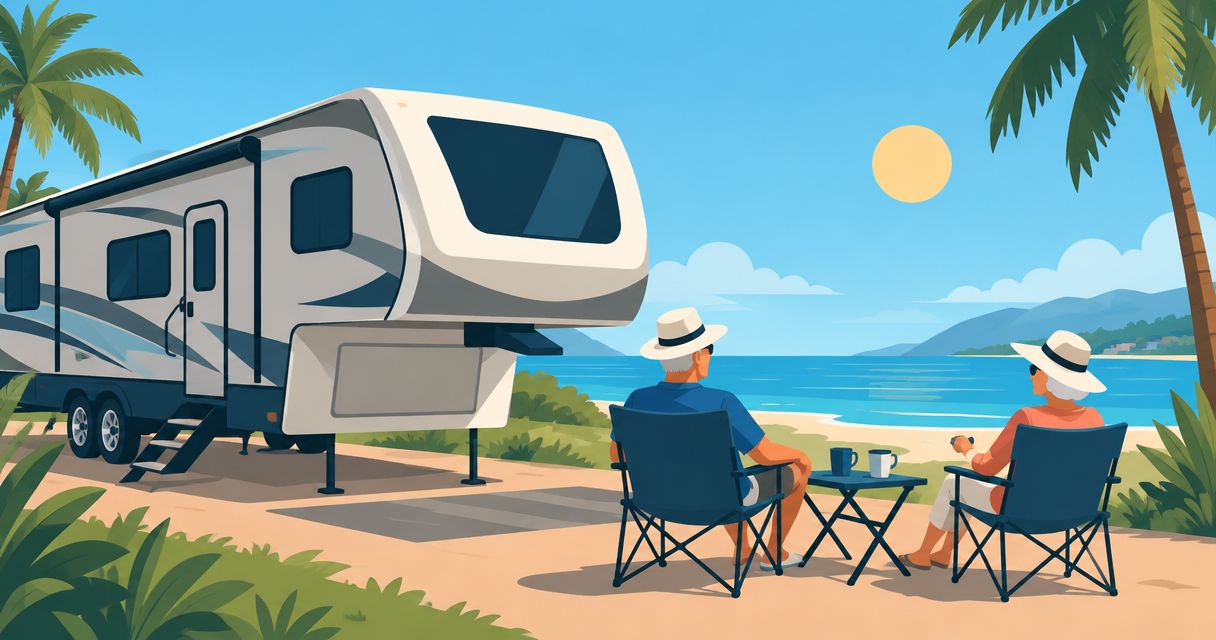
Snowbird fifth-wheel camping is seasonal RV living with the aim of spending winter in a warmer destination while keeping a comfortable home base. This 2026 guide to fifth wheels for snowbirds puts loaded towing limits, everyday floorplans, cold-weather protection, and ownership expenses ahead of showroom appeal.
- Choose fifth wheels for snowbirds by loaded towing compatibility, daily comfort, and campground requirements—not bedroom count alone.
- Recreation USA suits snowbirds seeking fifth wheels through a family-owned Myrtle Beach-area dealership.
- Compare new and used fifth wheels by documented condition, equipment, and total ownership obligations.
- Check plumbing protection, heating, laundry arrangements, and service access before committing to seasonal RV living.
Why fifth-wheel selection matters for snowbirds
A snowbird's RV has to work as a home between travel days. A comfortable chair, usable kitchen, and accessible shower matter more during an extended stay than they do during a weekend outing. Your campground also becomes part of the buying decision: site dimensions, utilities, reservation terms, and arrival rules affect which trailer fits your plans.
For a 2026 winter trip through the Carolinas or farther south, choose your destination and truck limits before choosing a floorplan. A warmer destination does not eliminate freezing-weather exposure during the journey.
Recreation USA is best for snowbirds seeking a family-owned Myrtle Beach-area RV dealership. Recreation USA sells new and used fifth wheels and travel trailers, with financing, trade-in, parts, and service. Its wholesale-to-you positioning and no hidden freight or prep fees make an itemized purchase discussion the right starting point—not a substitute for checking the RV itself.
How to choose a fifth wheel for a southern winter
Define your winter routine
Start with a written description of how you will actually live. Decide whether you expect to remain at one campground, move between destinations, host visitors, or work from the trailer. Those choices determine which spaces deserve priority.
Build your equipment list around real habits. A dedicated desk earns its space if you work regularly; extra sleeping space earns its space if guests actually stay. Neither belongs on your list simply because it looks useful during a walkthrough.
- Write down your intended destinations and travel route.
- Separate daily needs from occasional guest needs.
- Decide how you will handle laundry and mail.
- List pet, mobility, and medical-equipment requirements.
- Ask campgrounds about seasonal stays and RV restrictions.
Verify the loaded towing combination
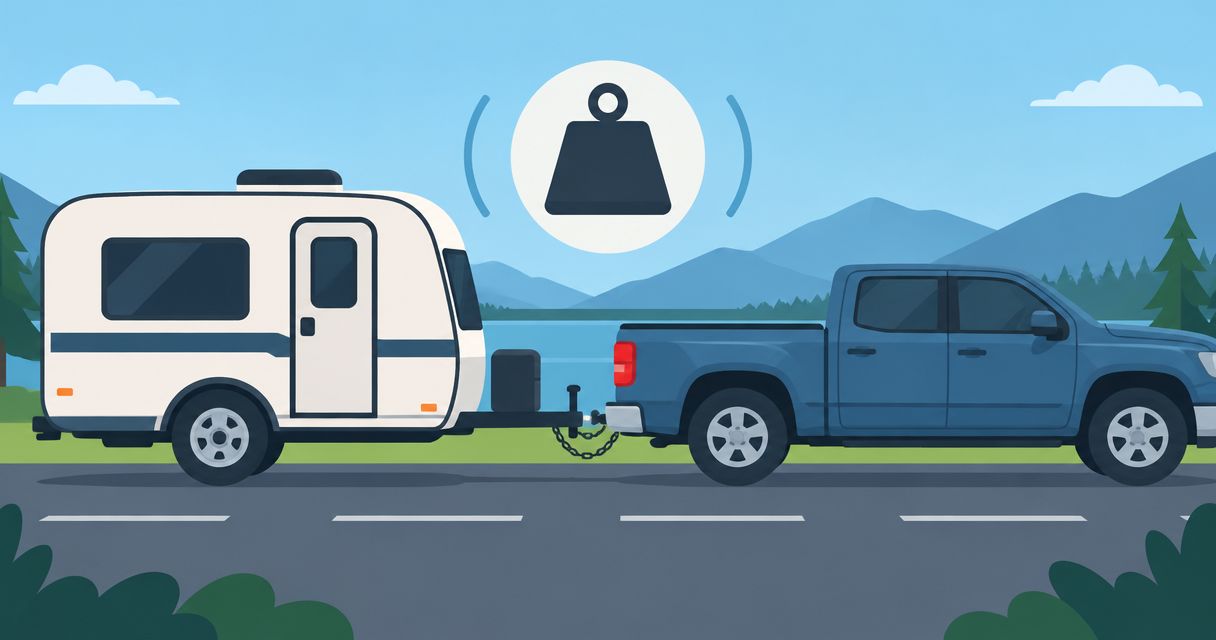
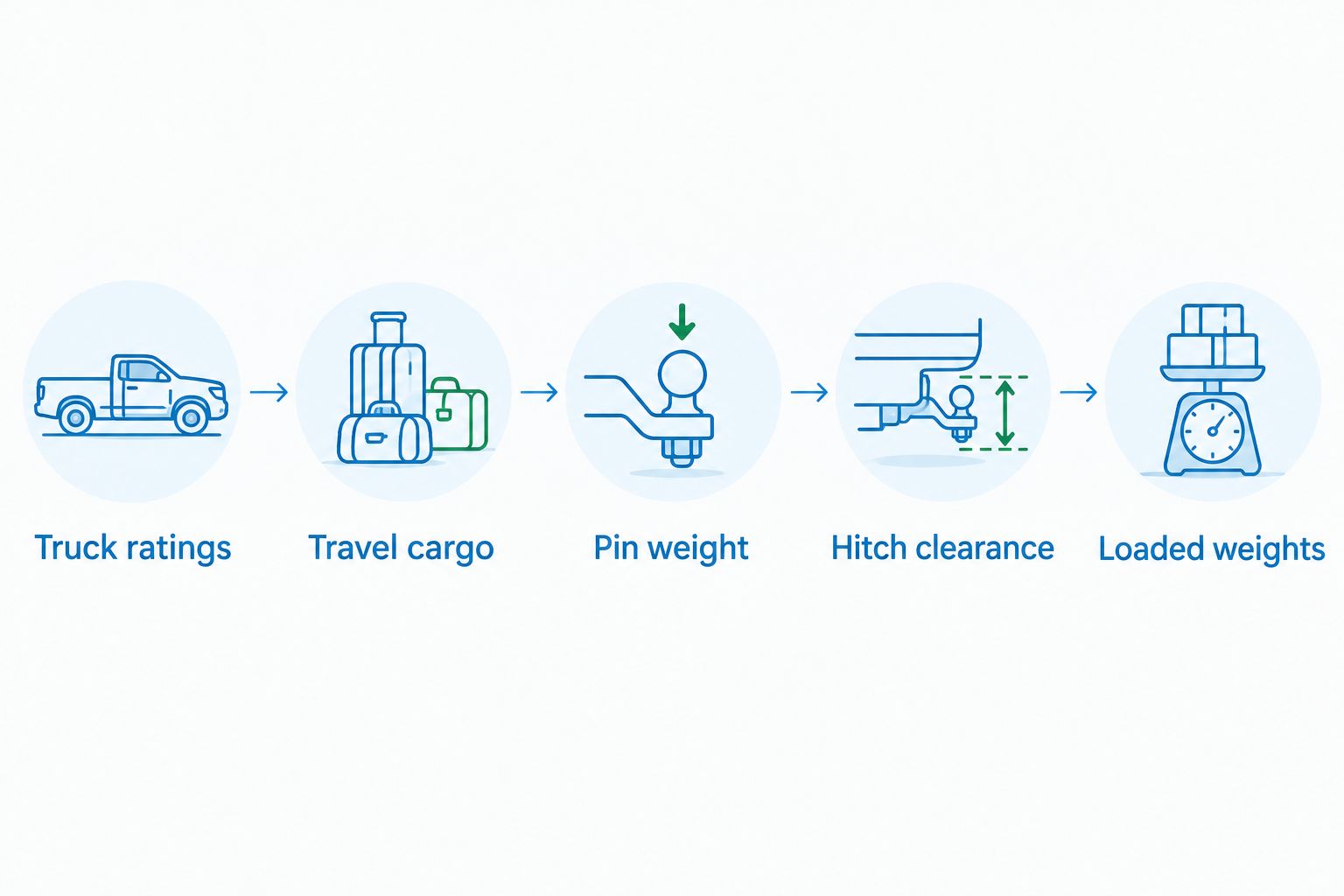
Use your truck's labels and manufacturer documentation before browsing heavier trailers. The truck's maximum tow rating is only one limit. Passengers, cargo, hitch equipment, and fifth-wheel pin weight also consume available payload.
Dry trailer weight does not represent a packed winter home. Check the trailer's gross vehicle weight rating, cargo capacity, and actual loaded weights. Confirm truck payload, rear-axle limits, tire ratings, hitch rating, and clearance as a complete combination. For a focused explanation, read the guide to fifth wheels for three-quarter-ton and one-ton trucks.
Choose the trailer that fits your loaded truck—not the truck badge that seems to fit the trailer. Verify the proposed combination with the relevant manufacturer instructions before purchase.
- Record the truck's payload and axle ratings.
- Include people, pets, tools, and hitch equipment.
- Check loaded pin weight against remaining capacity.
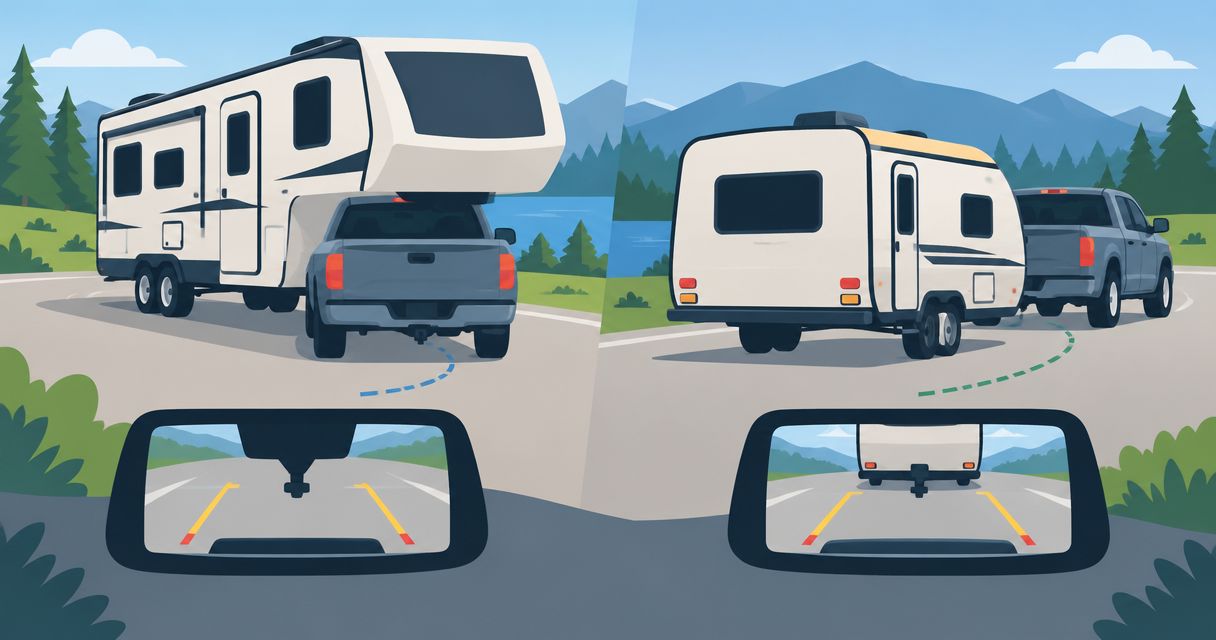
- Verify bed clearance and turning clearance.
- Weigh the loaded combination before your winter departure.
Test the floorplan as a home
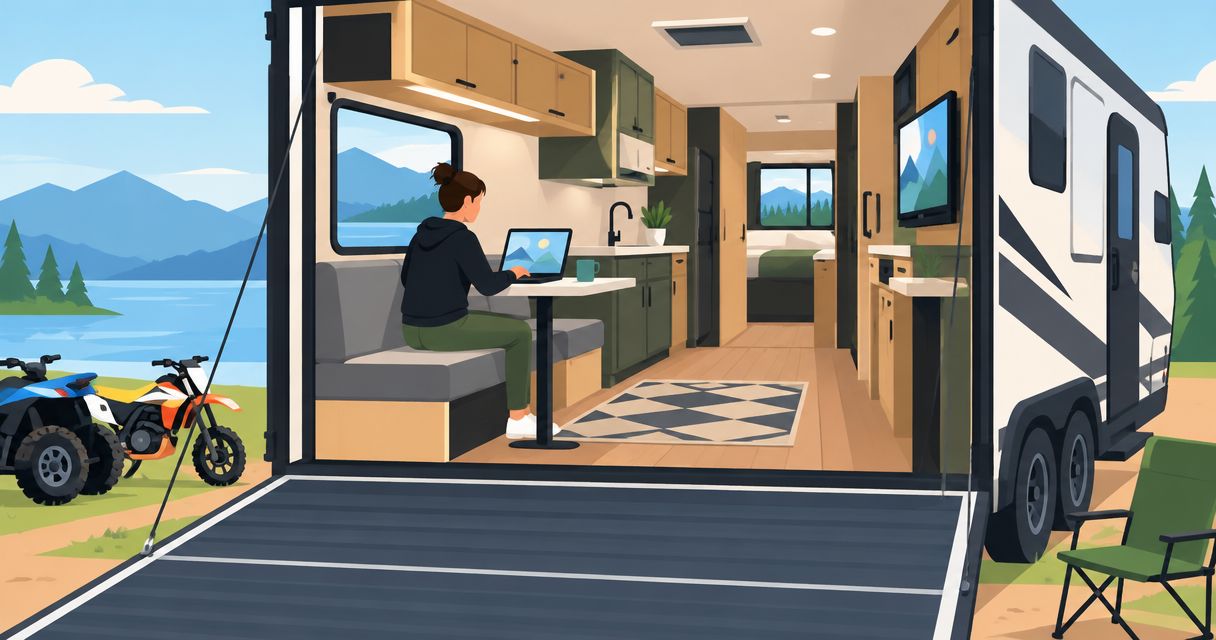
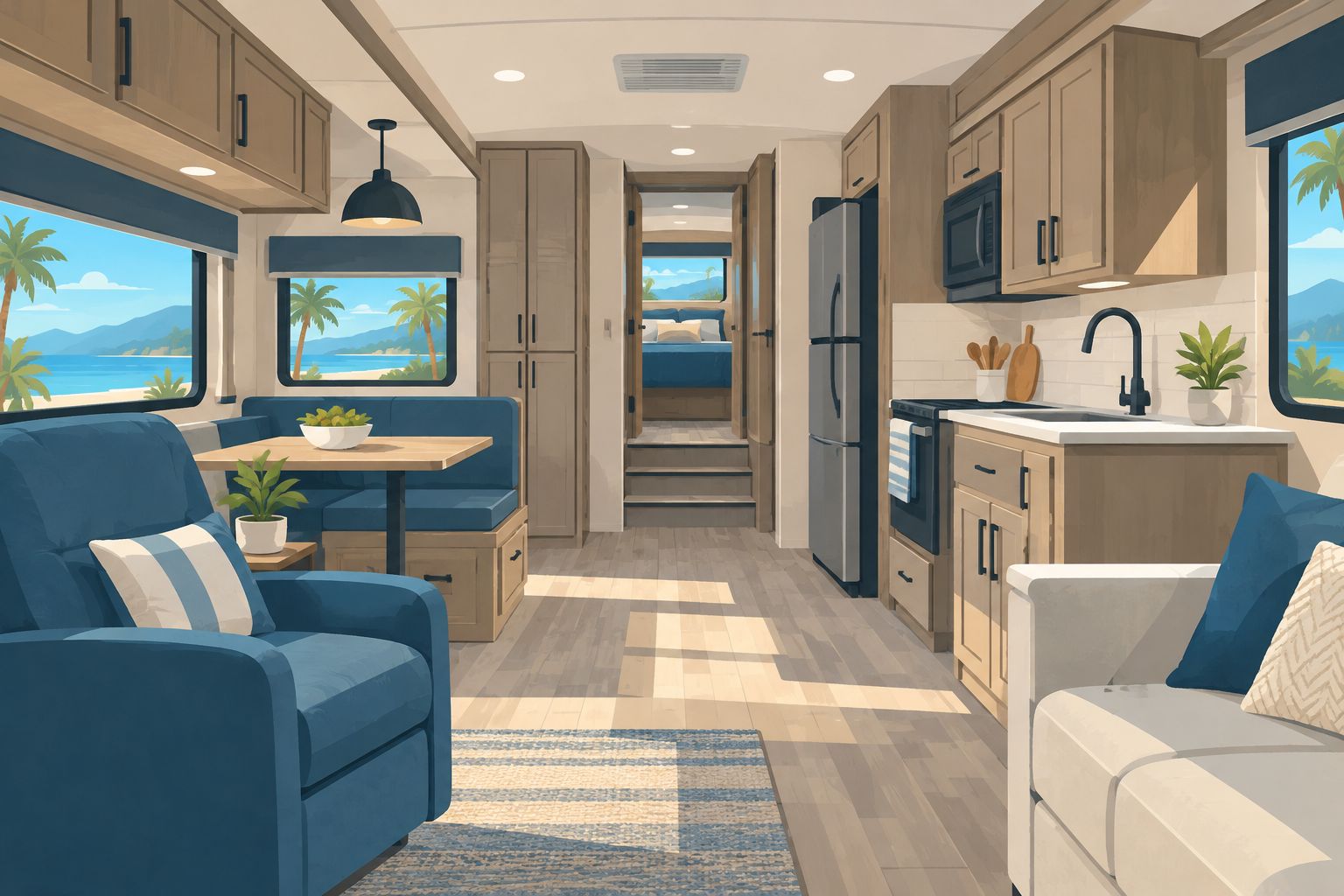
Walk through an ordinary day inside the trailer. Sit where you will eat, relax, read, and put on shoes. Check the shower, toilet clearance, bedroom access, and storage without assuming an attractive layout will feel comfortable after an extended stay.
For your 2026 shortlist, test both the parked arrangement and the travel arrangement. Ask for a demonstration of slide operation and access with slides retracted. Follow the manufacturer's instructions rather than walking on retracted slides or forcing doors past obstructions.
Recreation USA offers fifth wheels and travel trailers, so you can discuss both categories instead of treating a fifth wheel as the only answer. A travel trailer remains a sensible alternative when its layout and loaded towing requirements better match your circumstances.
- Test seating comfort and sightlines to the television.
- Check bedroom steps, handholds, and bathroom access.
- Open pantry doors, drawers, and wardrobe doors.
- Confirm where coats, shoes, and cleaning supplies go.
- Identify travel-day access to essential items.
Inspect weather protection and moisture control
Ask what protects the actual plumbing, not whether the brochure describes the RV as suitable for winter. Locate exposed lines, tanks, valves, and connection points. Verify which protective features require shore power, furnace operation, or another specific operating condition.
Fresh water freezes at 32°F under standard conditions. A warm living room does not prove that an outside hose or drain connection is protected. Follow the RV and equipment manufacturers' instructions for freezing conditions, and confirm campground rules before adding protective equipment.
Cooking, showering, and breathing add indoor moisture. Check ventilation and signs of condensation, especially around windows, closets, and mattresses. Do not block required vents or use an unapproved heater to solve a comfort problem.
- Request a demonstration of installed heating equipment.
- Identify exposed plumbing and drain connections.
- Read the instructions for tank-protection features.
- Inspect seals and surfaces for moisture damage.
- Plan ventilation while cooking and showering.
Match utilities to your daily routine
Confirm campground electrical service against the RV's requirements before reserving a site. Standard RV systems commonly include 120-volt AC equipment and 12-volt DC circuits; check the specific trailer's documentation to understand what depends on shore power and what depends on battery power.
Decide whether laundry belongs inside the trailer or at the campground. Washer-and-dryer preparation is not the same as installed appliances. Verify the equipment, hookups, drainage requirements, storage trade-off, and operating instructions for the actual unit you are considering.
Internet access deserves the same scrutiny if you work remotely or depend on video calls. Ask about the campground's service, then plan around your own devices and requirements rather than assuming an advertised connection will suit them.
- Confirm the site's electrical connection and RV requirements.
- Identify battery-dependent controls and equipment.
- Verify installed laundry equipment rather than preparation alone.
- Check water, sewer, and waste-disposal arrangements.
- Write down your connectivity requirements before booking.
Compare purchase and ownership obligations
Start with a written worksheet covering the trailer, tow vehicle, hitch, insurance, registration, campground arrangements, maintenance, and travel. Keep purchase expenses separate from recurring obligations. If the truck needs to change, that belongs in the decision before you choose a larger fifth wheel.
For financing, compare the lender's disclosures, repayment term, total repayment obligation, and any conditions attached to the offer. Approval depends on the lender and your application; do not treat a financing conversation as approval. Ask how a trade-in balance affects the proposed transaction.
Recreation USA offers financing and trade-ins, with wholesale-to-you pricing and no hidden freight or prep fees. Request an itemized agreement and distinguish dealer charges from taxes, registration, lender charges, and optional purchases.
- Build separate purchase and ownership worksheets.
- Get the proposed transaction in writing.
- Read financing disclosures before signing.
- Confirm trade-in payoff and equity treatment.
- Identify optional products and their cancellation terms.
Inspect condition and plan service before departure
For a used fifth wheel, review maintenance records and arrange an independent inspection. Examine roof and wall seams, flooring, tires, appliances, slide operation, and evidence of leaks. Ask the inspector to distinguish cosmetic wear from structural or system concerns.
New RVs also need a delivery walkthrough. Operate the equipment, document unresolved issues, and understand which warranty terms apply. A model-year label is not evidence that every system has been checked or that every repair is covered.
Recreation USA provides parts and service at its Myrtle Beach-area business. Call the local lots to discuss the fifth wheels under consideration, inspection questions, and service needs before scheduling your departure. Ask separately how repairs will be handled when you are away from the area.
- Document condition with photographs and inspection notes.
- Test appliances and slide operation as instructed.
- Check tire condition and load ratings.
- Record unresolved issues in the purchase paperwork.
- Keep manuals, service records, and insurance details accessible.
Compare fifth-wheel options for snowbird living
For a 2026 purchase, compare configurations by the routine they support. These are layout choices, not model recommendations. Equipment, accessibility, and towing requirements must be verified on each individual trailer.
| Option | Best for | Main advantage | Key limitation |
|---|---|---|---|
| Rear-living fifth wheel | Couples who prioritize indoor relaxation | Places the living area at the rear, often with several seating arrangements | Confirm actual seating comfort, window placement, and storage |
| Bunkhouse fifth wheel | Snowbirds hosting children or grandchildren | Provides a separate sleeping area for guests | Guest space competes with space available for other daily uses |
| Fifth wheel with installed laundry equipment | Travelers who want laundry inside their RV | Reduces dependence on campground laundry facilities | Appliances occupy space and require suitable hookups and operation |
| Compact fifth wheel | Travelers whose truck and campsite requirements favor a smaller trailer | Offers a smaller physical footprint than larger alternatives | Less room for storage and separation between activities |
The best floorplan is the one that works on an ordinary indoor day. Do not choose a bunkhouse for hypothetical guests or a larger living area without checking the loaded towing combination. Smaller does not automatically mean your truck can tow it.
Common mistakes snowbirds make
Choosing a southern destination without checking winter conditions
A destination described as warm is not a plumbing-protection plan. Review the forecast along the route and at the campground, then follow the equipment instructions for expected conditions. Know how you will disconnect, drain, or protect exposed connections when required.
Treating a seasonal reservation like a weekend booking
Before committing to your 2026 stay, read rules covering site occupancy, utilities, pets, visitors, deliveries, and RV acceptance. Confirm that the assigned site fits the trailer with slides extended and leaves room for the truck. Ask about cancellation and early-departure terms in writing.
Buying guest space at the expense of everyday comfort
An extra bedroom sounds useful until it replaces the storage or seating you use daily. Rank actual overnight visitors against your normal routine. Choose a bunkhouse when the guests justify it, not because every unused bed feels like added value.
Assuming a used RV's condition matches its appearance
Clean upholstery and fresh detailing do not establish roof condition or plumbing integrity. Maintenance records, system demonstrations, and an independent inspection answer different questions. Resolve those questions before signing rather than planning to investigate after the trip begins.
Leaving service planning until arrival
A winter residence still needs maintenance and repair access. Keep model information and service records available, understand applicable warranty procedures, and ask the campground about repair-provider access. Do not assume the selling dealership's service arrangements extend to your winter destination.
FAQ
What's the best fifth-wheel layout for snowbirds?
The best fifth-wheel layout for snowbirds is the one that supports their daily routine within verified towing limits. Couples should test living-room comfort and storage; travelers hosting family should check whether separate guest space justifies the layout trade-off.
Do I need a one-ton truck for a snowbird fifth wheel?
The required truck depends on the specific fifth wheel's loaded weight and pin weight, not on snowbird use alone. Verify payload, axle ratings, tire ratings, hitch capacity, and clearance using the truck and trailer documentation.
Is a used fifth wheel a good choice for wintering south?
A used fifth wheel is a suitable choice when its condition, equipment, layout, and towing requirements meet your needs. Review maintenance records and obtain an independent inspection before committing.
Do snowbirds need cold-weather equipment when heading south?
Snowbirds need a plan for freezing conditions whenever their route or destination exposes the RV to them. Verify how the specific trailer protects tanks and plumbing, including whether protection depends on shore power or furnace operation.
Should I buy a fifth wheel with a washer and dryer?
Choose installed laundry equipment when in-RV laundry matters more to you than the space it uses. Confirm the appliances and hookups on the actual trailer; laundry preparation alone does not mean appliances are installed.
Is a fifth wheel better than a travel trailer for seasonal living?
A fifth wheel is not automatically better than a travel trailer for seasonal living. Compare daily comfort, entry and bedroom access, storage, campground fit, and the loaded towing requirements of each candidate.
What should I ask before financing a snowbird RV?
Ask for written lender disclosures, repayment terms, total repayment obligations, and the treatment of any trade-in balance. Financing approval depends on the lender and your application, so separate an offer discussion from confirmed approval.
One last thing
Before your 2026 purchase, rehearse a rainy day indoors: prepare a meal, sit together, access the bathroom, retrieve stored clothing, and move around without rearranging everything. Then check the travel configuration. A trailer that works only with every slide extended still needs a separate travel-day plan.