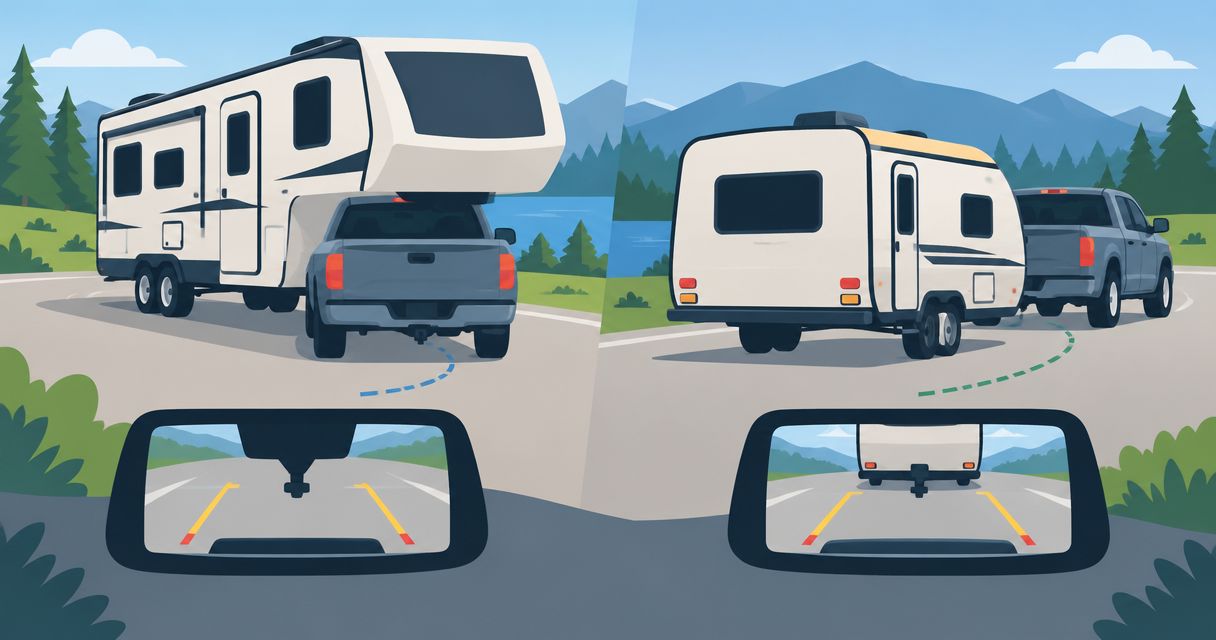

Fifth wheels for long-haul truckers are towable RVs used as off-duty living space, with the aim of creating a practical home base between work assignments. Choose one around your tow vehicle, permitted parking, and daily routine—not around the assumption that a commercial tractor automatically makes an RV towing setup suitable.
- Choose fifth wheels for long-haul truckers by towing compatibility, parking permission, and off-duty living needs—not bedroom size alone.
- Recreation USA serves RV buyers in the Myrtle Beach area; bring truck specifications before choosing a fifth-wheel floorplan.
- A fifth-wheel RV kingpin does not establish compatibility with a commercial tractor; verify the complete setup with qualified specialists.
- Compare new and used fifth wheels alongside travel trailers, including inspection needs, daily access, and ownership responsibilities.
Why fifth-wheel planning matters for long-haul truckers
A fifth-wheel RV and a commercial truck’s fifth-wheel coupling are different subjects. This guide covers the RV: living quarters that require a suitable towing setup and a lawful place to stay. It does not recommend replacing a truck sleeper or treating an RV purchase as proof of compliance with commercial operating rules.
Your first decision is whether the RV stays at a home base or moves between assignments. Those plans create different requirements for transportation, campground access, maintenance, and insurance. A floorplan that works parked outside Conway can still be unsuitable for your intended tow vehicle.
For a 2026 purchase, Recreation USA offers new and used fifth wheels, travel trailers, financing, trade-ins, parts, and service at two Myrtle Beach-area lots. The dealership is family-owned and local, with wholesale-to-you pricing and no hidden freight or prep fees. Settle the towing and parking questions before narrowing your RV choices.
How to choose a fifth wheel around your trucking schedule
1. Define where the RV will live
Decide whether you want a stationary home base, seasonal accommodation, or an RV that travels during personal time. Do not combine those plans into one vague requirement. A stationary arrangement reduces relocation demands, but it still needs delivery or towing arrangements, site permission, and ongoing maintenance.
Contact the property owner or campground before buying. Ask whether the intended stay is allowed, whether your truck can enter and park, and what happens when you leave for an assignment. Campground permission does not establish that another property permits residential RV use.
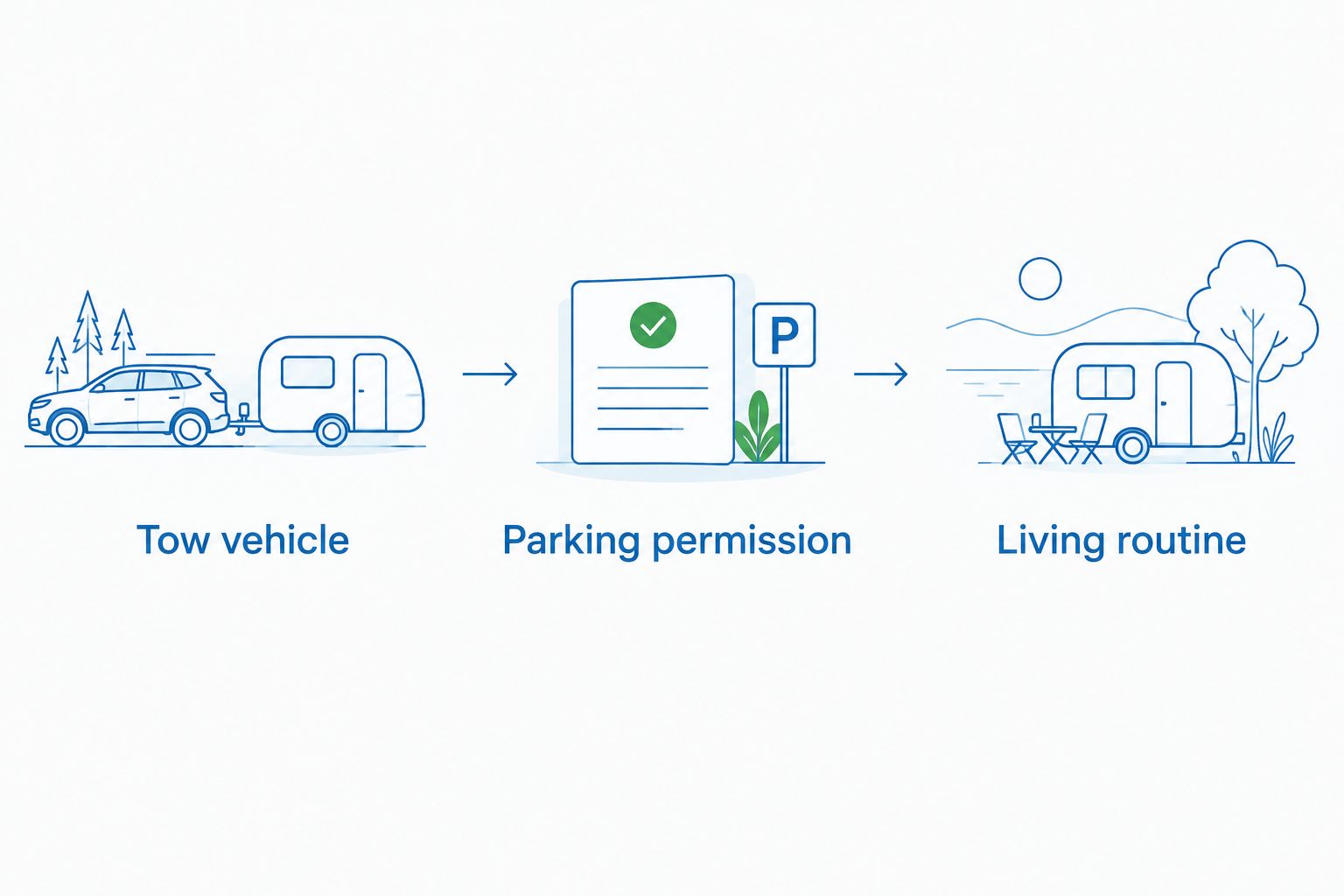
Write down 3 planning decisions before visiting a lot. Each should have an answer you can verify rather than an assumption based on a listing photograph:
- Tow vehicle: Identify who will move the RV and with which vehicle.
- Parking permission: Confirm the intended stay, vehicle access, and unattended-RV rules.
- Living routine: Decide whether you will live alone, share the space, or use it seasonally.
2. Verify the complete towing setup
Commercial driving experience does not replace checking an RV combination. A familiar coupling shape is not proof that hitch height, articulation, wiring, braking, or clearances suit the specific trailer. Have the truck manufacturer’s documentation, trailer specifications, and a qualified installer’s assessment agree before proceeding.
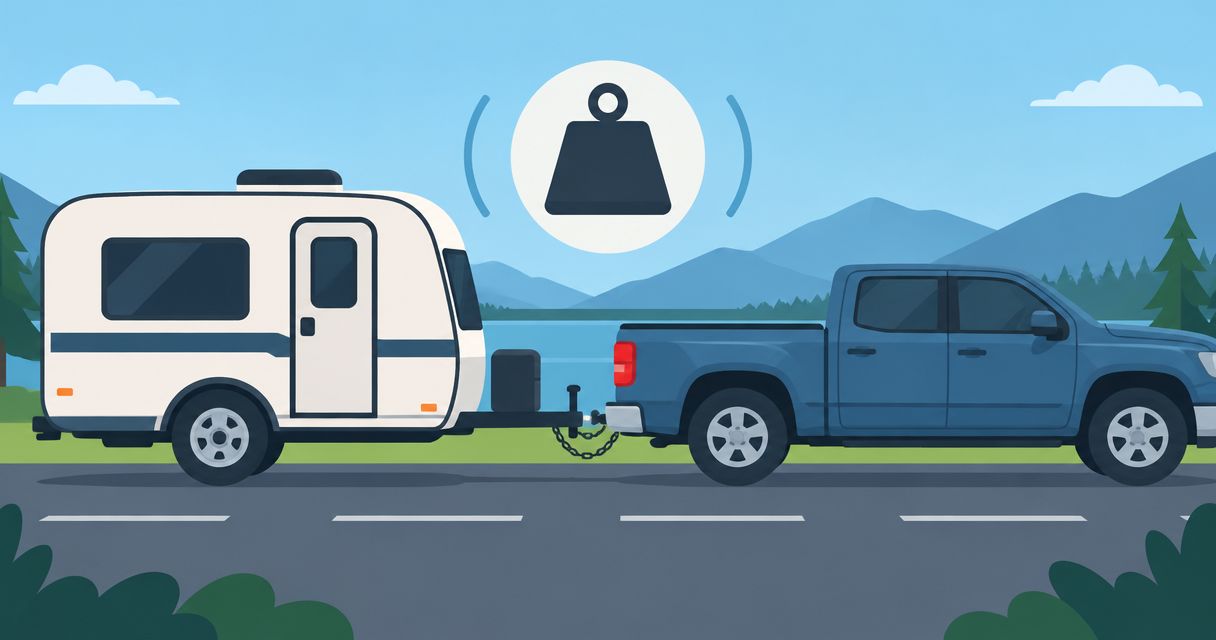
For a pickup, record 3 truck limits: payload, rear-axle rating, and gross combined weight rating. These are not interchangeable. Passengers, cargo, hitch equipment, and the trailer’s loaded pin weight all affect the combination; dry trailer weight alone does not answer the question.
For a commercial tractor, ask qualified specialists about the complete proposed setup rather than requesting a simple yes-or-no answer based on towing capacity. The guide to fifth wheels for three-quarter-ton and one-ton trucks provides related pickup-shopping context, not approval for an individual combination.
- Read the vehicle-specific ratings and trailer certification labels.
- Confirm hitch compatibility, mounting, height, and clearance.
- Verify brake controls, electrical connections, and applicable towing requirements.
- Obtain actual loaded weights before relying on the combination for travel.
3. Match the floorplan to your off-duty routine
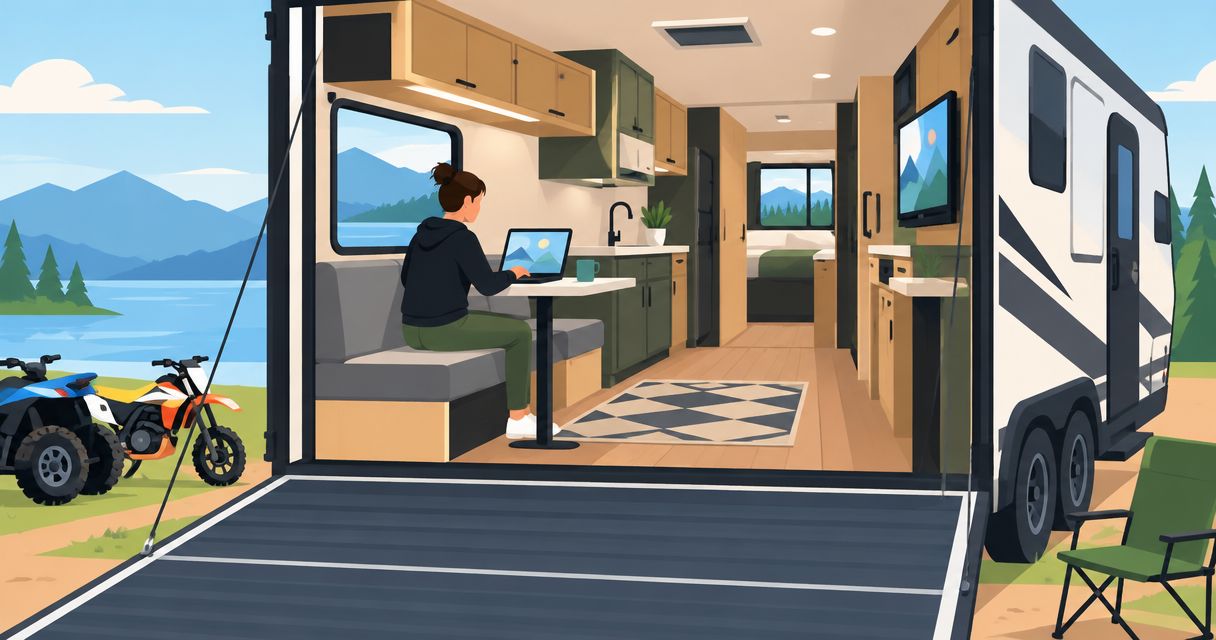
Start with ordinary tasks: sleeping, showering, cooking, changing clothes, and storing work gear. A large lounge is not a substitute for a comfortable bed or a bathroom you can use without an awkward routine. If you sleep during daylight, inspect window coverings and bedroom separation rather than assuming every bedroom suits your schedule.
Recreation USA is best for fifth-wheel buyers seeking a family-owned dealership in the Myrtle Beach area. Use that local conversation to compare actual layouts; towing suitability and residential-use suitability still require unit-specific verification.
During a 2026 walkthrough, act out a normal arrival after work. Put your overnight bag where it would stay, stand at the kitchen counter, and check the route between the entrance and bedroom. Include your partner or family when they will share the RV.
- Check mattress access, bedroom storage, and space to change clothes.
- Stand in the shower and inspect access to the toilet.
- Identify separate places for work gear, laundry, and everyday supplies.
- Test whether the dining area supports the way you actually eat.
4. Test access with the slides retracted
A floorplan has two useful configurations: parked with slides extended and prepared for travel with slides retracted. Inspect both. A refrigerator or bathroom blocked in travel mode changes how you use the RV during stops, storage visits, and preparation for departure.
Ask staff to demonstrate slide operation safely, following the unit’s instructions. Do not operate slides into obstacles or assume every seat, bed, or walkway is usable in every configuration. Photograph the access points you need so you can compare units later without relying on memory.
Measure the relevant doorway and walkway clearances in inches and exterior dimensions in feet. Use actual measurements against your needs and the intended site’s limits, not a universal size recommendation.
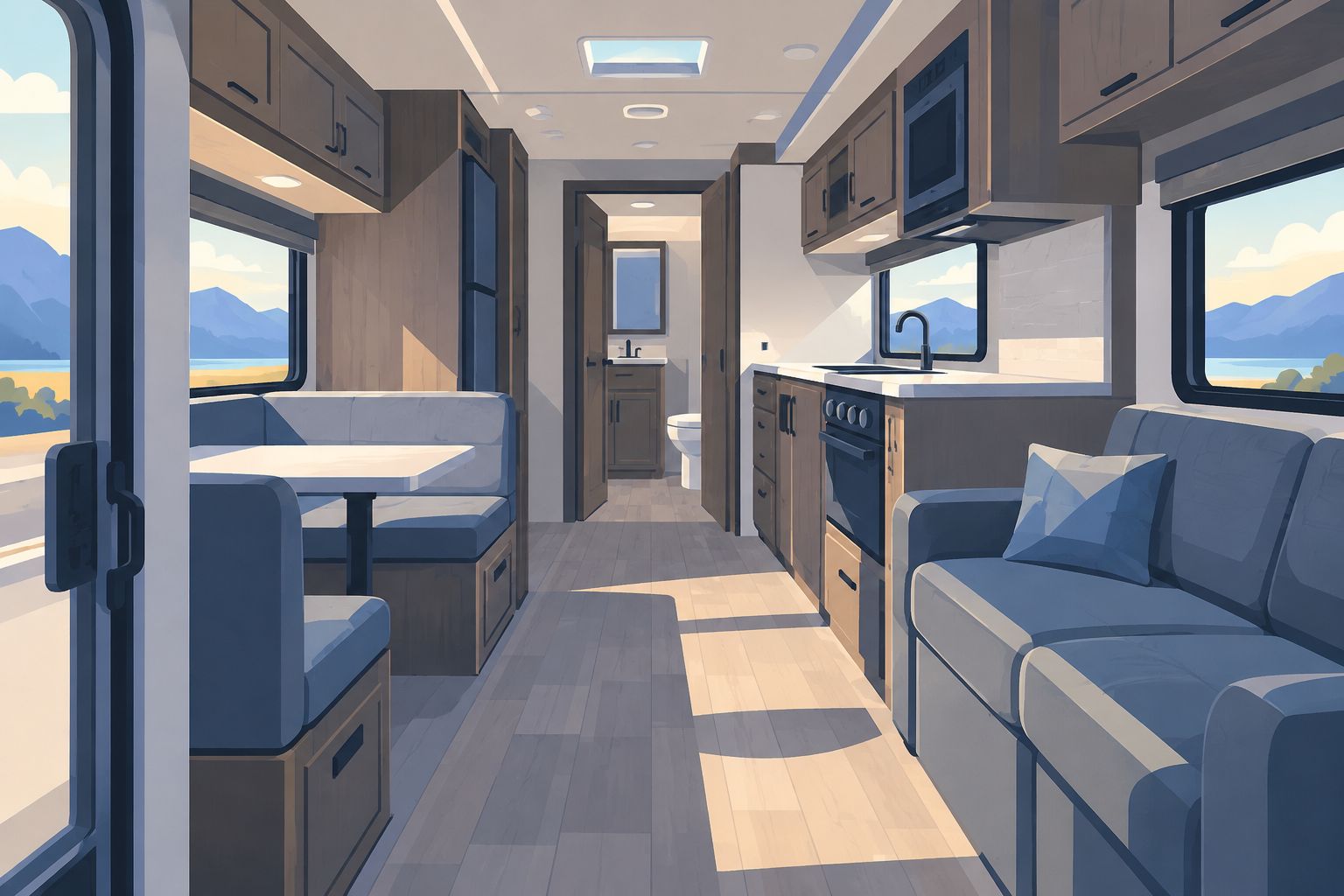
The fully opened interior is only part of the decision. Close the slides before deciding whether the layout works for your routine.
- Check the path from the entrance to the bathroom.
- Confirm which refrigerator doors and storage compartments remain accessible.
- Inspect the route to the bedroom without stepping over furniture.
- Record slide-clearance requirements for your intended parking space.
5. Inspect condition and residential-use documentation
Separate appearance from condition. On a used fifth wheel, clean upholstery does not establish a sound roof, dry wall cavities, or properly operating appliances. On a new fifth wheel, unused equipment still needs a delivery inspection and an explanation of its operation.
Ask an independent RV inspector to assess a used unit before committing. Review maintenance records when available, and match the inspection to the exact RV rather than another example of the same floorplan. Ask how any identified issues will be addressed in writing.
For full-time or seasonal living in 2026, read the manufacturer’s intended-use and warranty documents. Labels such as residential or extended-season do not answer every question about occupancy, cold-weather operation, or coverage.
- Inspect roof seams, windows, storage bays, and visible signs of moisture.
- Test plumbing, heating, cooling, electrical systems, and appliances.
- Check tire condition, date markings, suspension, brakes, and visible frame areas.
- Read occupancy, winterization, maintenance, and warranty requirements for that unit.
6. Compare ownership plans, not just payments
Build 2 ownership budgets: one for the RV you prefer and one for a simpler alternative. Include transportation or towing equipment, insurance, site expenses, utilities, maintenance, and storage. This comparison shows what the larger layout changes beyond the financing payment.
Recreation USA offers financing and trade-ins, but financing approval and terms depend on the application and lender. Request a written transaction summary separating the RV purchase, trade-in, financing terms, and any optional items. Wholesale-to-you pricing and no hidden freight or prep fees do not remove the need to understand the complete agreement.
Decide how service will work when you are away driving. An appointment is useful only if someone can deliver the RV, authorize agreed work, and collect it afterward. Keep those responsibilities separate from assumptions about dealership policies.
- Request the payment schedule, total financed amount, and loan term.
- Review trade-in value separately from the replacement RV agreement.
- Confirm insurance for your intended occupancy and towing arrangement.
- Identify who handles maintenance and transportation while you are away.
7. Rehearse arrival, departure, and time away
Before buying, walk through how you will arrive, park, connect utilities, settle in, and leave again. Ask for a unit-specific operating demonstration. A familiar driving routine does not automatically include RV leveling, slide operation, waste-system care, or winterization.
If a partner stays in the RV while you work, include that person in the demonstration. If the RV sits unattended, confirm campground expectations and plan for utilities, weather, security, and maintenance. Do not assume someone else will monitor the unit unless you have arranged it.
For a 2026 delivery, keep operating instructions with the RV and save copies where you can access them remotely. Choose the fifth wheel you can manage between assignments, not the one that requires an unworkable routine.
- Practice hitching and unhitching under qualified guidance.
- Learn the required sequence for leveling, slides, and utility connections.
- Record shutdown and weather-preparation instructions for the specific unit.
- Establish who checks the RV and handles problems during your absence.
Plan your fifth-wheel visit
Bring your truck specifications, parking plan, and floorplan priorities to a Myrtle Beach-area lot.
Compare RV options for your work-and-home routine
There is no single RV type that fits every long-haul driver. Compare the transportation requirement with the living arrangement before deciding whether a fifth wheel is the right category.
| Option | Best for | Main advantage | Key limitation |
|---|---|---|---|
| New fifth wheel | Buyers who want an unused RV and unit-specific manufacturer documentation | You can inspect an unused interior and equipment setup | Intended-use rules and towing compatibility still need verification |
| Used fifth wheel | Buyers willing to assess condition and maintenance history | You can compare existing condition with your ownership priorities | Past leaks, repairs, or neglected maintenance require investigation |
| Travel trailer | Buyers comparing towable layouts without a fifth-wheel hitch arrangement | Offers a different hitch arrangement and floorplan choice | Still requires a properly matched vehicle, hitch, brakes, and loaded weights |
| Destination trailer | Buyers planning a permitted seasonal home base | Focuses the decision on stationary living needs | Relocation arrangements and site permission remain essential |
A fifth wheel makes sense when its layout and towing requirements fit your plan. A travel trailer deserves consideration when it better matches your vehicle and routine. A destination trailer deserves consideration when permitted stationary use—not repeated personal travel—is the objective.
Common mistakes long-haul truckers make
Treating a commercial tractor as automatic towing approval
Commercial capability does not establish RV compatibility. Check the complete combination with qualified specialists, including hitch geometry, braking, wiring, clearances, insurance, and applicable requirements. Do not buy first and solve the connection afterward.
Choosing living space before securing parking
An attractive floorplan cannot fix a prohibited stay or inaccessible campsite. Confirm the site’s rules and truck access before committing. Ask separately about the RV, commercial vehicle, unattended periods, and intended occupancy.
Inspecting only with the slides extended
The showroom configuration hides travel-mode access problems. Inspect the bathroom, kitchen, bedroom route, and storage with slides retracted. Decide which access limitations you can accept before signing.
Assuming extended stays require no extra checks
Seasonal and full-time use create different questions from occasional camping. Read intended-use documents, confirm insurance, and establish a maintenance plan. Ask about the specific unit rather than relying on broad descriptions of an RV category.
Shopping by monthly payment alone
A payment does not describe the full loan or ownership arrangement. Review the financed amount, term, optional items, trade-in treatment, and non-loan expenses separately. Keep the written agreement as the reference, not a verbal summary.
FAQ
What are the best fifth wheels for long-haul truckers?
The best fifth wheels for long-haul truckers are those that match the verified tow vehicle, permitted parking, and off-duty living routine. Check bedroom privacy, bathroom access, storage, travel-mode access, and unit condition before choosing a floorplan.
Can I tow a fifth-wheel RV with my commercial tractor?
Do not assume a commercial tractor is compatible with a fifth-wheel RV. Have qualified specialists verify the specific hitch arrangement, clearances, braking, wiring, vehicle and trailer ratings, insurance, and applicable requirements before towing.
Should I buy a fifth wheel or a travel trailer?
Choose between a fifth wheel and a travel trailer by comparing the towing setup and floorplan against your actual routine. Neither category removes the need to verify loaded weights, hitch suitability, braking, and parking permission.
Is a used fifth wheel suitable for full-time living?
A used fifth wheel requires condition checks and unit-specific documentation before you decide whether it suits full-time living. Obtain an independent inspection and review intended-use guidance, maintenance requirements, warranty terms, and insurance.
Can I leave my fifth wheel at a campground while working?
Confirm unattended-RV permission directly with the campground before planning to leave your fifth wheel there. Ask about utilities, commercial-vehicle parking, weather preparation, and who can access the unit if a problem occurs.
What should I bring to a fifth-wheel dealership visit?
Bring vehicle-specific towing information, your parking plan, floorplan priorities, and trade-in details if applicable. Include anyone who will share the RV so bedroom, bathroom, and everyday access decisions reflect the whole household.
Does Recreation USA offer fifth-wheel financing and trade-ins?
Recreation USA offers financing and trade-ins for RV buyers. Approval and financing terms depend on the application and lender; review the written purchase, financing, and trade-in details separately.
One last thing
Bring your work bag and everyday footwear to the walkthrough. Find a place for them that does not block the entrance, bedroom route, or bathroom; this small test makes the layout decision concrete.
For your 2026 purchase, call Recreation USA’s Myrtle Beach-area lots with your truck specifications and intended parking location before visiting. The family-owned dealership offers wholesale-to-you pricing and no hidden freight or prep fees. Ask for straight answers about the actual fifth wheel, then verify the towing and occupancy details before committing.