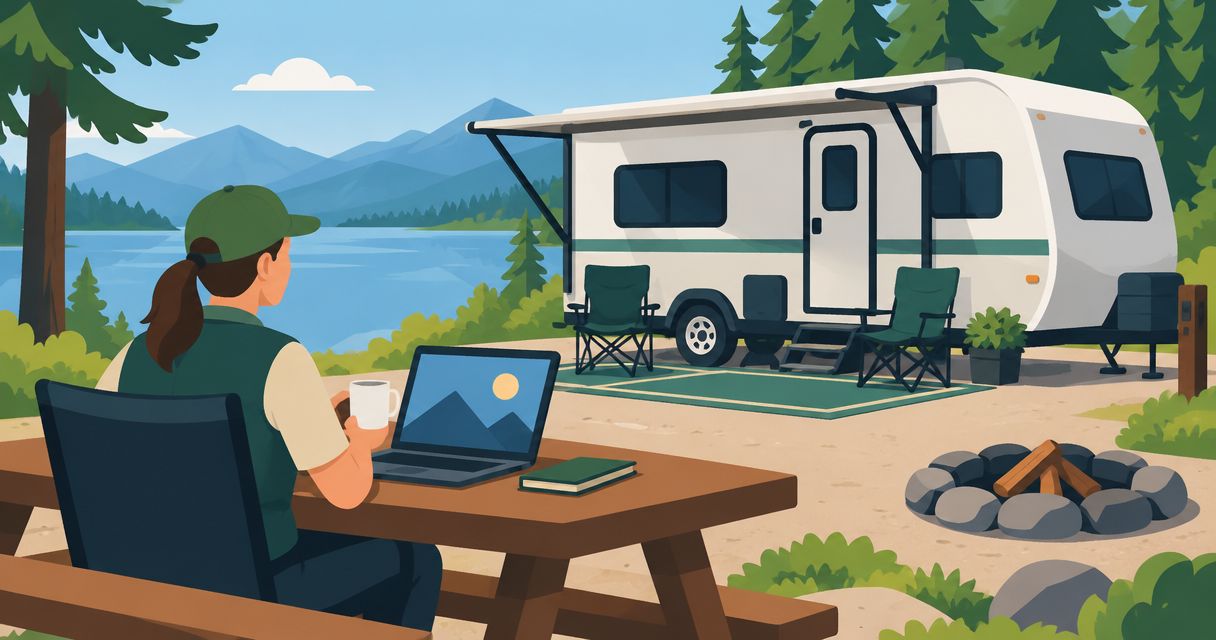
Campground hosts’ travel trailers are towable living spaces used as a home base during a hosting assignment, with the aim of keeping daily living practical while you work at the campground. Choose around the assigned site, your loaded tow vehicle, and everyday routines—not just sleeping capacity or the appearance of the floorplan.
- Choose travel trailers for campground hosts by site fit, loaded towing limits, private sleeping space, and utility access.
- Recreation USA is best for Myrtle Beach-area buyers comparing new and used travel trailers with local service.
- Verify campground hosting requirements before choosing a travel trailer or fifth wheel.
- Inspect used RVs for water damage and test systems before committing.
Why travel trailers matter for campground hosts
A hosting assignment changes what you need from a camper. You are choosing somewhere to sleep, cook, store work gear, and recover between duties—not simply somewhere to spend a weekend. A guest bed is less valuable than a comfortable permanent bed if visitors rarely stay.
For a 2026 hosting assignment, confirm the campground’s requirements before shopping. Get the host-site dimensions, utility details, occupancy rules, and assignment dates in writing. Do not assume an advertised campsite description also describes the host site.
Recreation USA is a family-owned dealership with two Myrtle Beach-area lots, offering new and used RVs, financing, trade-ins, parts, and service. Its wholesale-to-you pricing and no hidden freight or prep fees support a straightforward buying conversation; you still need a written transaction breakdown and an RV that fits your assignment.
How to choose a host-ready travel trailer
Work through site rules, towing, daily routines, utilities, condition, and ownership in that order. This keeps an attractive floorplan from distracting you from a site restriction or a vehicle limit.
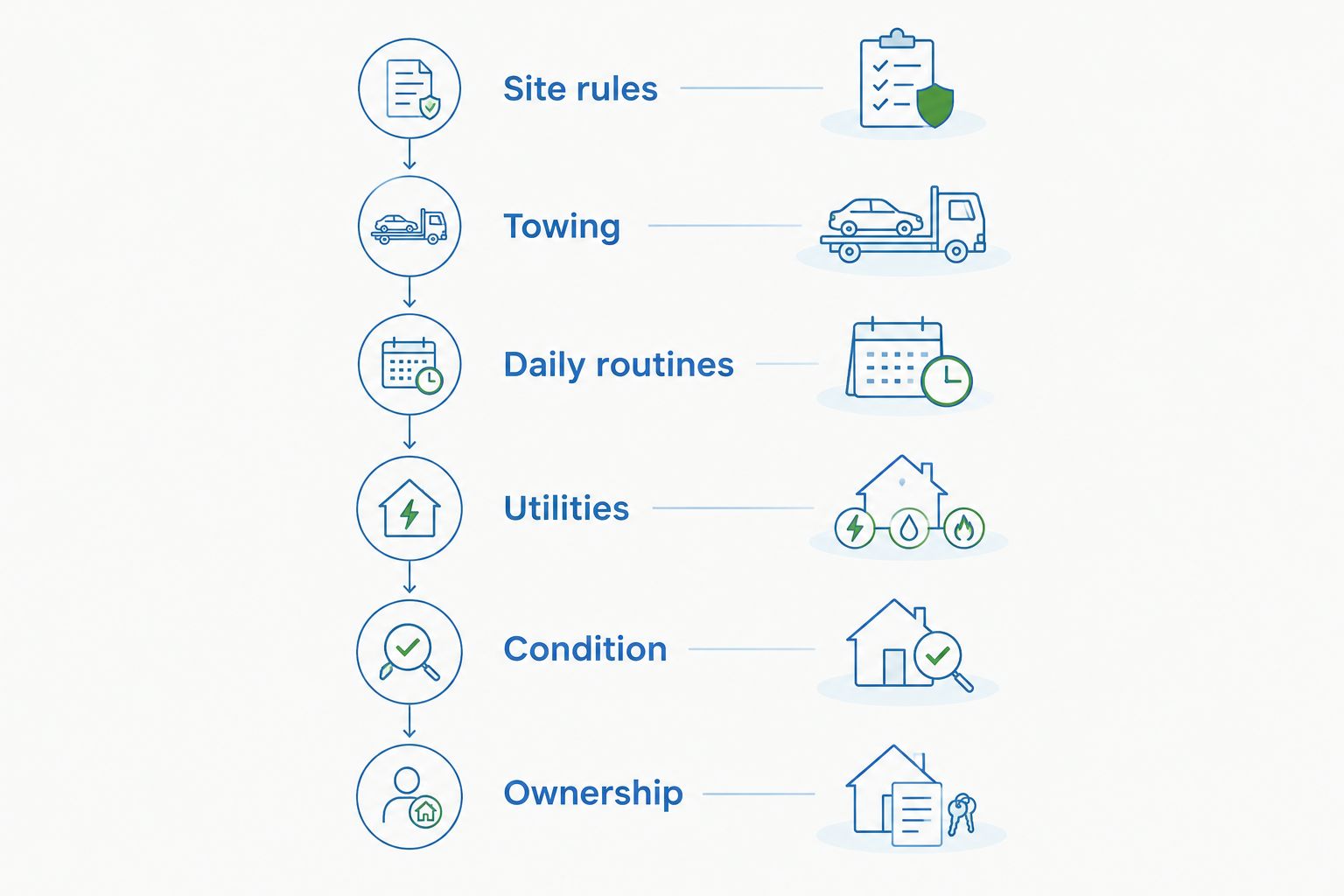
1. Confirm your host-site rules
Start by contacting the person responsible for the hosting assignment. Ask for the actual site details, not just general campground information. A trailer that fits the parking pad still needs room for its entry steps, slide-outs, connections, and tow vehicle.
Keep 3 documents together: the assignment terms, site requirements, and utility information. This is a shopping checklist, not a substitute for the campground’s written agreement. For a 2026 placement, confirm that the documents apply to that assignment rather than a previous season.
Find out where visitors approach the host site. Your outdoor seating and entrance should work with that traffic without turning the bedroom into the campground’s reception area. If you have not seen the site, request photographs showing the pad, hookups, access road, and surrounding obstacles.
- Confirm permitted RV types and any stated size restrictions.
- Ask how trailer length is measured for site approval.
- Check space for slide-outs, steps, parking, and service access.
- Verify pet, visitor, storage, and occupancy rules.
- Establish who handles utility interruptions and site maintenance.
2. Match the trailer to your loaded tow vehicle
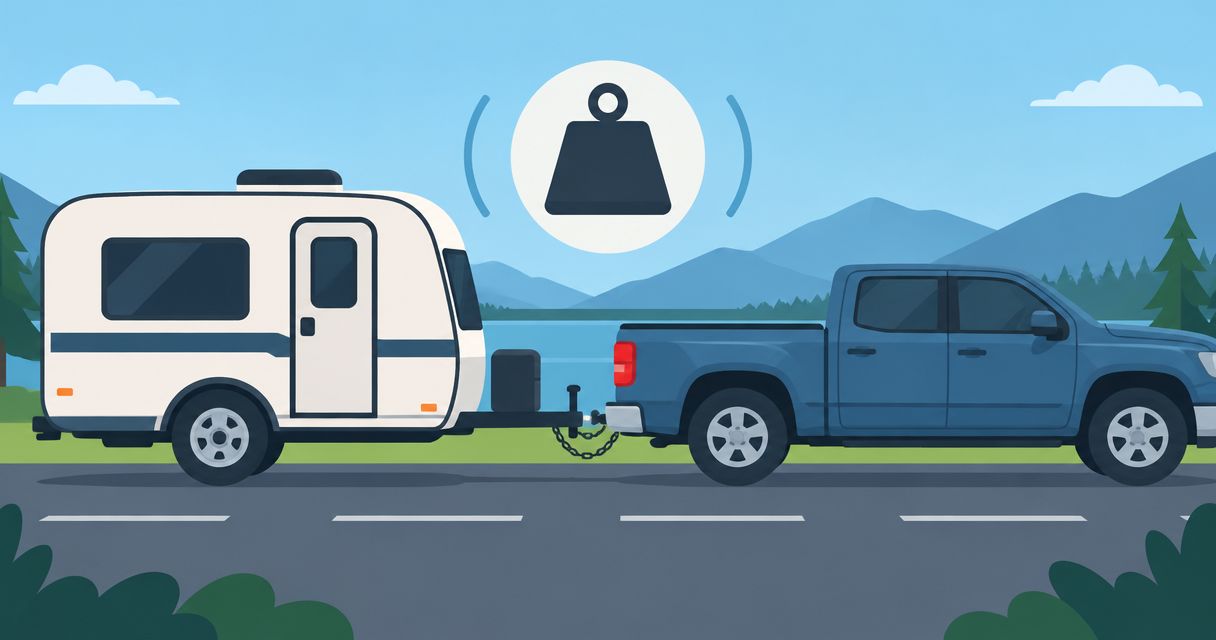
Use your vehicle’s labels and owner’s manual first. Identify its payload limit, towing requirements, and relevant weight ratings before narrowing the trailer list. The same truck model can have different limits depending on its configuration.
Dry trailer weight is not your travel weight. Water, batteries, propane, belongings, and installed equipment add weight. Tongue weight also uses tow-vehicle payload, alongside passengers, cargo, and hitch equipment. Check the loaded combination against all applicable ratings, not just the advertised maximum tow rating.
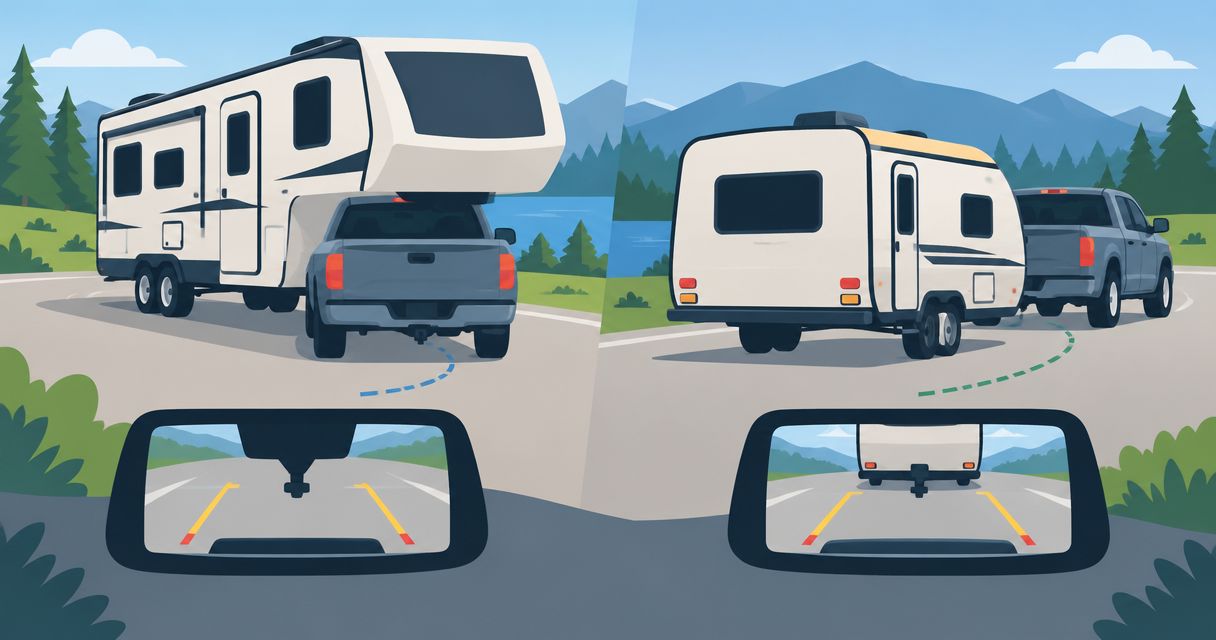
For a fifth wheel, confirm pin weight, hitch requirements, truck-bed clearance, and payload. A larger living area does not justify exceeding a vehicle limit. Choose a compatible trailer before choosing a favorite floorplan. If you plan to change vehicles, evaluate the proposed vehicle and trailer together before signing either purchase agreement.
- Record vehicle payload and applicable towing ratings.
- Check trailer GVWR and cargo-carrying capacity.
- Include passengers, cargo, and hitch equipment in payload calculations.
- Verify hitch, brake-control, and connection requirements.
- Weigh the loaded combination before assignment travel.
3. Test the floorplan against your daily routine
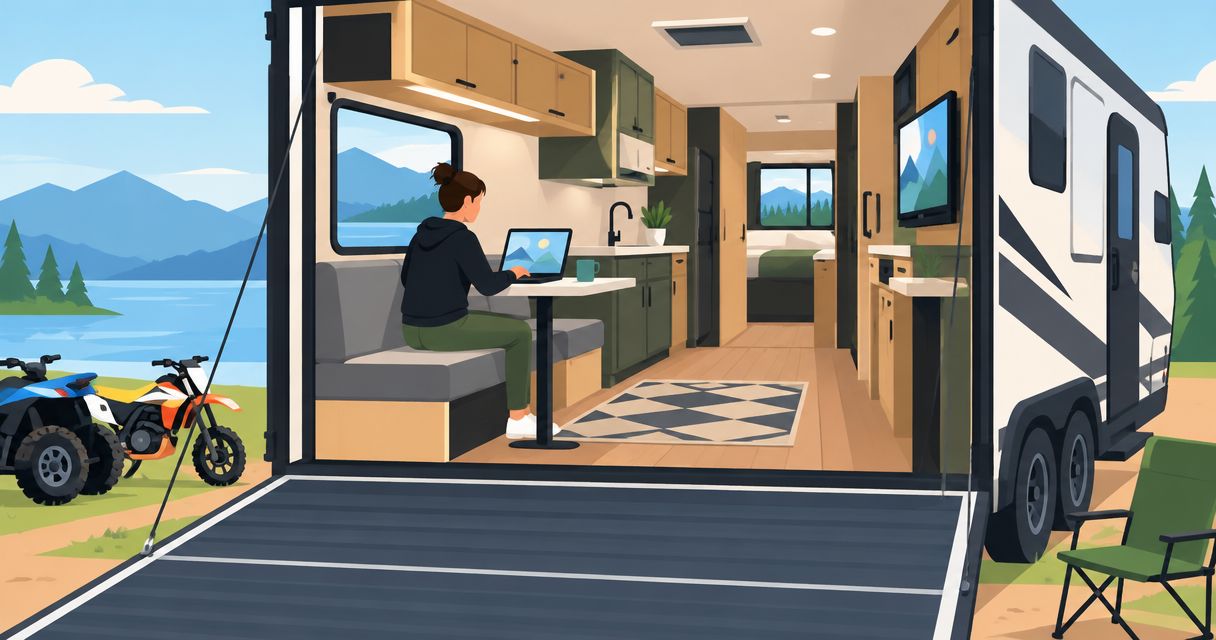
Sketch your routine on paper: wake up, dress, prepare food, leave for duties, return with dirty shoes, shower, and sleep. Then walk those activities inside each candidate. A floorplan works when those tasks do not require moving furniture or unpacking storage every day.
Arrange 2 walkthroughs: one with slide-outs extended and one in travel configuration. The first tests everyday living; the second shows what you can reach during travel stops. Ask before operating slides, and do not force access through a restricted space.
Recreation USA can help you compare new and used travel trailers and fifth wheels around that checklist. Local dealership help saves you from narrowing the search by photographs alone, but an in-person walkthrough remains essential.
Prioritize a separate sleeping area if campground activity conflicts with your rest hours. Bunk space makes sense for children or regular guests; otherwise, evaluate whether that space would serve you better as storage or living room.
- Lie on the permanent bed and check access around it.
- Stand in the shower and test bathroom privacy.
- Sit at the table with your paperwork or laptop.
- Identify storage for work clothes, footwear, and cleaning supplies.
- Check refrigerator, bathroom, and bed access with slides closed.
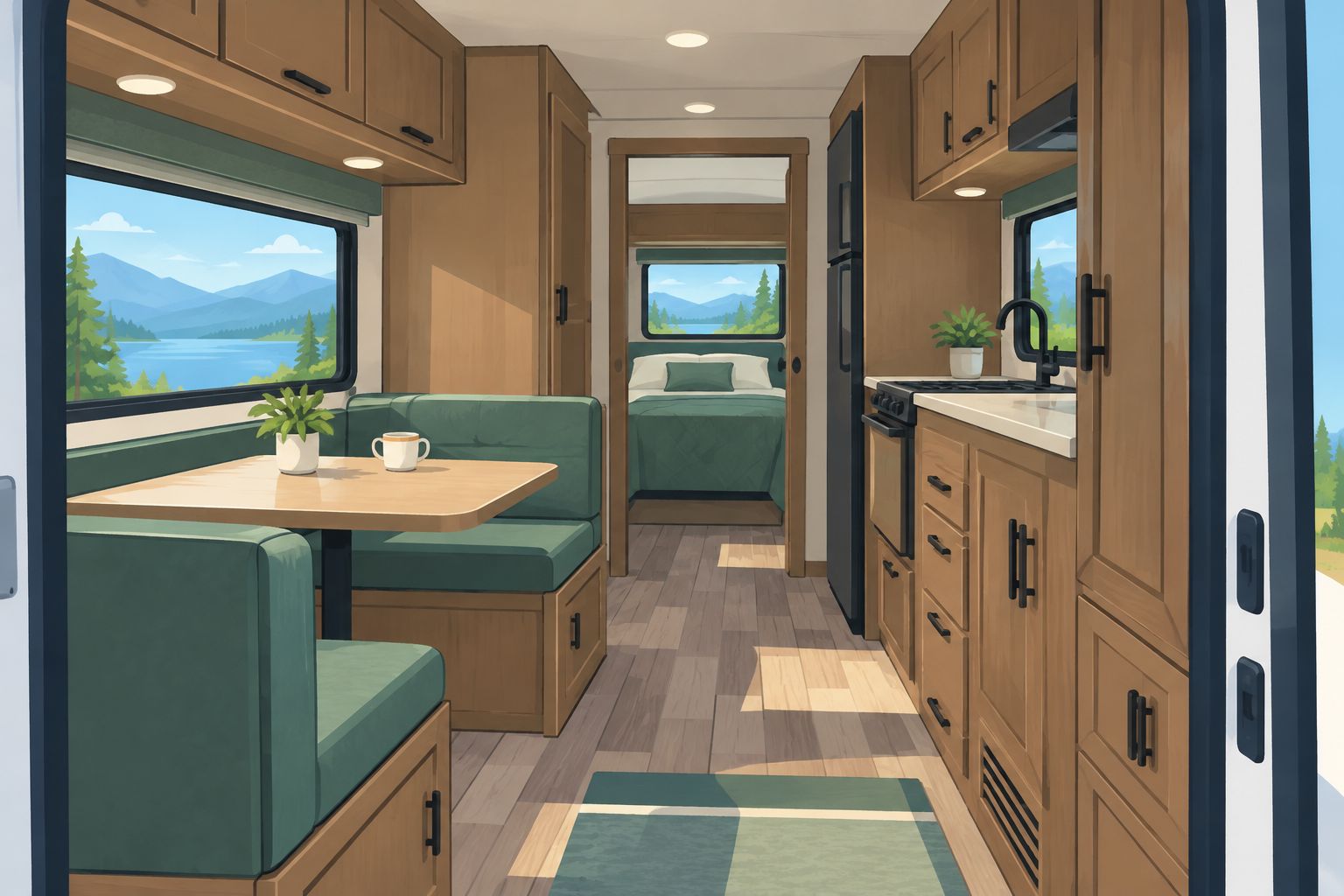
4. Verify utilities and weather suitability
Match the trailer’s systems to the assigned site. Ask what electrical connection is provided, whether water stays connected, and how wastewater is handled. Do not assume a host site has a sewer connection because other campground sites do.
For a 2026 assignment in the Carolinas or a nearby state, assess the actual location and season. Coastal summer use and an inland cold-weather assignment call for different questions. Check manufacturer documentation for insulation, plumbing protection, and equipment rather than treating a seasonal marketing label as a specification.
Take 4 measurements: the trailer’s overall length, overall height, slide-out projection, and deployed entry-step footprint. Compare them with site access and clearance information. Measure the candidate itself or use verified documentation for that exact configuration.
- Verify electrical compatibility and safe connection requirements.
- Confirm water access, pressure-control needs, and hose routing.
- Establish the wastewater connection or dump-station routine.
- Review heating, cooling, ventilation, and moisture-control instructions.
- Check laundry arrangements before prioritizing appliance space.
5. Inspect condition and test the working systems
Use a written inspection checklist for both new and used RVs. On a used trailer, request maintenance records and examine the roof, sealants, openings, underbody, and interior for damage. Staining, soft areas, or unexplained repairs need investigation—not a verbal assurance.
An independent RV inspection adds another set of eyes, but its value depends on scope. Ask what gets tested, what requires utilities, and what remains inaccessible. An inspection is not a guarantee that every concealed defect will be found.
Have the seller demonstrate system operation under appropriate conditions. Record unresolved items in writing and establish how they will be handled before delivery. For a host, an unresolved plumbing or cooling problem affects the living space you are relying on during the assignment.
- Check roof seams, windows, doors, and visible sealants.
- Look for stains, soft flooring, odors, and concealed moisture concerns.
- Test plumbing, appliances, lights, outlets, and slide operation.
- Inspect tires, brakes, running gear, and safety equipment.
- Document repair commitments and delivery conditions.
6. Compare ownership terms before committing
Build an ownership worksheet yourself before applying for financing. Include the RV purchase, taxes and registration, insurance, towing equipment, maintenance, storage, and travel expenses. Separate confirmed campground provisions from expenses you remain responsible for.
For a 2026 purchase, compare the written transaction and financing terms—not just the payment. Approval depends on the lender’s requirements and your application. Review the loan term, interest rate, total amount financed, and any optional products separately.
Recreation USA offers financing, trade-ins, parts, and service, alongside wholesale-to-you pricing and no hidden freight or prep fees. Those services give local buyers a place to ask ownership questions; they do not remove your responsibility to verify terms, towing compatibility, or campground acceptance.
If you are trading in, compare the trade allowance and purchase agreement together. Before traveling from Conway or elsewhere in the Carolinas, call the Myrtle Beach-area lots with your vehicle details and host-site checklist.
- Request an itemized written transaction breakdown.
- Compare financing terms and optional products separately.
- Review trade-in valuation and any existing loan payoff.
- Check insurance coverage for your intended RV use.
- Ask about service scheduling and manufacturer use restrictions.
Compare trailer options for campground hosting
The best option is the one that fits your assignment and tow vehicle while supporting your daily routine. Neither a new RV nor a larger RV automatically solves those requirements. Compare these choices before focusing on individual units.
| Option | Best for | Practical advantage | Key limitation |
|---|---|---|---|
| New travel trailer | Buyers who want to compare current layouts and documented equipment | You can review the exact configuration before committing | New units still need inspection, system demonstrations, and delivery checks |
| Used travel trailer | Buyers willing to assess condition and maintenance history closely | You can evaluate an existing unit’s condition and records | Hidden damage and incomplete maintenance records need investigation |
| Fifth wheel | Hosts whose truck and site support a fifth-wheel setup | Worth comparing when bedroom separation and living layout are priorities | Pin weight, truck payload, hitch requirements, and site access restrict suitability |
| Destination trailer | Seasonal hosts whose campground explicitly accepts the configuration | Worth comparing when the site will serve as an extended-stay base | Movement arrangements, access, and campground acceptance require early confirmation |
Decide between new and used after inspection and ownership review, not before. A suitable used trailer deserves consideration; an unsuitable new trailer still fails the host-site and towing checks.
Common mistakes campground hosts make
Buying before the assignment is confirmed
A verbal discussion is not the same as written site requirements. Confirm the assignment, parking dimensions, utility arrangements, and occupancy rules before committing to a trailer for that placement.
Choosing guest beds over daily comfort
Sleeping capacity does not tell you whether the permanent bed, shower, kitchen, and seating work for everyday use. Match the layout to your actual household, including children, visitors, and pets where applicable.
Treating hookups as an unlimited utility plan
An electrical connection does not answer questions about equipment compatibility, and a water connection does not establish wastewater arrangements. Verify each utility separately and identify whom to contact when service fails.
Ignoring repairs because the trailer will stay parked
A parked trailer still needs weather protection and working systems. Tires, brakes, bearings, lights, and hitch components also matter when the assignment ends and you need to move it.
FAQ
What's the best travel trailer for a campground host?
The best travel trailer for a campground host fits the assigned site, stays within loaded towing limits, and supports daily living. Prioritize a permanent bed, usable bathroom, practical storage, and verified utility compatibility.
Is a fifth wheel better than a travel trailer for campground hosting?
A fifth wheel is a better choice only when its layout fits your needs and your truck and host site support it. Compare payload, pin weight, hitch requirements, access, and bedroom privacy rather than assuming larger means better.
Should a first-time campground host buy new or used?
A first-time campground host should compare new and used RVs against the same site, towing, and inspection checklist. Used condition and repair history need close attention, while new RVs still require a delivery inspection and system demonstration.
Can I choose a host trailer using its dry weight?
Dry weight alone is not enough to choose a host trailer. Check loaded trailer weight, cargo capacity, tow-vehicle payload, hitch requirements, and all applicable vehicle and trailer ratings.
Do campground hosts need a washer and dryer in their RV?
Campground hosts should confirm laundry access before prioritizing a washer and dryer. Check the assignment's facilities, then verify appliance compatibility, utility requirements, storage trade-offs, and the exact trailer configuration.
What should I bring when shopping for a host trailer in 2026?
Bring your written host-site requirements, tow-vehicle details, household needs, and ownership worksheet when shopping in 2026. Include assignment dates and utility arrangements so you can reject unsuitable trailers early.
Where can Myrtle Beach-area campground hosts compare travel trailers?
Recreation USA offers new and used travel trailers and fifth wheels at two Myrtle Beach-area lots. Call before visiting with your host-site requirements and towing details, and ask about financing, trade-ins, parts, and service without assuming financing approval.
One last thing
Check what happens when the assignment ends before you buy for the assignment. Confirm your departure obligations, next parking location, towing arrangements, and whether insurance and storage plans cover the transition. A trailer must work as your home base and remain practical to move afterward.