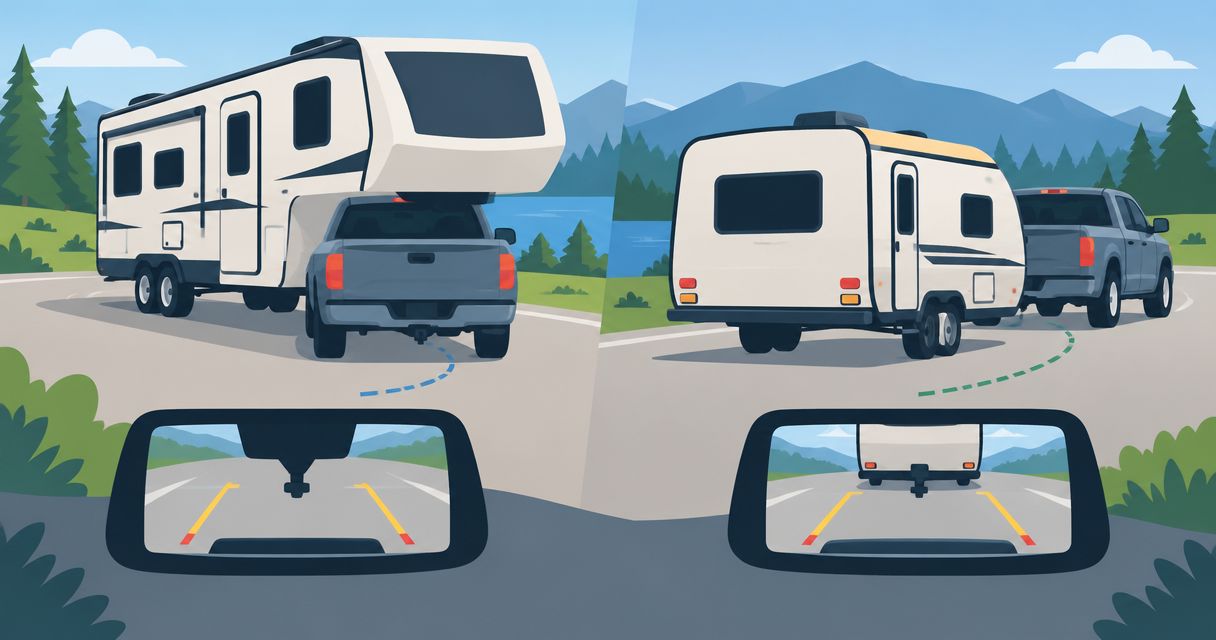

Best overall: an open-living travel trailer with a clear dog-bed space. Best for families: a bunkhouse travel trailer. Best for bulky crates: a travel-trailer toy hauler. The best pet friendly travel trailers in 2026 fit your dog, your camping routine, and your tow vehicle—not just a pet-friendly label.
- The best pet friendly travel trailers provide usable dog space without blocking doors, seating, or nighttime access.
- Recreation USA shoppers should prioritize floorplan fit and towing compatibility over pet-themed features.
- Bunkhouse travel trailers suit families; compact layouts suit couples whose dogs need less floor space.
- Travel-trailer toy haulers accommodate bulky crates, but garage space brings towing and floorplan trade-offs.
Why this matters
A dog changes how you use a travel trailer. A crate can block the bathroom, a bed can sit in the slide path, and an entry step can make every bathroom break difficult. Those problems matter more than a decorative pet feature.
Recreation USA is a family-owned RV dealership with two lots in the Myrtle Beach area, selling new and used travel trailers alongside other RV types. For Recreation USA travel-trailer shoppers camping with dogs, the best floorplan keeps the dog’s resting space out of the main walkway. Bring your crate measurements and towing information before comparing layouts.
For your 2026 shortlist, rank usable space first. Then check towing compatibility, entry access, cleaning surfaces, and the equipment needed for your camping plans. A larger trailer is not automatically a better dog trailer.
What makes the best pet-friendly travel trailer?
Use these criteria before you compare floorplans. They apply to new trailers, used trailers, weekend trips, and seasonal stays.
- Dog-space fit: Your dog’s bed or crate fits without blocking the entrance, bathroom, refrigerator, or a required exit.
- Entry access: You can manage the leash while your dog enters and exits. Assess step height, footing, and room at the doorway.
- Cleanable surfaces: Inspect flooring, upholstery, seams, and corners. Look for places where hair, sand, and wet paws create extra work.
- Travel-day access: Check the layout with slides retracted. A campsite-ready floorplan can work differently during a roadside stop.
- Temperature management: Review the actual ventilation, air-conditioning equipment, and power requirements rather than assuming the trailer stays comfortable unattended.
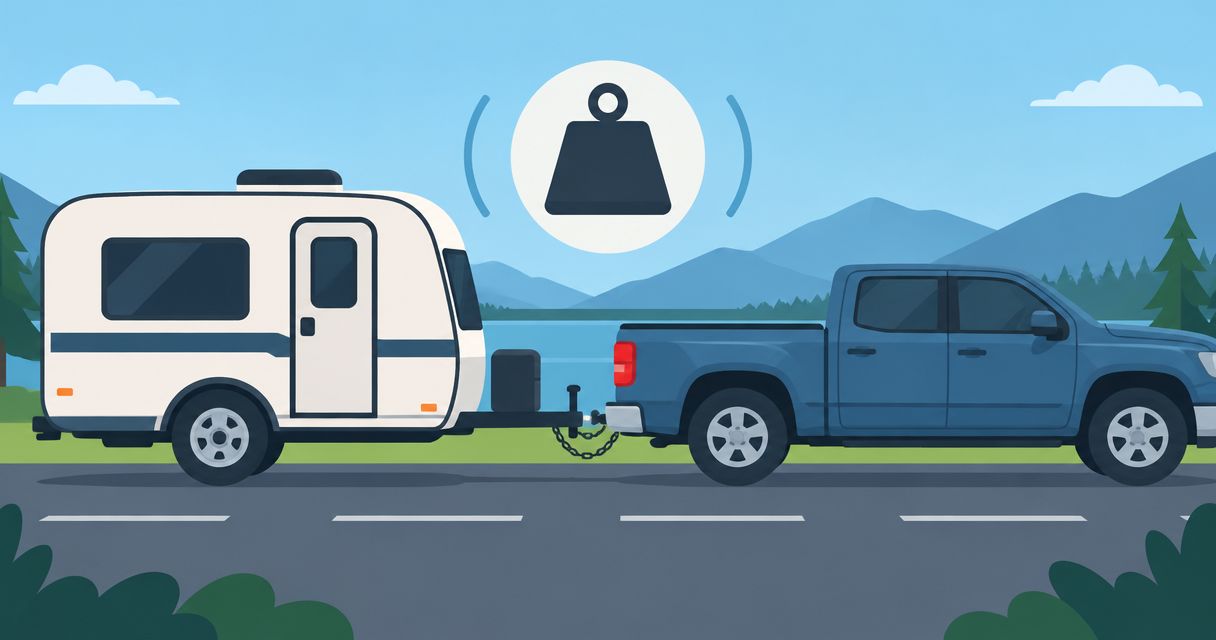
- Towing compatibility: Match the loaded trailer and hitch load to the specific tow vehicle’s ratings. Include people, pets, and camping equipment.
For a Myrtle Beach or Conway shopping visit, bring the actual crate when practical. Otherwise, bring its exterior measurements and a cardboard footprint. You need to verify the space, not judge it from a wide-angle photo.
Best pet-friendly travel trailers at a glance
These are ranked floorplan types, not named models. Equipment varies by trailer, so every recommendation depends on inspecting the exact unit.
| Rank and option | Best for | Standout layout benefit | Key limitation |
|---|---|---|---|
| 1. Open-living travel trailer | Couples camping with dogs | Shared living space can accommodate a dedicated dog area | A bed or crate can interrupt the main walkway |
| 2. Bunkhouse travel trailer | Families with children and dogs | Separate sleeping areas help organize people and pet equipment | Bunks do not guarantee usable crate space |
| 3. Compact travel trailer | New campers with a smaller dog | A simpler footprint keeps the layout easy to assess | Limited floor area leaves fewer placement choices |
| 4. Rear-living travel trailer | Seasonal campers wanting separate rest zones | Living and sleeping areas can serve different routines | Furniture and slides can restrict travel-day access |
| 5. Travel-trailer toy hauler | Buyers carrying bulky crates or dog equipment | A garage area can provide flexible equipment space | Garage utility competes with conventional living space |
1. Open-living travel trailer: best for couples camping with dogs
An open-living travel trailer puts the kitchen, seating, and circulation space together. The right example leaves a clear place for your dog to settle while you cook, sit, or move through the trailer. For couples, that shared space avoids treating a spare bedroom as necessary pet accommodation.
Look beyond how spacious the trailer feels with slides extended. Place the crate footprint on the floor and check whether another person can reach the bathroom without stepping over it. Also check where the dog rests when the table or seating is in use.
Open-living travel trailer pros:
- Shared space keeps your dog near your normal camping routine.
- A suitable layout allows a dedicated bed beside, rather than inside, the walkway.
- You can compare seating, kitchen access, and dog space together during the walkthrough.
Open-living travel trailer cons:
- Cooking, eating, and pet activities share the same area.
- Furniture placement can leave less usable floor space than photographs suggest.
Best for: Couples who want their dog nearby without adding a separate sleeping room.
For a 2026 purchase, judge the actual floorplan rather than the category name. Buy an open-living travel trailer when the dog’s space remains clear during normal use; skip a layout that requires moving the crate whenever you need the bathroom.
2. Bunkhouse travel trailer: best for families with children and dogs
A bunkhouse travel trailer gives children a defined sleeping area. That separation can help keep bedding, toys, and pet equipment from competing in the main living space. It does not mean the dog belongs on a bunk or that the bunk room automatically fits a crate.
Walk through the trailer with the family’s evening routine in mind. Check where the dog sleeps after the children go to bed and whether an adult can reach the exterior door without disturbing everyone. Keep required exits clear in every sleeping configuration.
Bunkhouse travel trailer pros:
- Separate child sleeping areas help organize family belongings.
- The main living area can remain available after bedtime.
- A suitable layout lets you establish distinct sleeping and pet-storage zones.
Bunkhouse travel trailer cons:
- Additional sleeping capacity does not necessarily create open floor space.
- Family passengers and equipment must be included in the towing assessment.
Best for: Families camping with children and dogs who need separate sleeping routines.
Inspect the bunkhouse as a working family space, not just a bed count. A crate beside the bunks is unsuitable if it blocks access or an exit. Buy a bunkhouse travel trailer when people and pets have workable sleeping locations; skip one that solves the children’s beds but leaves the dog in the aisle.
3. Compact travel trailer: best for new campers with a smaller dog
A compact travel trailer keeps the floorplan simple to evaluate. For a couple or solo camper whose dog needs a modest resting area, a smaller layout can meet the camping brief without adding unused rooms. Compact dimensions alone do not establish towing compatibility.
Pay attention to convertible furniture. If the dinette becomes your bed, the dog’s daytime resting spot might disappear at night. Check both arrangements before deciding the trailer works.
Compact travel trailer pros:
- A smaller interior makes it straightforward to check the complete daily routine.
- Fewer separate rooms keep the dog’s location easy to manage.
- A suitable layout avoids buying extra sleeping space you do not need.
Compact travel trailer cons:
- There are fewer alternative locations for a crate or dog bed.
- Convertible sleeping arrangements can disrupt the pet’s resting space.
Best for: First-time campers, solo buyers, or couples with a dog whose bed fits comfortably in a compact layout.
During your 2026 walkthrough, test the trailer in both daytime and sleeping configurations. Sit down, open the bathroom door, and identify where shoes and leashes will go. Buy a compact travel trailer when both configurations work; skip one that requires your dog to sleep across the entrance.
4. Rear-living travel trailer: best for seasonal campers
A rear-living travel trailer groups the main lounge toward the back. In a layout with a separate bedroom, you can create different spaces for sleeping and daytime use. That distinction matters when one person wakes early or stays up later than the other.
Check whether your dog can settle near the seating without blocking circulation. Recliners, tables, and slide-outs can occupy the floor area that looks suitable in a brochure. Also inspect the route from the bedroom to the entry door for nighttime walks.
Rear-living travel trailer pros:
- A separate bedroom can keep human sleeping space apart from daytime activity.
- The lounge provides a defined area for shared downtime.
- A suitable layout supports a consistent dog-bed location during longer stays.
Rear-living travel trailer cons:
- Lounge furniture can reduce the clear space available for pets.
- Retracted slides can change access to the living area or bedroom.
Best for: Seasonal campers who value separate sleeping and lounging routines.
For Recreation USA travel-trailer shoppers planning longer stays, rear-living layouts deserve a close walkthrough with the dog’s bed footprint in place. Buy a rear-living travel trailer when furniture movement and door access remain clear; skip one whose lounge only works after the dog bed is removed.
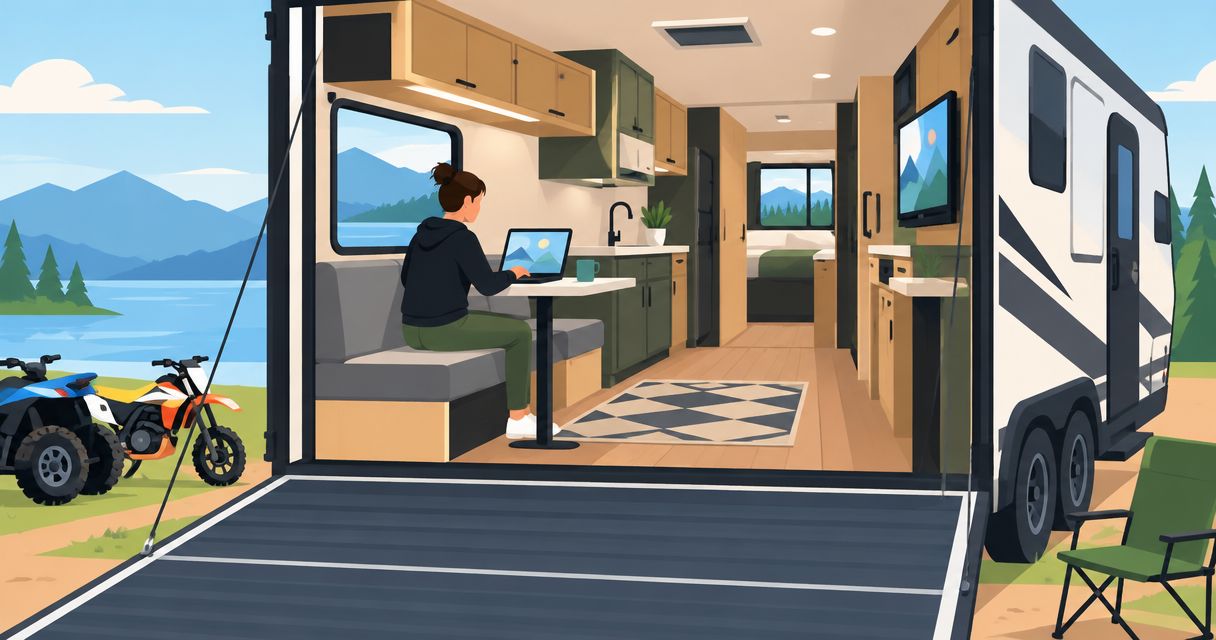
5. Travel-trailer toy hauler: best for bulky crates and equipment
A travel-trailer toy hauler combines RV living space with an area intended for transporting equipment. That garage can be useful when bulky crates, exercise equipment, or other camping gear crowd a conventional layout. Verify the garage dimensions, surfaces, ventilation, and access on the exact trailer.
A toy-hauler garage is not automatically a safe unattended pet room. Inspect its environment separately from the living area, and never assume a rear ramp functions as an approved patio or pet enclosure.
Travel-trailer toy hauler pros:
- A suitable garage provides a defined area for bulky equipment.
- Separating gear from the lounge can preserve everyday living space.
- Flexible layouts can accommodate equipment that does not fit beside conventional seating.
Travel-trailer toy hauler cons:
- Garage space can reduce the conventional lounge or bedroom area.
- Additional cargo changes the loaded-trailer assessment.
- Equipment storage does not establish safe pet occupancy.
Best for: Buyers whose crates and camping equipment genuinely need a dedicated space.
Compare the garage benefit against your actual packing list. Do not choose a toy hauler solely because the dog bed looks easier to place. Buy a travel-trailer toy hauler when the equipment space earns its place and towing checks pass; skip one when a conventional trailer meets the same needs.
Check the trailer with your dog’s routine in mind
Use the same walkthrough for every candidate. In 2026, a consistent inspection makes a new-versus-used comparison more useful than choosing by appearance alone.
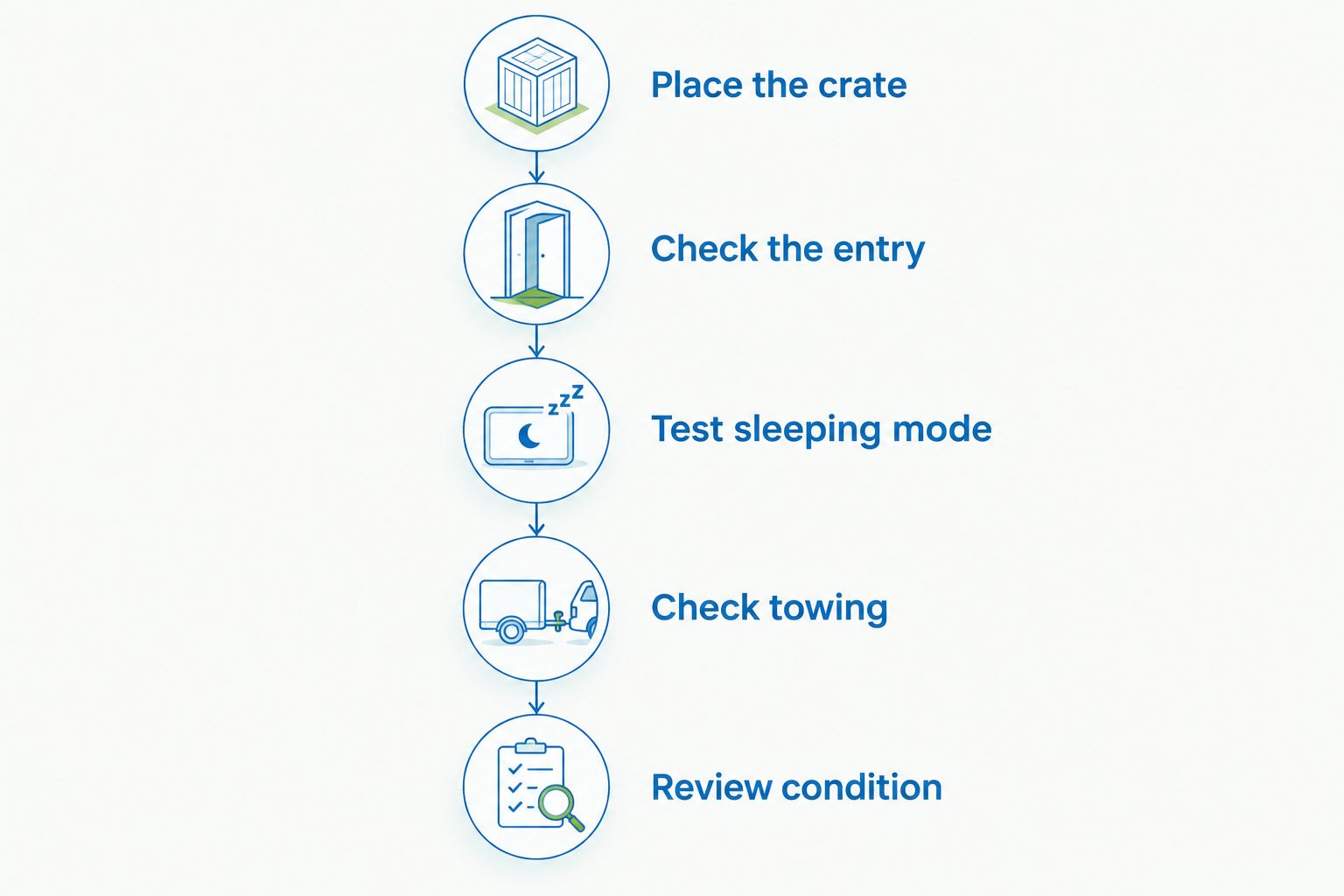
- Place the crate. Use its full exterior footprint, including the space needed to open its door.
- Check the entry. Review 2 door positions: open and closed. Confirm the crate and leash routine work in both.
- Test sleeping mode. Arrange convertible furniture and identify each person’s and pet’s resting place.
- Check towing. Review 3 limits together: tow rating, payload rating, and hitch rating. Use the vehicle documentation and actual loading information.
- Review condition. On a used trailer, inspect flooring, seals, upholstery, and signs of moisture damage rather than assuming wear is cosmetic.
Take 2 photos of each finalist: one showing the dog’s resting space and one showing the route to the door. Those views make it easier to compare practical access after you leave the lot. For a trade-in, explain what does not work in your current camper so the next layout fixes that problem.
Compare layouts before choosing
Bring your crate measurements and tow-vehicle details to the Myrtle Beach-area lots.
How these floorplans are ranked
This ranking prioritizes clear dog space, entry access, cleaning, travel-day usability, temperature-management checks, and towing compatibility. Open-living layouts come first because they address everyday shared space without requiring a dedicated garage or additional sleeping room. The remaining choices solve narrower needs: family sleeping, compact camping, seasonal routines, or equipment storage.
No floorplan name guarantees those benefits. The individual trailer must pass the walkthrough, and a used example needs a condition assessment alongside its layout review.
Which pet-friendly travel trailer should you choose?
Choose an open-living travel trailer as your default, then change categories only to solve a specific need. Choose a bunkhouse for children’s sleeping space, a compact layout for a smaller camping footprint, rear living for separate routines, or a toy hauler for bulky equipment.
Call Recreation USA’s Myrtle Beach-area lots with your tow-vehicle details, dog-bed measurements, and preferred sleeping arrangement. Ask for straight answers about the exact trailer, trade-ins, financing, and service. Financing is a separate decision from whether the floorplan works for your household.
FAQ
What are the best pet friendly travel trailers for camping with dogs?
The best pet friendly travel trailers provide a dedicated dog-bed or crate location without blocking doors or walkways. Start with an open-living layout, then consider a bunkhouse, compact trailer, rear-living layout, or toy hauler for a specific household need.
Is a bunkhouse travel trailer better for families with dogs?
A bunkhouse travel trailer is a good fit when children need separate sleeping space. Check the dog's sleeping location independently, because bunks do not guarantee usable crate space or clear nighttime access.
Can I camp with a dog in a small travel trailer?
Yes, a small travel trailer works when the dog's resting space fits in both daytime and sleeping configurations. Check convertible furniture, bathroom access, and the route to the exterior door before choosing.
Is a toy hauler garage a good place for dog crates?
A toy hauler garage can accommodate bulky crates when its dimensions and layout fit the equipment. Garage space alone does not establish safe pet occupancy; inspect ventilation, temperature management, access, and surfaces on the exact trailer.
Should I buy a new or used travel trailer for camping with dogs?
Choose between new and used travel trailers by floorplan fit, condition, and ownership needs. A used trailer needs careful inspection for moisture damage, worn surfaces, and equipment condition in addition to the pet-space walkthrough.
Can I leave my dog alone in a travel trailer?
Do not assume a travel trailer is safe for an unattended dog. Power interruptions or equipment problems can compromise temperature control, so arrange supervision and follow applicable campground rules.
What should I bring to a dealership when shopping for a dog-friendly camper?
Bring crate or bed measurements, tow-vehicle information, and a description of your sleeping routine. Bring the actual crate when practical, and ask the dealership about its rules before bringing your dog.
One last thing
The best pet-space test happens with the furniture configured for bedtime, not during the showroom walkthrough. That is when extra beds, closed doors, and the dog’s resting spot compete for the same floor area. Before committing in 2026, repeat the route from your bed to the exterior door.