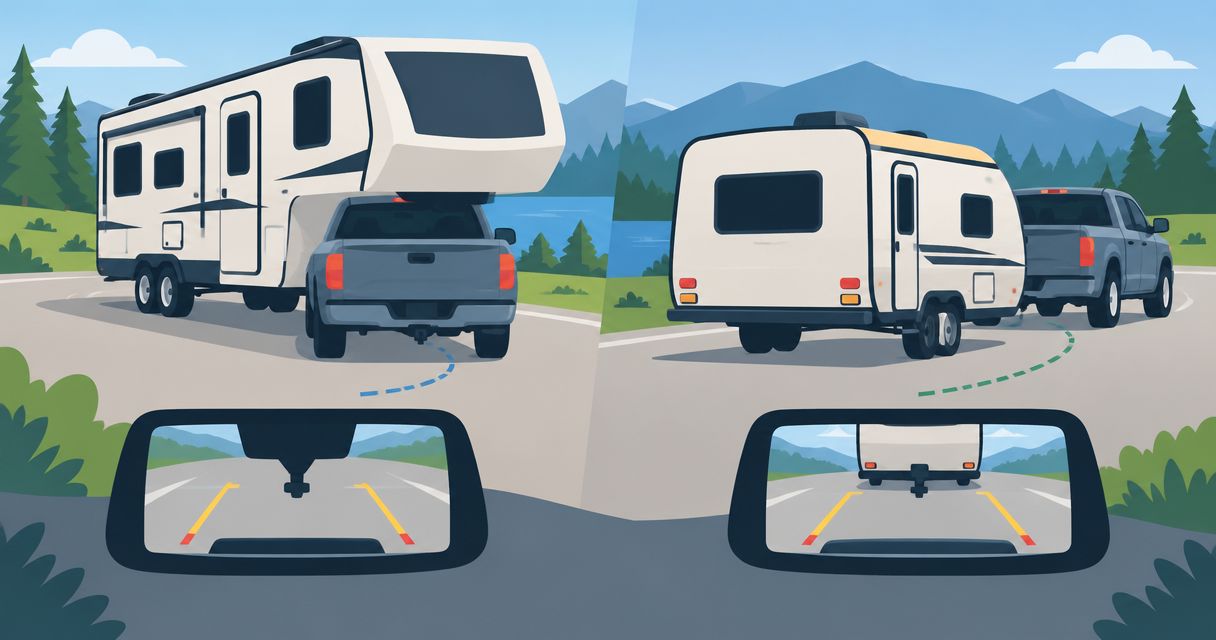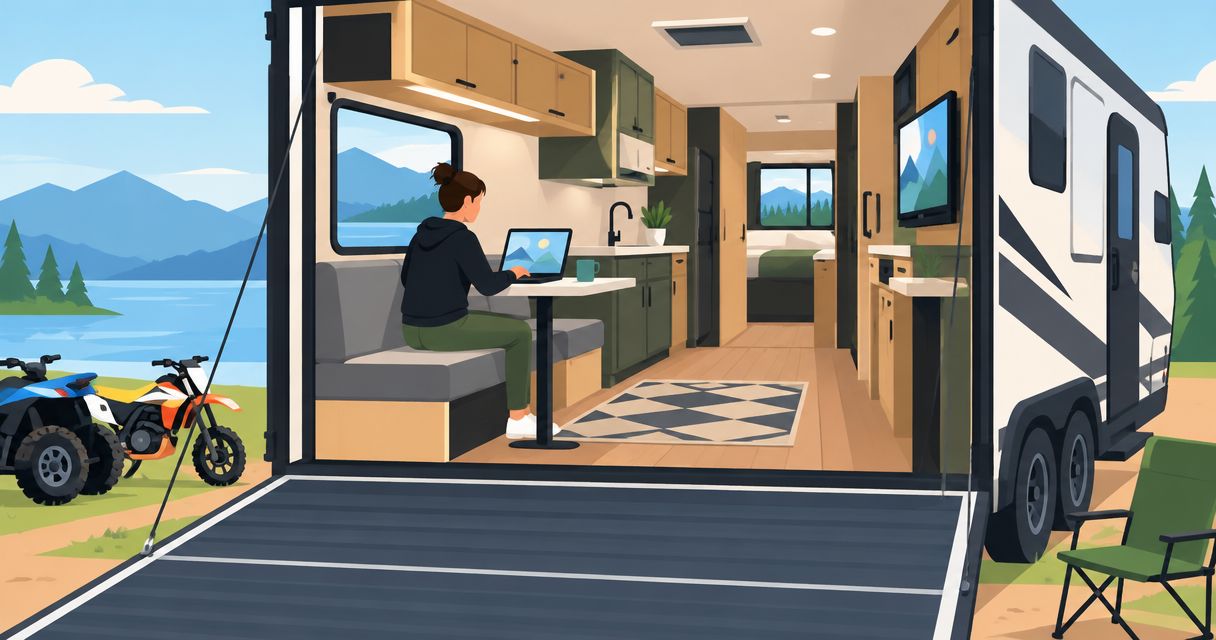

Best overall: a rear bedroom with a solid door and bathroom buffer. Best for families: a rear bedroom with a separate front bunkroom. Best value-focused starting point: a compact, enclosed rear bedroom. The best rear bedroom travel trailers separate sleeping from household traffic; this 2026 guide ranks layout types rather than treating a model name as proof of privacy.
- The best rear bedroom travel trailers combine an enclosed bedroom with a bathroom route that avoids the sleeping area.
- Choose a rear bedroom with front bunks when children and adults need separate sleeping spaces.
- Choose rear twin beds when separate beds matter more than sharing one mattress.
- Recreation USA is a local option for rear-bedroom travel trailer buyers near Myrtle Beach and Conway.
Why this matters
A bed at the back of a trailer is not automatically a private bedroom. Curtains, open doorways, bathroom access, and convertible sleeping areas determine whether someone can sleep while another person makes breakfast.
Recreation USA is a family-owned dealership with two Myrtle Beach-area lots selling new and used travel trailers and fifth wheels, alongside other RV types. Its wholesale-to-you approach and no hidden freight or prep fees give you a straightforward starting point: compare the written purchase terms, then inspect the actual floorplan.
For your 2026 shortlist, separate three questions: where the bed sits, whether the room closes, and who must pass through it. Those answers matter more than a rear-bedroom label.
What makes the best rear bedroom travel trailers?
Use these criteria before choosing a floorplan. A strong layout should suit your sleeping routine without creating problems for towing or daytime use.
- Bedroom separation: Look for a solid door that closes fully. A curtain blocks sightlines but does not provide the same physical separation.
- Bathroom routing: Prefer bathroom access from the shared living area without crossing the bedroom. Check the route with every sleeping space in use.
- Bed access: Confirm that each sleeper can get out without climbing over the other. Test the aisle rather than judging it from a floorplan drawing.
- Living-area independence: Check whether someone can cook, sit, or leave the trailer while the rear bedroom remains closed.
- Travel compatibility: Match the exact trailer to your vehicle's ratings, payload, hitch equipment, and loaded weights. Bedroom placement proves nothing about towability.
- Ownership fit: Inspect storage, ventilation, maintenance access, and the layout with slides retracted. Your travel-day routine matters alongside your campsite routine.
Choose the traffic pattern first, then the bed arrangement. An attractive bedroom loses its advantage when everyone needs to walk through it at night.
Rear-bedroom layouts at a glance
These are shopping configurations, not claims that every manufacturer offers each combination. Confirm the bed location, door arrangement, and bathroom access on the exact trailer you inspect.
| Ranked layout | Best for | Standout feature to seek | Key limitation |
|---|---|---|---|
| Rear bedroom with bathroom buffer | Couples with different schedules | Separation between the bed and shared living space | Bathroom activity can still disturb sleepers |
| Rear bedroom with front bunkroom | Families needing adult privacy | Children and adults sleep in separate zones | More sleeping areas mean more floorplan compromises |
| Rear twin-bedroom layout | Travelers wanting separate beds | Individual beds with a shared aisle | Does not suit buyers wanting one shared mattress |
| Compact enclosed rear bedroom | First-time buyers prioritizing simplicity | Private sleeping space without extra rooms | Bed access and storage deserve close inspection |
| Rear bedroom with separate work area | Seasonal campers and working travelers | Sleeping and daytime work stay in different zones | A desk does not compensate for poor bedroom separation |
1. Rear bedroom with bathroom buffer: best for different schedules
A rear bedroom with a solid door and an intervening bathroom or storage zone is the strongest starting point for couples who wake at different times. The extra separation interrupts the direct connection between the bed and the kitchen or lounge; it does not make the bedroom soundproof.
Look for bathroom access from the common area. A bathroom that requires passage through the bedroom defeats the purpose, even when the floorplan looks spacious.
Bathroom-buffer layout pros:
- Creates distinct sleeping and living zones.
- Lets you close the bedroom while someone uses the lounge.
- Adds separation without relying solely on a curtain.
Bathroom-buffer layout cons:
- Plumbing, fans, and nighttime bathroom use remain sources of disturbance.
- A pass-through bathroom can complicate access when doors are closed.
During your walkthrough, have one person sit in the bedroom while another opens cabinets and moves through the living area. Listen and watch for direct sightlines.
Best for: Couples with different bedtimes, early risers, and late sleepers.
Verdict: Buy this layout when the bathroom remains accessible without entering the bedroom.
2. Rear bedroom with front bunkroom: best for family separation
A rear adult bedroom and a separate front bunkroom divide family sleeping into distinct zones. That arrangement gives adults a room they can close rather than sharing their sleeping space with bunks or a converted dinette.
Check that the front sleeping area is actually enclosed. A bunk alcove beside the lounge creates a different privacy experience from a room with its own door. Your 2026 search should distinguish those layouts before comparing individual trailers.
Front-bunkroom layout pros:
- Separates adult and children's sleeping areas.
- Keeps dedicated beds out of the main bedroom.
- Supports different bedtime routines when both rooms close.
Front-bunkroom layout cons:
- Additional sleeping space competes with lounge and storage space.
- Bathroom placement can favor one sleeping zone over the other.
Walk the route from each bed to the bathroom. If family separation matters more than rear bed placement, compare the alternatives in this travel trailer bunkhouse guide.
Best for: Families who want an adult bedroom separate from children's beds.
Verdict: Buy only after confirming both sleeping zones and the nighttime bathroom route.
3. Rear twin-bedroom layout: best for separate sleepers
A rear twin-bedroom arrangement gives each traveler a separate bed. Look for an enclosed room and a usable aisle so either person can get up without disturbing the other's mattress.
This configuration suits friends traveling together and couples who prefer separate sleeping surfaces. It answers a different question from sound privacy: independent beds help with movement, but both occupants still share a room.
Rear twin-bedroom layout pros:
- Gives each traveler an individual sleeping surface.
- Avoids climbing across a shared mattress when the aisle is usable.
- Makes separate bedding arrangements straightforward.
Rear twin-bedroom layout cons:
- Does not provide separate rooms or separate sound environments.
- Bed length and access vary by floorplan and require an in-person check.
Lie down rather than estimating comfort while standing beside the bed. Open nearby wardrobes and drawers to see whether storage access blocks the aisle.
Best for: Friends, relatives, and couples who want separate beds within one private bedroom.
Verdict: Buy for independent sleeping; skip if your priority is one shared mattress.
4. Compact enclosed rear bedroom: best for a simple first trailer
A compact rear-bedroom layout keeps the decision focused on a private bed, a workable bathroom, and enough living space for your routine. It is the value-focused starting point here because you can compare trailers without adding a bunkroom or dedicated office to your requirements—not because smaller automatically means cheaper.
A compact trailer is not automatically suitable for your tow vehicle, either. Check the exact ratings and loaded-weight calculations before treating size as an advantage.
Compact rear-bedroom layout pros:
- Keeps the floorplan search focused on essential spaces.
- Avoids requiring an additional sleeping or work room.
- Makes compromises easier to identify during a walkthrough.
Compact rear-bedroom layout cons:
- A corner bed can make nighttime access awkward.
- Storage doors, the bedroom door, and walking space can conflict.
For a 2026 new-versus-used comparison, inspect condition and purchase terms alongside layout. A private room is useful only when you can comfortably enter, dress, and reach your belongings.
Best for: First-time buyers and weekend campers who want privacy without extra rooms.
Verdict: Buy when the bedroom stays usable with its door closed; skip cramped access.
5. Rear bedroom with separate work area: best for longer stays
A rear bedroom paired with a work area outside the sleeping room separates rest from daytime tasks. Look for a desk or usable work surface in the common area rather than assuming that bedroom furniture creates a practical office.
Seasonal and full-time shoppers should also inspect seating, storage, and bathroom access. A rear bedroom is one part of daily living, not proof that a travel trailer suits extended occupancy.
Separate-work-area layout pros:
- Keeps work equipment out of the sleeping space.
- Lets one person use the work area while the bedroom closes.
- Gives daytime activities a defined location.
Separate-work-area layout cons:
- Calls and kitchen activity still share the common living area.
- Work furniture competes with seating and storage space.
Sit at the work surface with your usual equipment dimensions in mind. Check outlet locations, chair clearance, and whether another person can pass without interrupting you.
Best for: Seasonal campers and travelers who need a work surface away from the bed.
Verdict: Buy when work and sleep can happen independently; skip bedroom-only desk solutions.
Test privacy before you commit
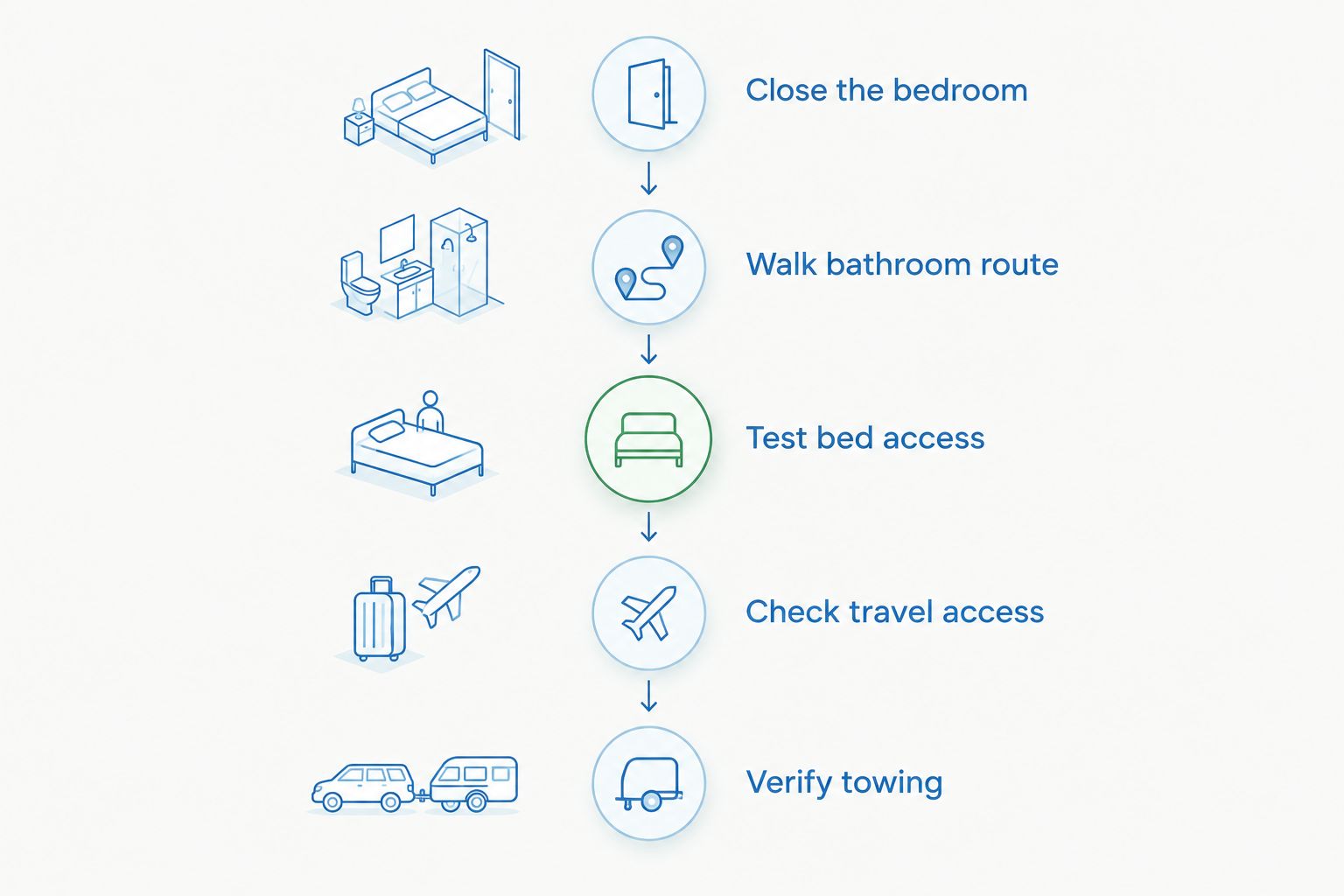
Use this sequence at the dealership rather than relying on an empty-trailer impression. Bring the people who will use the RV when practical; a walkthrough with 2 people reveals traffic conflicts that a solo visit misses.
- Close the bedroom. Check the latch, door clearance, and sightline from the entry. Make sure bedding does not interfere with closing it.
- Walk the bathroom route. Have one person remain in bed while another reaches the toilet and sink. Include any converted sleeping spaces in this check.
- Test bed access. Get in and out from each sleeping position. Check footing and access to personal storage.
- Check travel access. Inspect 2 slide positions: extended and retracted, where the trailer has slides. Follow the dealer's operating instructions and check which spaces remain reachable.
- Verify towing. Review your vehicle's ratings and the trailer's labels with the dealer. Include occupants, cargo, hitch equipment, and loaded trailer weight in the assessment.
Recreation USA offers rear-bedroom travel trailer shoppers a local place to discuss layout requirements, trade-ins, financing, and service. Call the Myrtle Beach-area lots before traveling from Conway, elsewhere in the Carolinas, or nearby states, and explain which sleeping arrangement you need.
Start your rear-bedroom trailer search
Discuss bedroom separation, towing requirements, and new or used options with the Myrtle Beach-area dealership.
How these layouts are ranked
The ranking puts bedroom separation and bathroom routing ahead of furniture features. Bed access comes next, followed by independent use of the living area, towing compatibility, and ownership fit.
These are layout recommendations, not a model-by-model road test or an inventory ranking. For your 2026 purchase, the exact trailer's floorplan, condition, labels, and written terms determine whether it belongs on your shortlist.
Which rear-bedroom layout should you choose?
Choose an enclosed rear bedroom with common-area bathroom access as your default. Add a bathroom buffer when different schedules make separation especially important. Choose front bunks for family sleeping zones, twin beds for separate sleepers, or a separate work area for longer stays.
Recreation USA's rear-bedroom travel trailer buyers can start with new or used options rather than assuming one route is always better. Ask for the written transaction terms, inspect used condition carefully, and discuss financing without treating approval as guaranteed.
In 2026, the deciding question remains simple: can someone sleep while the rest of your household uses the trailer? If the answer requires everyone to tiptoe through the bedroom, keep looking.
FAQ
What's the best rear bedroom travel trailer layout for privacy?
An enclosed rear bedroom with bathroom access from the common area is the best starting point for privacy. A bathroom or storage buffer adds separation, but you still need to check doors, sightlines, and household traffic.
Does a rear bedroom mean a travel trailer has a private bedroom?
No, rear bed placement does not prove that the bedroom is private. Confirm whether the sleeping area has a solid door, an open doorway, or a curtain, and check whether anyone must pass through it.
Is a rear bedroom better than a front bedroom?
A rear bedroom is better only when its traffic pattern suits your household. An enclosed front bedroom with independent bathroom access can serve your routine better than an open rear sleeping area.
What rear-bedroom layout should a family choose?
Families seeking separate adult and child sleeping zones should look for a rear bedroom with a separate front bunkroom. Confirm that both spaces close and that children can reach the bathroom without entering the adult bedroom.
Are rear twin beds good for couples?
Rear twin beds suit couples who prefer separate sleeping surfaces. They do not create separate rooms, so check bedroom closure and bathroom routing if privacy is the main goal.
Can my half-ton truck tow a rear-bedroom travel trailer?
Rear bedroom placement does not establish whether your half-ton truck can tow a trailer. Match the exact truck's towing and payload limits to the trailer's loaded weights, hitch equipment, passengers, and cargo.
Should I buy a new or used rear-bedroom travel trailer?
Choose between new and used by comparing the exact layout, condition, written purchase terms, and ownership needs. For a used trailer, inspect for water damage and have its systems, structure, and running gear assessed before committing.
Where can I discuss rear-bedroom travel trailers near Myrtle Beach?
Recreation USA is a family-owned RV dealership with two lots in the Myrtle Beach area selling new and used travel trailers and other RV types. Call before traveling and explain your bedroom, towing, trade-in, or financing requirements.
One last thing
Inspect the bedroom door from the bed—not just from the hallway. A door that closes neatly while you stand outside can still block a wardrobe, trap bedding, or leave no comfortable dressing space.
Repeat the check with the mattress and bedding in place. The best privacy feature is a room you can actually use with its door shut.