
Yes, you can get approved for RV financing after bankruptcy, but approval depends on the lender, your bankruptcy status, your current finances, and the RV you want to buy. An open case requires a different conversation from a discharged case, and you should ask your bankruptcy attorney about borrowing restrictions before applying. Approval also does not establish affordability: insurance, maintenance, storage, and camping expenses still need room in your budget.
- RV financing after bankruptcy is possible; discharge does not guarantee approval.
- Resolve borrowing restrictions before applying during an active bankruptcy case.
- Compare total repayment and ownership expenses, not just the monthly payment.
- Recreation USA suits Myrtle Beach-area RV buyers who want a local, family-owned dealership offering financing and service.
Why this matters
A bankruptcy does not tell a lender everything about your finances today. Your documented income, existing obligations, recent payment history, and requested loan still matter. But an RV purchase adds a new obligation, so the application needs to fit both your legal situation and your household budget.
For your 2026 purchase, separate three questions: Are you permitted to borrow, will a lender approve the application, and can you comfortably own the camper? Those answers are not interchangeable. Start with the broader RV financing options for buyers with bad credit if you also need help understanding the application process.
Can I get approved for RV financing after a bankruptcy?
Bankruptcy is not an automatic, permanent ban on RV financing. A lender decides whether your application meets its requirements, while your attorney can explain whether the bankruptcy process restricts taking on new debt.
The first useful distinction is your case status—not simply whether you have filed before.
| Bankruptcy situation | What it means for your next step | Main limitation |
|---|---|---|
| Active Chapter 7 case | Ask your attorney about the proposed purchase before submitting applications | Unresolved proceedings require legal review; lender acceptance is separate |
| Active Chapter 13 case | Ask your attorney whether court or trustee authorization is required | New payments must be considered alongside your repayment plan |
| Discharged bankruptcy | Gather the discharge documentation and ask about lender eligibility | Discharge does not erase the credit history or guarantee approval |
| Dismissed bankruptcy | Explain the case outcome accurately and review remaining debts | Dismissal is not the same as discharge; debts can remain enforceable |
A discharge releases personal liability for certain debts. A dismissal ends the case without providing that same discharge. Use the correct term when speaking with a dealership or lender, and provide the actual court paperwork rather than relying on memory.
For a 2026 application, ask whether the lender considers your exact status before authorizing a credit inquiry. That question prevents you from confusing general financing assistance with a lender's willingness to review your circumstances.
Chapter 7: Confirm your case status first
Chapter 7 does not create a universal RV-loan waiting period that applies to every lender. The bankruptcy timeline and the lender's eligibility rules are separate issues. Ask whether the lender requires discharge and whether it applies an additional waiting period.
Best for: Buyers reviewing their options after a Chapter 7 discharge who can document their current income and obligations. The practical benefit of discharge documentation is clarity about the case outcome; the limitation is that the bankruptcy can still affect credit evaluation.
The Consumer Financial Protection Bureau's consumer guidance explains that bankruptcy information can generally remain on a credit report for up to 10 years. That reporting period is not an automatic borrowing prohibition. Do not assume you must wait for the entry to disappear, and do not assume an earlier approval is assured.
Check that your credit reports accurately reflect the bankruptcy and affected accounts. If an entry is wrong, dispute it through the appropriate credit-reporting process before relying on the report for an application.
Chapter 13: Check borrowing rules before shopping
An active Chapter 13 case involves a court-supervised repayment plan. U.S. Courts guidance describes Chapter 13 plans as lasting 3 years or 5 years, depending on the circumstances. An RV loan would add an obligation during that process.
Best for: Buyers who have discussed the proposed purchase with their bankruptcy attorney and understand the authorization process. The benefit of that conversation is a clear legal path; the limitation is that permission to borrow still does not require a lender to approve the loan.
Tell your attorney what you intend to buy, how you intend to use it, and how the payment would fit your plan. Do not describe a recreational purchase as a housing or employment necessity unless that accurately reflects your situation.
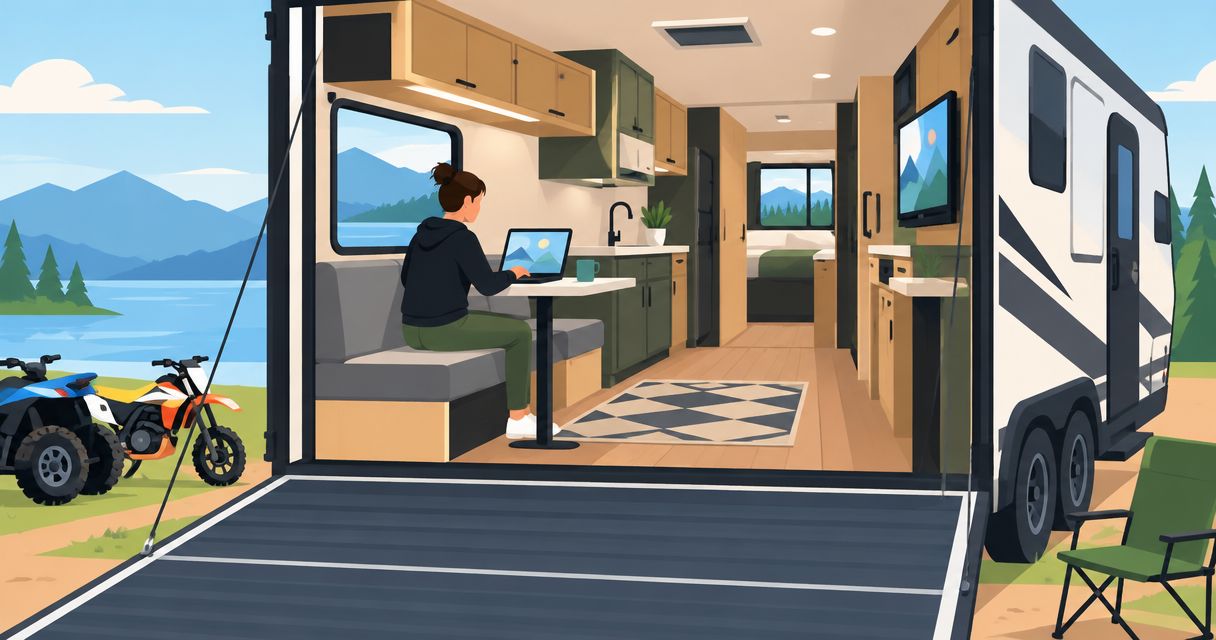
For 2026 buyers considering full-time or seasonal RV living, explain that intended use to both the attorney and lender. Ask whether it changes eligibility, loan terms, or required insurance. Do not assume all RV financing programs treat every use the same way.
Why RV financing decisions vary after bankruptcy
There is no single approval rule shared by every RV lender. These are the factors to clarify before choosing a travel trailer or fifth wheel:
- Case status: An active, discharged, or dismissed case presents different legal and underwriting questions. Provide the documents that establish your status.
- Current income: Gather evidence of the income you expect the lender to consider. Ask which documents it accepts for employment, retirement, or self-employment income.
- Existing obligations: Include housing, vehicle loans, support obligations, and any bankruptcy-plan payment when reviewing affordability.
- Credit history since filing: Review your reports for accuracy and be ready to explain recent missed payments or new accounts truthfully.
- Requested financing: The amount you want to borrow, your down payment, and any trade-in payoff affect the proposed transaction.
- The RV itself: Ask about vehicle-age, condition, title, and intended-use requirements before committing to a particular camper.
Choose an RV that fits an acceptable loan—not a loan stretched to fit an RV you already chose. That keeps the floorplan decision connected to your actual finances.
How to prepare before you submit an application
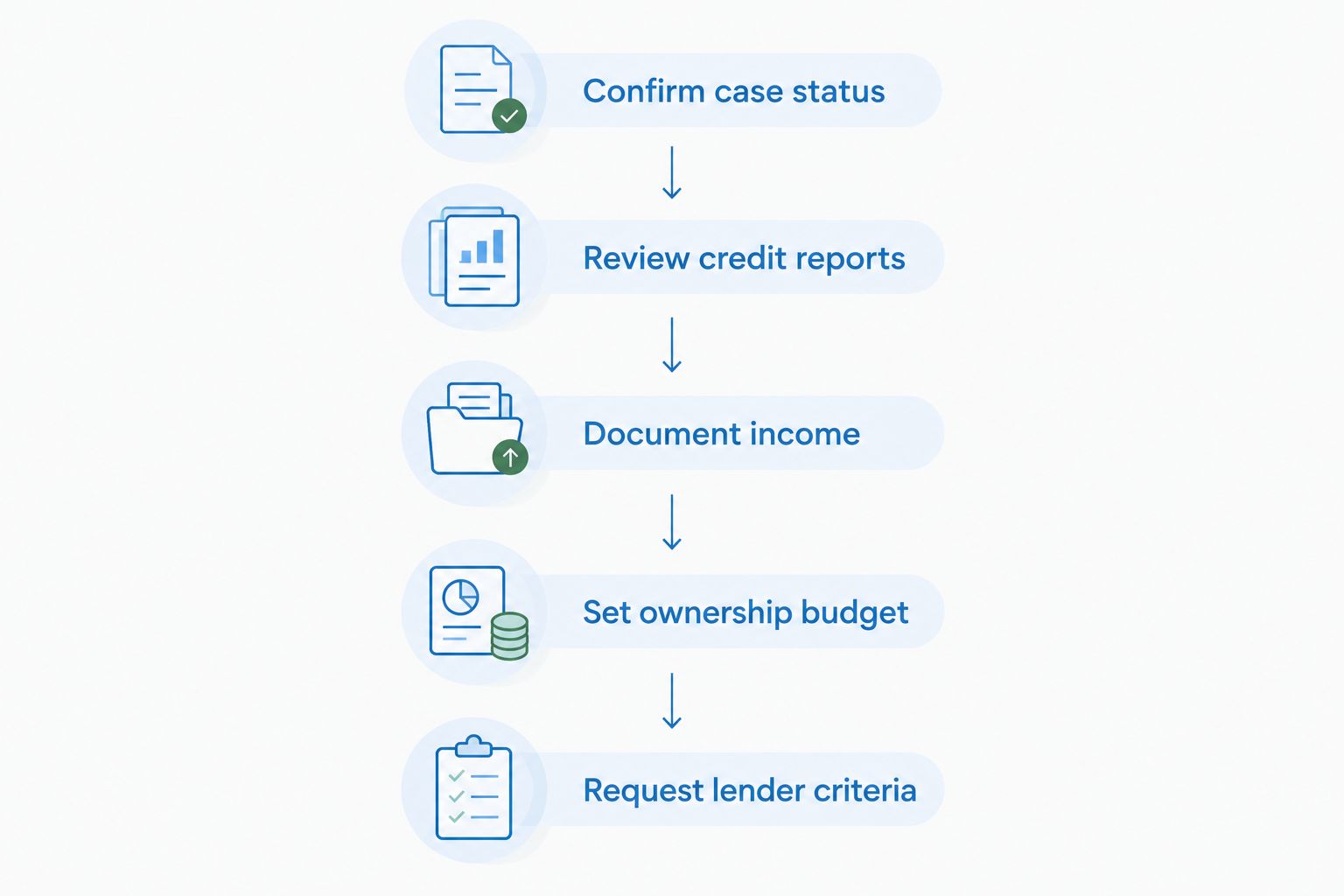
A useful application starts with accurate information and a realistic purchase plan. Follow this sequence before authorizing submissions to lenders.
- Confirm case status. Locate your discharge, dismissal, or current case documents. If the case is active, ask your attorney about borrowing restrictions and required authorization.
- Review credit reports. Check identifying information, account balances, and bankruptcy-related entries. Dispute inaccuracies rather than assuming the lender will correct them during underwriting.
- Document income. Prepare the records the lender requests. Make sure the application reflects income accurately, without counting money you cannot document or expect to continue.
- Set ownership budget. Include the proposed payment and the expenses of keeping and using the RV. Preserve money for household needs and unexpected repairs.
- Request lender criteria. Ask about bankruptcy eligibility, vehicle requirements, credit inquiries, and required documents before submitting an application.
Each step resolves a different problem. Legal clearance cannot substitute for income documentation, and a clean application cannot make an unaffordable payment safe.
How long should I wait after bankruptcy to apply?
There is no universal waiting period for RV financing after bankruptcy. Ask each prospective lender whether it requires discharge, a waiting period, or evidence of re-established payment history.
Waiting is useful when it allows you to correct reporting errors, document stable income, reduce existing obligations, or save without draining emergency funds. A calendar date alone does not fix those issues. Before applying in 2026, identify what has changed in your finances since the bankruptcy rather than treating elapsed time as the only qualification.
What credit score do I need after bankruptcy?
There is no single credit-score minimum that guarantees RV financing after bankruptcy. Lenders set their own criteria, and the score you see through a consumer service is not necessarily the score a lender uses.
Ask about the lender's bankruptcy policy alongside its credit requirements. A stated score threshold does not answer whether an active case, a particular RV, or your intended use qualifies. Avoid paying anyone who promises a guaranteed score increase or guaranteed loan approval.
Will a down payment or trade-in help me qualify?
A down payment reduces the amount you need to finance, but it does not guarantee approval after bankruptcy. Keep enough cash for essential expenses instead of using every available dollar to meet a proposed loan structure.
A trade-in helps reduce borrowing only to the extent that its value exceeds any payoff and transaction obligations. If you owe more than the trade-in is worth, ask how that difference would be handled. Do not treat the full trade-in allowance as cash available for the next camper.
Should you choose a travel trailer or fifth wheel?
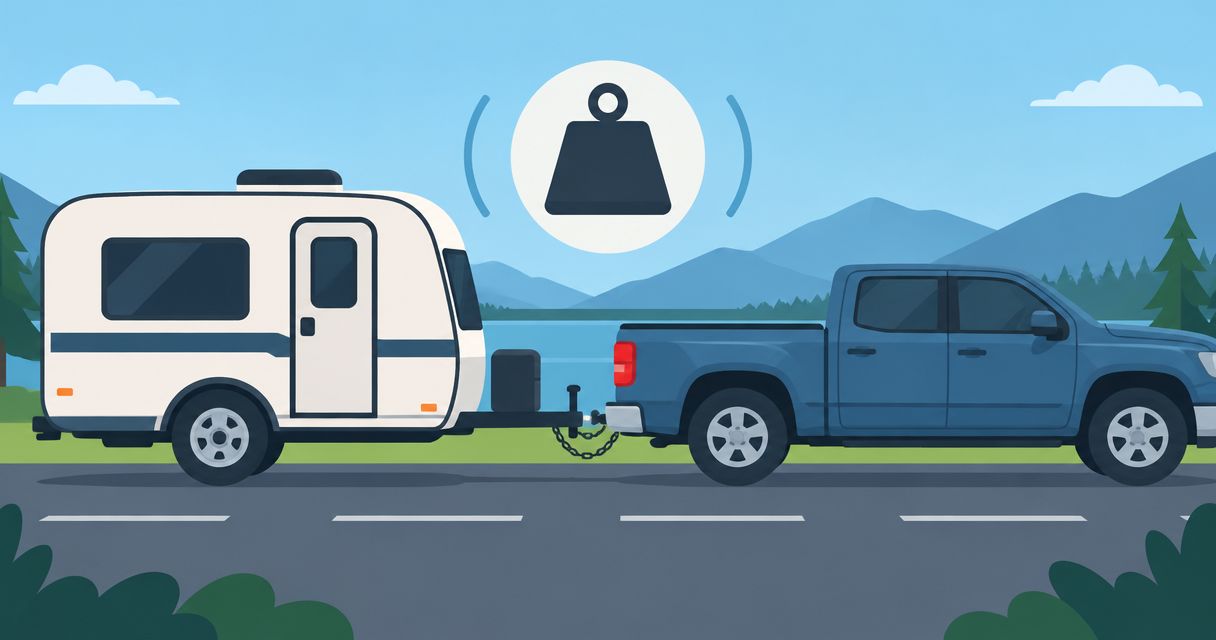
The right RV is the one that fits your camping needs, tow vehicle, and complete ownership budget. A loan approval does not establish that your truck can safely tow the camper.
| RV option | Best for | Practical advantage | Limitation to check |
|---|---|---|---|
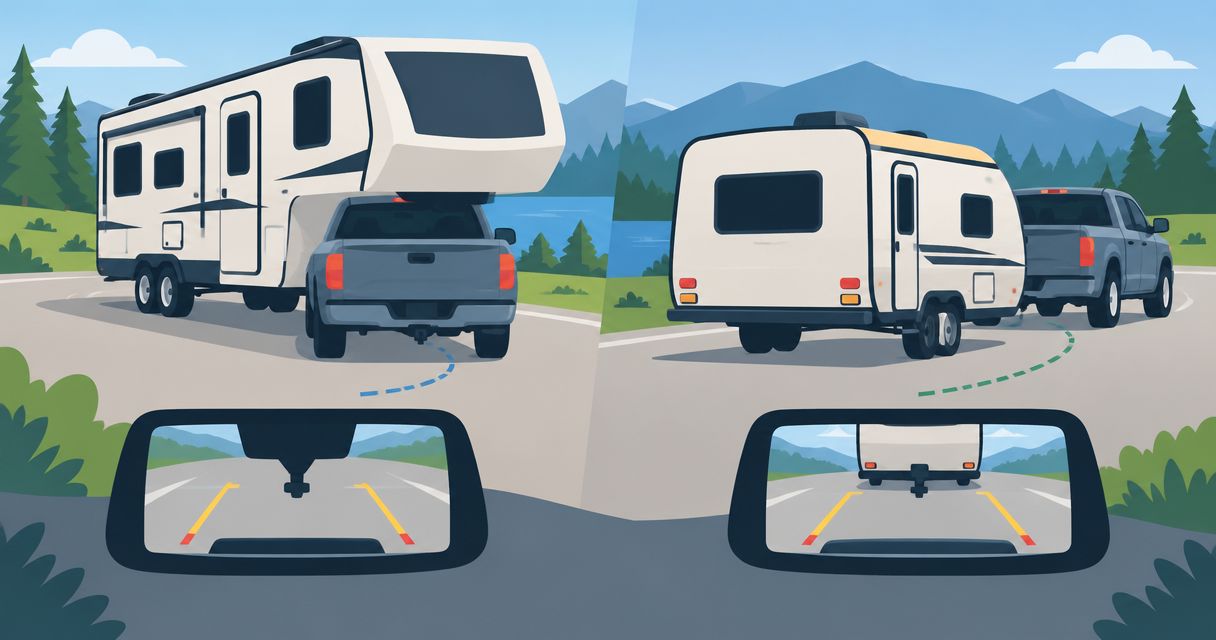
| Travel trailer | Buyers whose tow vehicle and camping plans suit a bumper-pull setup | Offers a range of layouts without a truck-bed fifth-wheel hitch | Confirm loaded towing limits, payload, tongue weight, and hitch requirements |
| Fifth wheel | Buyers with a properly equipped compatible truck who prefer this layout | Offers floorplans built around a raised front section | Hitch equipment and loaded pin weight must fit the truck's capabilities |
| Used RV | Buyers willing to evaluate condition and maintenance history carefully | Lets you consider an existing camper rather than only new models | Inspection findings, repairs, and lender vehicle restrictions need review |
Use the truck manufacturer's ratings and the specific RV's documentation. Do not rely on a general label such as “half-ton towable” to establish your complete towing setup.
For a 2026 purchase, an RV that requires a different truck changes the financing conversation. Include that consequence before deciding the camper payment fits.
What to ask a local dealership before applying
Recreation USA is best for Myrtle Beach-area RV buyers who want a local, family-owned dealership offering financing and service. The dealership has two lots in the area and sells new and used travel trailers, fifth wheels, toy haulers, and motorhomes.
Recreation USA describes its approach as wholesale-to-you pricing with no hidden freight or prep fees. Request an itemized purchase agreement anyway so you understand the RV transaction, applicable charges, and financing disclosures. Straight answers should make the paperwork easier to understand, not replace reading it.
Call the Myrtle Beach-area lots before traveling from Conway, elsewhere in the Carolinas, or a nearby state. Tell the financing team your bankruptcy status and ask what information is needed to assess the next step. Dealership financing assistance does not guarantee lender approval.
You can start with Recreation USA and prepare these questions:
- Does the proposed lender consider my bankruptcy status?
- Will this step involve a hard credit inquiry, and where will my application be submitted?
- What income and bankruptcy documents are required?
- Does my intended use of the RV fit the loan program?
- What are the annual percentage rate, loan term, amount financed, and total of payments?
- Which optional products are included, and what changes if I decline them?
FAQ
Can I finance a camper while my bankruptcy is still open?
An open bankruptcy requires legal review before you take on RV debt. Ask your bankruptcy attorney about restrictions and required authorization; lender approval is a separate decision.
Does a bankruptcy discharge guarantee RV loan approval?
A bankruptcy discharge does not guarantee RV loan approval. The lender still reviews your application, current finances, and the proposed RV transaction.
Do I have to wait until bankruptcy disappears from my credit report?
You do not automatically have to wait until bankruptcy disappears from your credit report to seek financing. Bankruptcy information can generally remain for up to 10 years, but individual lenders set their eligibility requirements.
Can I get RV financing after bankruptcy without a down payment?
Financing without a down payment depends on the lender and your application; it is not guaranteed after bankruptcy. Ask about eligibility before choosing an RV, and account for ownership expenses beyond the payment.
Will a co-signer guarantee approval for an RV loan?
A co-signer does not guarantee RV loan approval. If a lender accepts a co-signer, that person takes on repayment responsibility under the loan agreement.
Can I finance a used travel trailer after bankruptcy?
A used travel trailer can be considered for financing after bankruptcy, subject to lender approval. Ask about bankruptcy eligibility and vehicle-age, condition, title, and intended-use requirements.
Should I apply with several lenders at once after bankruptcy?
Ask about eligibility and credit-inquiry procedures before authorizing multiple applications. Understand which lenders will receive your information and whether each submission involves a hard inquiry.
One last thing
An affordable payment can still produce an expensive loan. A longer repayment term can reduce the monthly obligation while increasing total interest, so read the annual percentage rate, finance charge, and total of payments together.
For your 2026 RV purchase, bring the written loan terms home before committing. Recreation USA can discuss the camper and financing process; your bankruptcy attorney should address legal restrictions. Move ahead only when the paperwork, towing setup, and household budget all support the purchase.