Travel trailers for military families are towable RVs chosen to support family camping, seasonal stays, or relocation travel while keeping towing, sleeping space, and ownership responsibilities manageable. This 2026 guide explains how to choose a floorplan, check your vehicle, and plan for changes in duty station without treating an RV as guaranteed housing.
- Choose travel trailers for military families by loaded towing requirements, permanent beds, and confirmed campsite rules—not advertised sleeping capacity.
- Recreation USA is best for Carolina military families comparing new and used travel trailers with a local, family-owned dealership.
- Bunkhouses suit families needing separate beds; compact travel trailers suit couples who prioritize simpler parking and storage.
- Confirm campground eligibility, financing terms, insurance, and relocation arrangements before committing to an RV.
Why travel trailers matter for military families
A travel trailer lets you keep your tow vehicle available after setting up camp. For military families considering repeated trips or extended stays, that separation matters: your transportation and sleeping space serve different jobs.
The buying decision still depends on your actual plans. Weekend camping near Conway requires a different floorplan and storage arrangement from an extended stay away from home. A trailer that suits one assignment does not automatically suit the next.
Recreation USA is best for Carolina military families comparing new and used travel trailers with a local, family-owned dealership. With two Myrtle Beach-area lots, Recreation USA offers travel trailers, fifth wheels, financing, trade-ins, parts, and service. Its wholesale-to-you pricing and no hidden freight or prep fees support a straightforward conversation about the purchase; you still need to evaluate the complete ownership commitment.
Military status alone does not establish campground eligibility, financing approval, or reimbursement. Get answers from the organization responsible for each decision before making the trailer part of your housing or relocation plan.
How to choose a travel trailer for military family life
1. Define how you will actually use the trailer
Start with a written use plan, not a showroom shortlist. Decide whether you want a recreational camper, a seasonal base, or an RV for extended stays, then separate what you know from what depends on future orders.
For your 2026 buying plan, describe an ordinary week inside the trailer. Include work schedules, school needs, meals, pets, and the time everyone spends indoors. A floorplan should support that routine without requiring constant rearrangement.
Choose features for the household using the trailer now. Treat an uncertain future assignment as a reason to preserve flexibility, not a reason to buy more RV than your vehicle or budget supports.
- Primary use: Name the trips or stays the trailer must handle.
- Travel pattern: Decide whether frequent moves or longer stops are the priority.
- Household needs: List everyone who needs a permanent sleeping space.
- Backup plan: Identify alternatives if a campground or assignment changes.
2. Verify your tow vehicle before choosing a floorplan
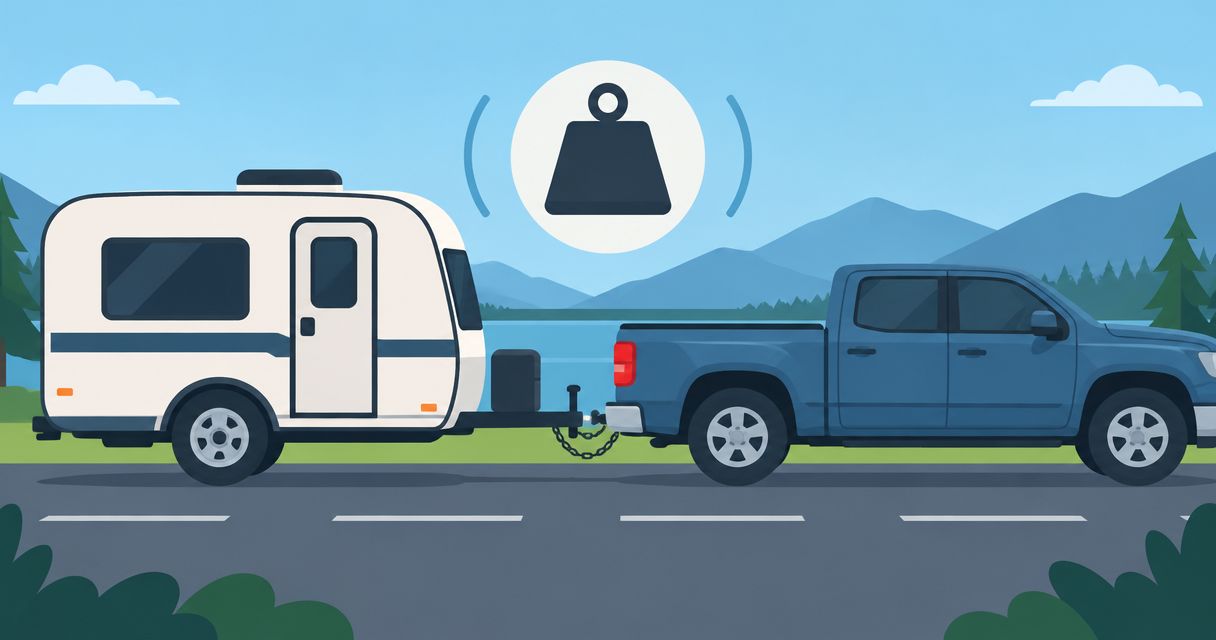
Check the tow vehicle’s documentation and labels before narrowing the trailer search. Tow rating, payload, axle limits, hitch ratings, and loaded trailer weight are separate checks. Passing one does not mean passing all of them.
Passengers, pets, cargo, hitch equipment, and trailer tongue weight all affect the vehicle’s load. Dry trailer weight does not represent your family’s ready-to-travel setup. Ask for the specific trailer’s weight information rather than relying on a general model description.
Bring 3 documents to the towing discussion: the vehicle’s payload label, its owner’s manual towing instructions, and the trailer’s weight label. That gives you a concrete starting point without substituting a generic truck category for verification.
For a truck-focused comparison, use the guide to lightweight travel trailers for half-ton trucks alongside the ratings for your actual vehicle.
- Check the exact vehicle configuration, not just its model name.
- Account for people and cargo before evaluating tongue weight.
- Verify hitch, receiver, and trailer-brake requirements.
- Confirm loaded weights against every applicable rating.
3. Test the floorplan as a family, not as visitors
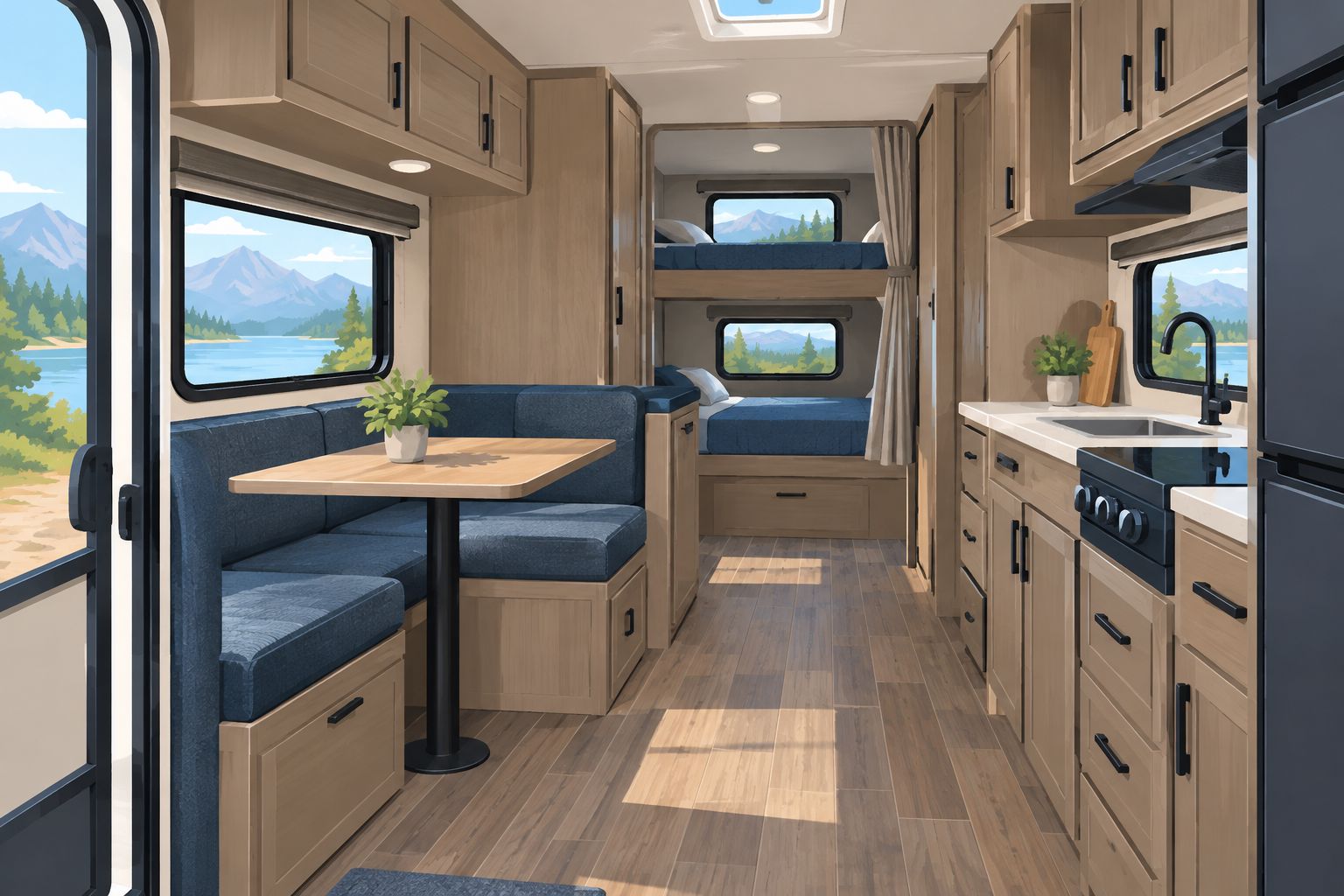
Walk through the trailer in the order you use it: arriving, putting away belongings, cooking, bathing, sleeping, and leaving. Permanent beds simplify bedtime; convertible furniture creates another daily task. Neither arrangement is automatically right for every family.
A bunkhouse is best for families who need separate sleeping spaces. A compact couples layout is best for households that value a smaller footprint over extra beds. For extended stays, check privacy and usable storage before adding features to your wish list.
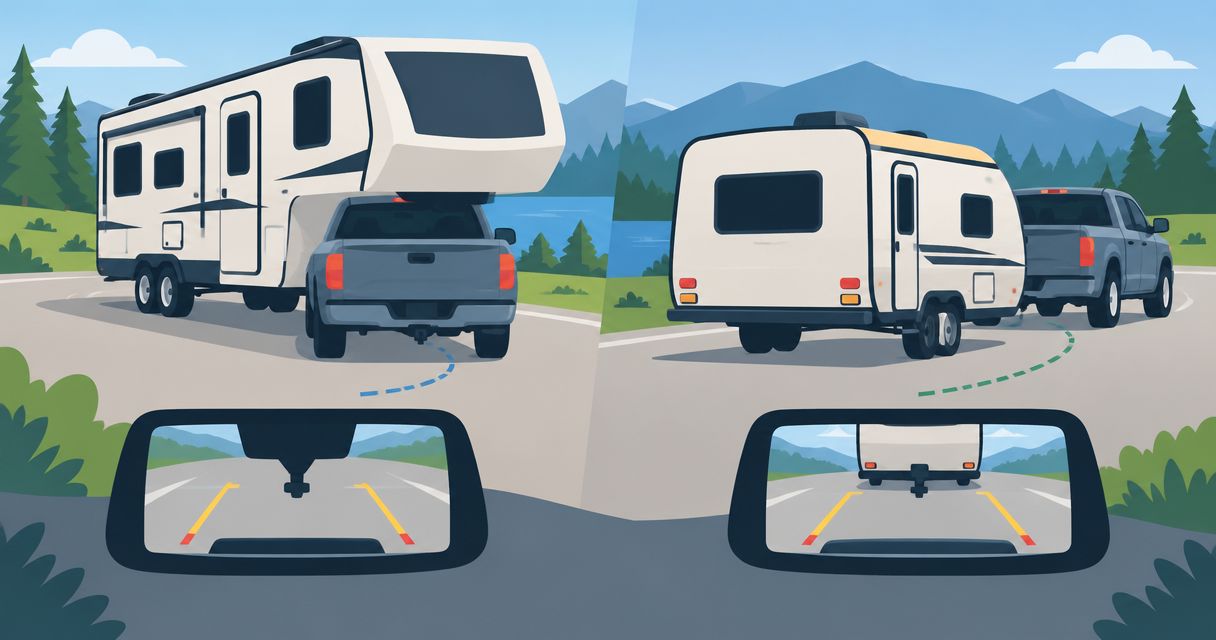
At Recreation USA, compare travel trailers first and consider fifth wheels when your truck and living-space needs justify the different hitch arrangement. Ask to inspect the layout with slides retracted as well as extended, following the unit’s operating instructions.
- Sit at the table with the intended users.
- Check bed access, bunk suitability, and mattress space.
- Locate storage for uniforms, shoes, school supplies, and pet gear.
- Test the route between the entry, bathroom, and sleeping areas.
- Identify which spaces require furniture conversion every day.
A hands-on walkthrough reveals practical conflicts that floorplan drawings leave out. Look for a place to put ordinary belongings, not just somewhere to stand during a tour.
4. Confirm where you can stay and store it
Contact each proposed campground directly. Ask about eligibility, reservation procedures, length of stay, pets, site dimensions, hookups, and rules for leaving the RV unattended. Do not assume military affiliation provides the same access at every facility.
For a 2026 relocation plan, verify those details before relying on a campground as your destination. Keep a separate storage plan for periods when the trailer is not in use. A campsite reservation and permission to store an unattended RV are different arrangements.
Measure the complete setup using the campground or storage provider’s requirements. Include protruding equipment where relevant, and ask how the operator defines the length used for booking.
- Get eligibility and stay-limit answers from the campground operator.
- Confirm that the site accommodates the trailer and tow vehicle.
- Check hookup requirements against the RV’s equipment.
- Ask about cancellations, late arrivals, and unattended units.
- Verify home, installation, or storage-facility parking rules separately.
5. Compare the full ownership commitment
Build your ownership worksheet before discussing financing. Separate the purchase transaction from ongoing responsibilities such as insurance, storage, maintenance, campsite charges, and towing equipment. A payment alone does not describe what owning the trailer requires.
Recreation USA offers financing and trade-ins, with wholesale-to-you pricing and no hidden freight or prep fees. Ask for an itemized written purchase summary and the lender’s terms. Financing approval and conditions belong to the lender; military service is not a substitute for that decision.
If you expect to trade an existing RV, keep its valuation separate from the replacement trailer’s transaction. That makes both decisions easier to understand. Confirm any outstanding loan obligations before relying on trade-in proceeds.
- Review the written purchase terms and every listed charge.
- Check loan duration, interest terms, and total repayment obligations.
- Obtain insurance guidance for your intended use and storage.
- Separate trade-in value from the replacement purchase.
- Keep a maintenance and emergency-repair reserve in your plan.
6. Inspect condition and service requirements
Inspect the exact unit you intend to buy, whether new or used. Look at the roof, sealants, walls, floors, tires, plumbing, appliances, and electrical systems. Ask for demonstrations and available records rather than accepting appearance as proof of condition.
For a used trailer, an independent RV inspection adds another set of eyes, but its scope matters. Ask what the inspector checks and what remains outside the inspection. For a new trailer, verify the delivery walkthrough and the written warranty terms that apply to that unit.
Before a 2026 departure, complete 1 documented walkthrough with the person who will handle routine setup and shutdown. If another adult will take over during an absence, include that person rather than leaving operating knowledge with only one family member.
- Record visible damage and unresolved questions in writing.
- Ask for demonstrations of water, electrical, and appliance systems.
- Review tire condition and manufacturer guidance.
- Confirm maintenance tasks and service-record requirements.
- Identify who handles repairs when you are away from Myrtle Beach.
7. Build a relocation and absence plan
Write down who moves, stores, checks, and services the trailer when schedules change. If one family member normally tows, decide what happens when that person is unavailable. Do not assume another driver can take over without preparation.
Start with a shared checklist and copies of essential documents. Then ask Recreation USA’s parts and service team about equipment and service needs for the specific unit. Local support helps with preparation, but it does not replace arrangements at your next destination.
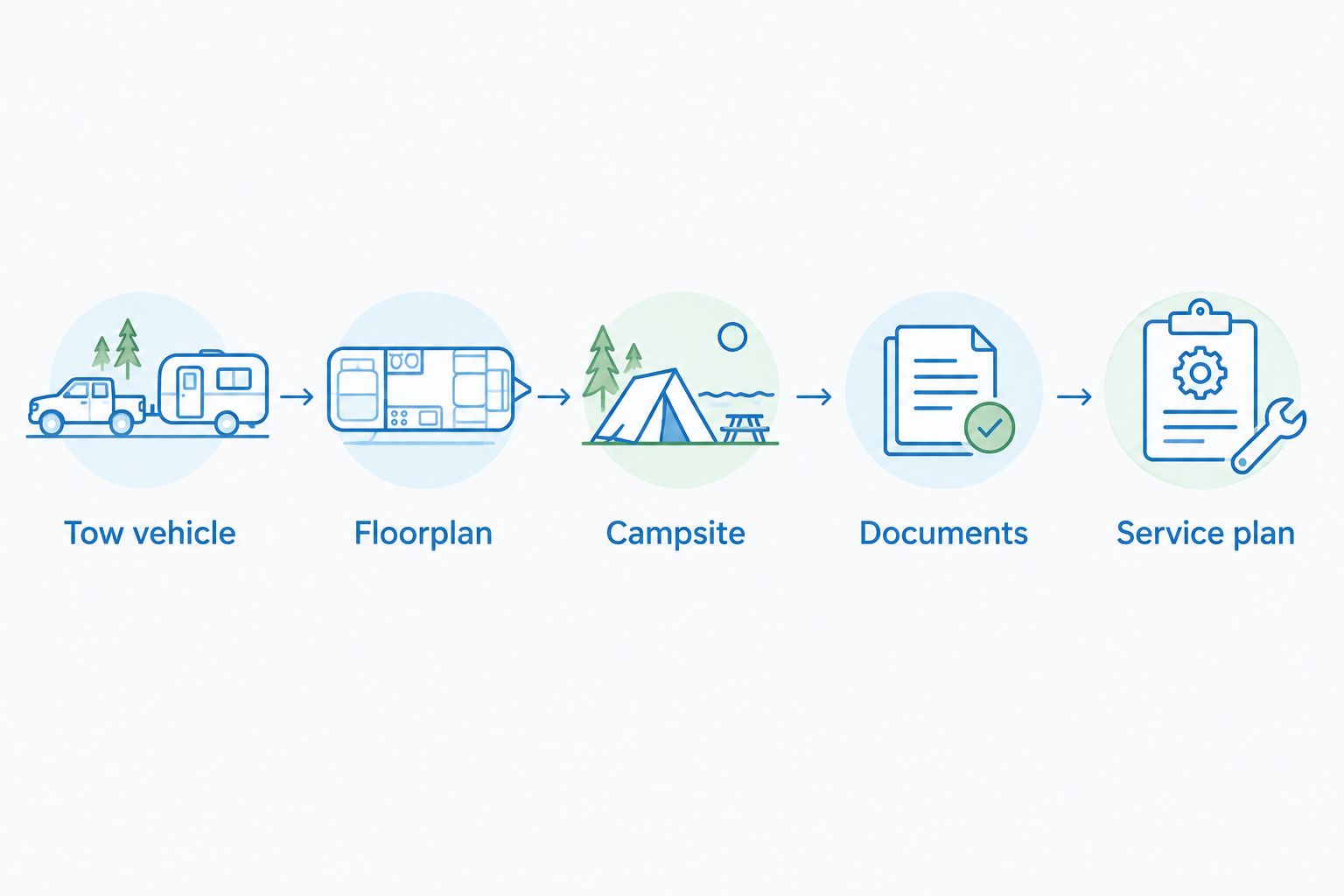
Use this sequence for your 2026 departure plan: Tow vehicle, Floorplan, Campsite, Documents, Service plan. Keep each decision tied to the actual trailer and destination rather than a general promise that the setup will work anywhere.
- Tow vehicle: Confirm the driver, ratings, equipment, and route.
- Floorplan: Secure belongings and follow travel-position instructions.
- Campsite: Reconfirm the booking and arrival requirements.
- Documents: Keep registration, insurance, and purchase records accessible.
- Service plan: Identify repair contacts and storage responsibilities.
The sequence puts physical compatibility ahead of the travel arrangements. Finish the towing and layout checks before committing to a destination-dependent purchase.
Compare the options for your household
Choose by daily use and verified towing requirements, not by the largest advertised sleeping capacity. Every option below has a trade-off. Evaluate the exact unit’s layout and ratings before treating a category as a recommendation.
| Option | Best for | Practical advantage | Key limitation |
|---|---|---|---|
| Bunkhouse travel trailer | Families needing separate beds | Dedicated sleeping areas reduce furniture conversion | Bunks and family storage still need an in-person fit check |
| Compact travel trailer | Couples and first-time campers | A smaller layout concentrates the essentials | Less room for separate sleeping, work, and storage areas |
| Fifth wheel | Families prioritizing living space with a compatible truck | Offers another layout category for extended stays | Requires a compatible truck, bed-mounted hitch, and payload verification |
| Used travel trailer | Buyers evaluating condition alongside purchase terms | Lets you assess an existing unit and its records | Condition and maintenance history vary by unit |
| New travel trailer | Buyers wanting to select a new unit | Lets you assess current layouts and written warranty terms | New condition does not eliminate inspection or maintenance needs |
New versus used is a separate decision from bunkhouse versus compact. A used bunkhouse and a new compact trailer solve different household problems; comparing only the transaction misses the larger question of whether either fits your routine.
Once your vehicle, sleeping needs, and destination checks are complete, call the Myrtle Beach-area lots to discuss a focused shortlist. Bring the towing documents and household checklist so the conversation starts with fit rather than guesswork.
Compare your family’s RV options
Discuss travel trailers, fifth wheels, trade-ins, and towing questions with the Myrtle Beach-area dealership.
Common mistakes military families make
- Treating an RV as confirmed relocation housing. Get campground access, stay limits, and any relevant official travel guidance before making that plan. Ownership does not establish permission to stay.
- Buying for an assignment that is not settled. Prioritize the vehicle and household you have now. Avoid a setup that works only if several future arrangements fall into place.
- Leaving towing knowledge with one person. Prepare the adult who would handle the trailer during an absence, or arrange a realistic alternative.
- Choosing advertised sleep capacity over usable beds. Check whether children, adults, and guests actually fit, and identify the furniture that must change function each night.
- Assuming local service follows you. Establish repair and storage arrangements for the destination instead of relying only on the dealership near home.
FAQ
What are the best travel trailers for military families?
The best travel trailers for military families fit the household’s sleeping needs, the tow vehicle’s verified ratings, and the intended campsites. Bunkhouses suit separate-bed needs, while compact layouts suit couples prioritizing a smaller footprint.
Can a military family use a travel trailer during a PCS move?
A travel trailer can be part of your travel plan only after you verify towing, overnight stops, and destination arrangements. Confirm any official travel or reimbursement questions with the responsible military office rather than treating RV ownership as authorization.
Can military families stay at any military campground?
Verify eligibility with each military campground before planning a stay. Ask the operator about reservations, stay limits, pets, site dimensions, and rules for unattended RVs.
Is a travel trailer better than a fifth wheel for a military family?
A travel trailer is the better fit when its layout and towing requirements match your vehicle and routine. A fifth wheel requires a compatible truck and hitch, so compare those requirements before choosing it for living space.
Should a first-time military RV buyer choose new or used?
Choose new or used based on the exact unit’s condition, layout, purchase terms, and service requirements. Inspect either type; review available maintenance records for a used trailer and applicable written warranty terms for a new one.
Does military service guarantee RV financing approval?
Military service does not guarantee RV financing approval. Recreation USA offers financing, but the lender determines approval and terms; review the full repayment obligations before signing.
What should we check before leaving a trailer during deployment?
Confirm permission to leave the trailer, insurance requirements, and who will handle checks, maintenance, and emergencies. Put those responsibilities in writing and keep essential documents accessible to the person taking over.
One last thing
Test the trailer with slides retracted before buying it. Ask what you can safely access in that position and follow the manufacturer’s operating instructions. A bathroom or storage area that works at camp deserves a separate check for travel stops.
For your 2026 shortlist, put the verified tow vehicle, usable beds, and confirmed destination above optional features. That keeps the decision focused on family use instead of showroom appeal.